


Route Briefing: Los Angeles to Rome
There are flights, and then there are flights that feel like the beginning of something genuinely life-changing. Los Angeles to Rome is firmly in the second category. You're trading Pacific sunshine for cobblestone streets, avocado toast for supplì, and the Hollywood sign for a skyline that has been turning heads for over two thousand years. That's a trade worth making.
The journey typically runs around 12 hours and 30 minutes with a connection — Frankfurt and Madrid are common and reliable hubs — and while direct options do exist, they're rarer and often pricier. Connecting itineraries through major European hubs can actually save you meaningful money, so don't reflexively chase the nonstop. ITA Airways (the successor to ITA Airways), Lufthansa, and American Airlines all serve this route regularly, giving you solid options year-round.
On pricing, a roundtrip under $650 is genuinely good — grab it without hesitation. Standard fares typically sit between $900 and $1,200 or more, so the gap between a deal and a dud is real. Book three to six months out, especially if you're eyeing summer travel, and lean toward mid-week departures for better pricing. Peak season runs June through August when Rome is busy, warm, and buzzing with energy — beautiful, but crowded. Shoulder seasons in spring and autumn offer cooler temperatures, thinner crowds, and a more relaxed pace that lets the city breathe around you.
Landing at Rome Fiumicino (FCO), you're well-connected to the city center. The Leonardo Express train runs directly from the airport to Roma Termini, the city's main railway hub, and it's fast, comfortable, and straightforward — exactly what you want after a long transatlantic flight.
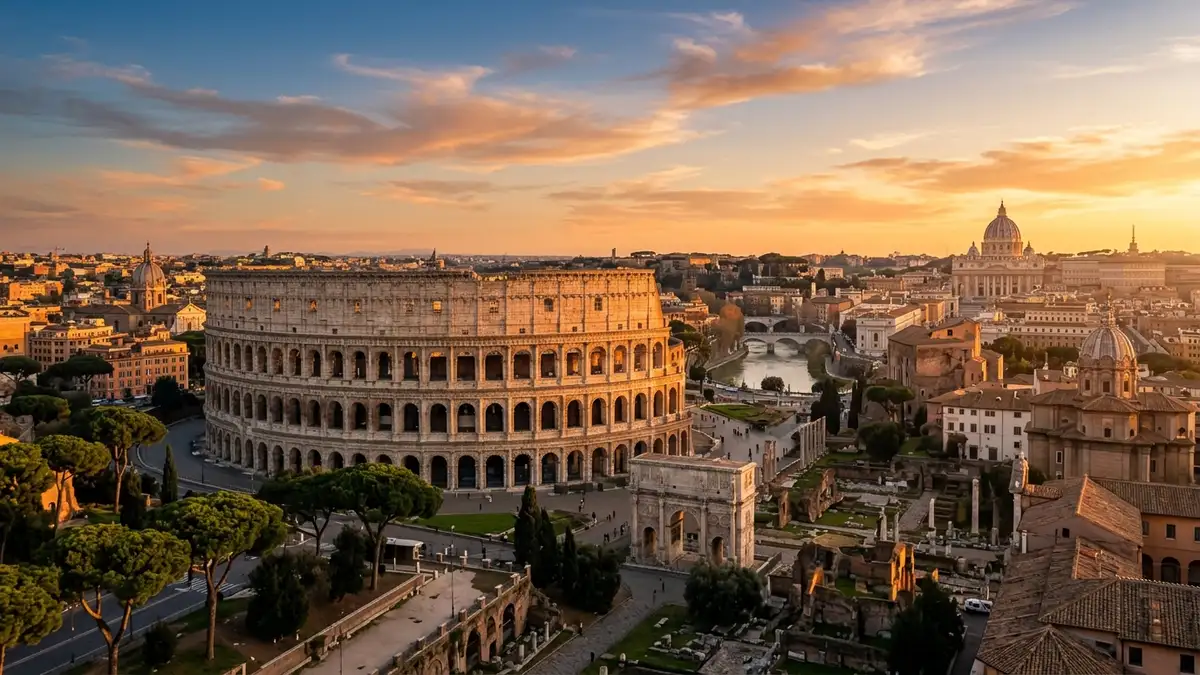
Rome itself rewards the curious and punishes the rushed. The Colosseum is as staggering in person as every photograph promises. Vatican City — technically its own sovereign state tucked inside the city — holds the Sistine Chapel and St. Peter's Basilica, both genuinely unmissable. Toss a coin in the Trevi Fountain if you want, but also wander away from it into the quieter surrounding streets where the real neighborhood character lives.
Eat everywhere. Roman pasta — cacio e pepe, carbonara, amatriciana — is a distinct regional tradition, not just Italian food in general. Gelato from a quality gelateria is one of life's more reliable pleasures. The best money-saving tip for Rome isn't about flights at all: book your major site tickets well in advance online. The Colosseum and Vatican Museums both sell out, and skipping those queues is worth every bit of planning effort.