


Route Briefing: Dallas to Osaka
There's a reason food lovers, history buffs, and first-time Japan visitors keep choosing Osaka over Tokyo as their entry point — this city has a personality all its own, and flying into it directly from Dallas makes the whole adventure feel intentional rather than accidental. The route runs about 14 hours and 30 minutes with one stop, typically connecting through Seoul's Incheon Airport or Tokyo, and carriers like Japan Airlines, ANA, and Korean Air all serve it well. JAL and ANA in particular are consistently praised for comfort and service, which matters a lot when you're crossing the Pacific.
On fares, anything under $700 roundtrip is genuinely a strong deal — standard pricing tends to sit in the $900 to $1,200 range or higher. Booking three to six months out gives you the best shot at those lower fares, and routing through Seoul on Korean Air often unlocks some of the most competitive prices on this corridor.
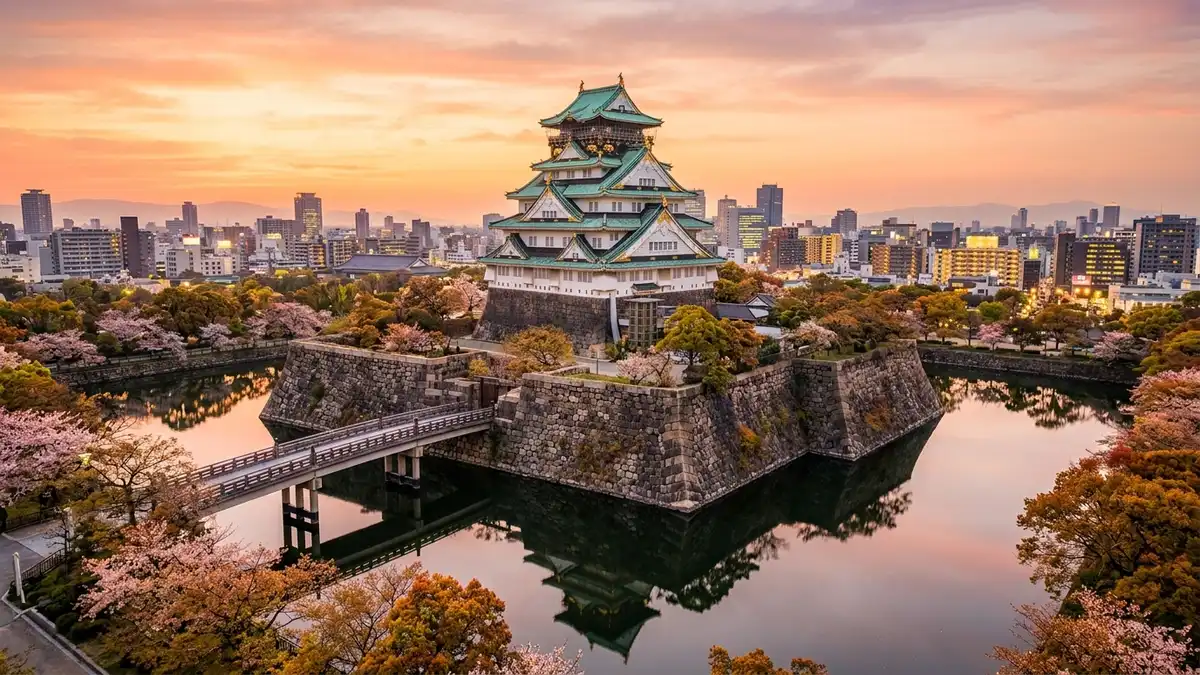
Timing your trip around late March to early April puts you squarely in cherry blossom season, one of the most genuinely magical travel experiences in the world. The crowds are real, but so is the beauty. If you'd rather have breathing room, the shoulder seasons on either side offer pleasant weather and a calmer atmosphere. Summer runs hot and humid, so pack accordingly if you're going July or August.
Once you land at Kansai International Airport, the city is easily accessible by train — the airport sits on an artificial island in Osaka Bay, and rail connections get you into the heart of the city efficiently and affordably. It's one of the smoother airport-to-city transitions in Asia.
Osaka itself is best understood through its famous saying: *kuidaore*, roughly meaning "eat until you drop." Dotonbori is the neon-lit, canal-side neighborhood where that philosophy plays out in real time — takoyaki, okonomiyaki, and kushikatsu are the local obsessions, and the street food scene here genuinely rivals anywhere on earth. Osaka Castle is worth a morning of your time, both for the history and the surrounding park. And the Kansai region's reputation for warmer, more outgoing locals compared to other parts of Japan is something most visitors notice and appreciate immediately.
The one tip worth burning into your memory: get an IC card like an ICOCA at the airport on arrival. It works on trains, subways, and buses across the Kansai region and saves you the hassle of buying individual tickets every time you move. Small thing, enormous quality-of-life improvement.