


Route Briefing: Denver to Curaçao
Trading Denver's mile-high altitude for a Caribbean island sitting just above the equator is one of those trips that feels like a genuine escape — and Curaçao delivers something genuinely different from the typical Caribbean playbook. While most islands lean hard into resort culture, this Dutch-influenced gem has a real city at its heart, a distinct identity, and underwater scenery that divers travel from around the world to experience.
The journey from Denver runs around nine and a half hours with one connection, typically routing through Miami, Houston, or Panama City depending on whether you fly American, United, or Copa Airlines. It's not a quick hop, but the connection cities are easy to navigate, and the moment you land at Hato International Airport and step into that warm, breezy air, the travel time evaporates quickly. Taxis are the most straightforward way to reach Willemstad from the airport, and the drive is short — the island itself is compact enough that you'll rarely feel far from anything.
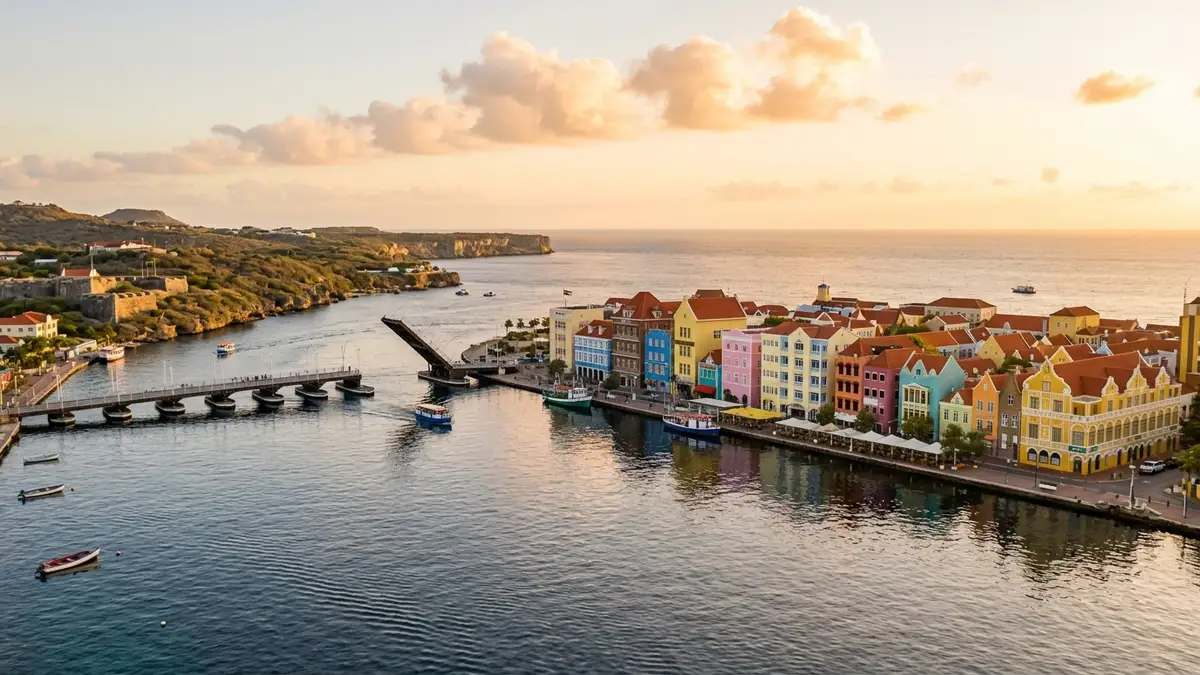
Willemstad is the reason Curaçao punches above its weight. The waterfront district of Handelskade, with its row of candy-colored Dutch colonial buildings reflected in the Sint Annabaai channel, is genuinely one of the most photogenic streetscapes in the entire Caribbean. The floating Queen Emma Bridge connects the two halves of the city and swings open to let ships pass — a small spectacle that never gets old. Beyond the postcard views, the city has a layered culture shaped by Dutch, African, Spanish, and South American influences, and the local Papiamentu language is a fascinating linguistic blend you won't encounter anywhere else.
Outside the city, the island rewards exploration. Beaches range from calm, sheltered coves to more rugged stretches on the western tip. The diving and snorkeling are exceptional — coral reefs are accessible directly from shore in several spots, making this a destination where you don't need a boat to have an extraordinary underwater experience.
Timing matters on this route. Peak season runs December through April, when the weather is driest and demand is highest — fares can climb well above $800 roundtrip during this window. If you can travel outside those months, you'll find better pricing and fewer crowds, and Curaçao's location outside the main hurricane belt means it stays relatively safe to visit year-round. A good deal on this route is anything under $550 roundtrip, so set a fare alert and book two to four months out. Flying mid-week rather than on weekends can meaningfully reduce what you pay, which leaves more budget for the thing Curaçao does best — getting you into the water.