


Route Briefing: Dubai to Curaçao
Few routes demand as much commitment as Dubai to Curaçao — a journey of 18-plus hours across two stops and multiple continents — but for travellers willing to make the leap, the reward is one of the Caribbean's most underrated and genuinely distinctive islands. This isn't a cookie-cutter beach holiday. Curaçao sits outside the hurricane belt, offers a cultural depth that most Caribbean destinations simply can't match, and has an underwater world that draws serious divers from across the globe.
The most reliable way to make this journey is through Amsterdam with KLM, which makes elegant geographic sense — Curaçao was a Dutch colony for centuries, and the connection between the two places runs deep in the island's architecture, language, and food. Routing through a US hub like Miami with American Airlines or Houston and Newark with United are solid alternatives, and both give you a chance to break up the journey if you want to add a night stateside. Whichever connection you choose, book at least three to four months ahead. This route has limited inventory, and prices climb steeply as departure approaches. Lock in under $1,200 roundtrip and you've done very well — standard fares push past $1,800.
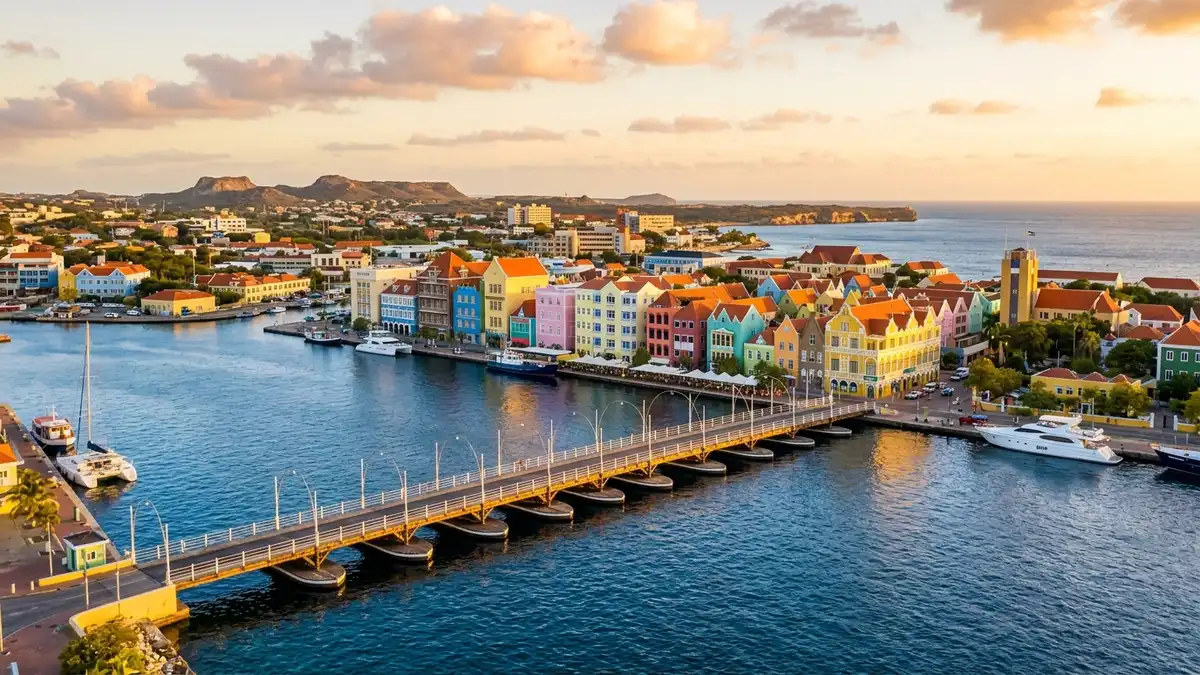
Once you land at Hato International Airport, the capital Willemstad is a short drive away, and taxis are the most straightforward option from arrivals. The city itself is the first thing that will genuinely stop you in your tracks — the pastel-painted Dutch colonial buildings lining the waterfront of the Handelskade are as vivid in person as they look in photographs, perhaps more so. The floating Queen Emma Bridge connects the two sides of the historic centre and swings open to let boats through, which is one of those small, charming details that makes a place feel alive.
Beyond Willemstad, the island rewards exploration. The diving here is exceptional — clear warm water, healthy coral, and accessible reef walls make it a destination that serious divers return to repeatedly. The beaches are less crowded than you'd find in more heavily marketed Caribbean spots, and the rugged, arid interior has a character all its own, shaped by centuries of trade winds and a landscape that looks nothing like the lush tropics most people picture.
December through April is peak season, when the weather is driest and the island is busiest. If you can travel in the shoulder months just outside that window, you'll find quieter beaches and more breathing room — and Curaçao's location outside the main hurricane zone means the risk of severe weather is far lower than on many neighbouring islands.
The one tip worth holding onto: give yourself at least a week. The journey from Dubai is long enough that anything shorter feels like a waste of the effort. Settle in, slow down, and let the island's unhurried pace do its work.