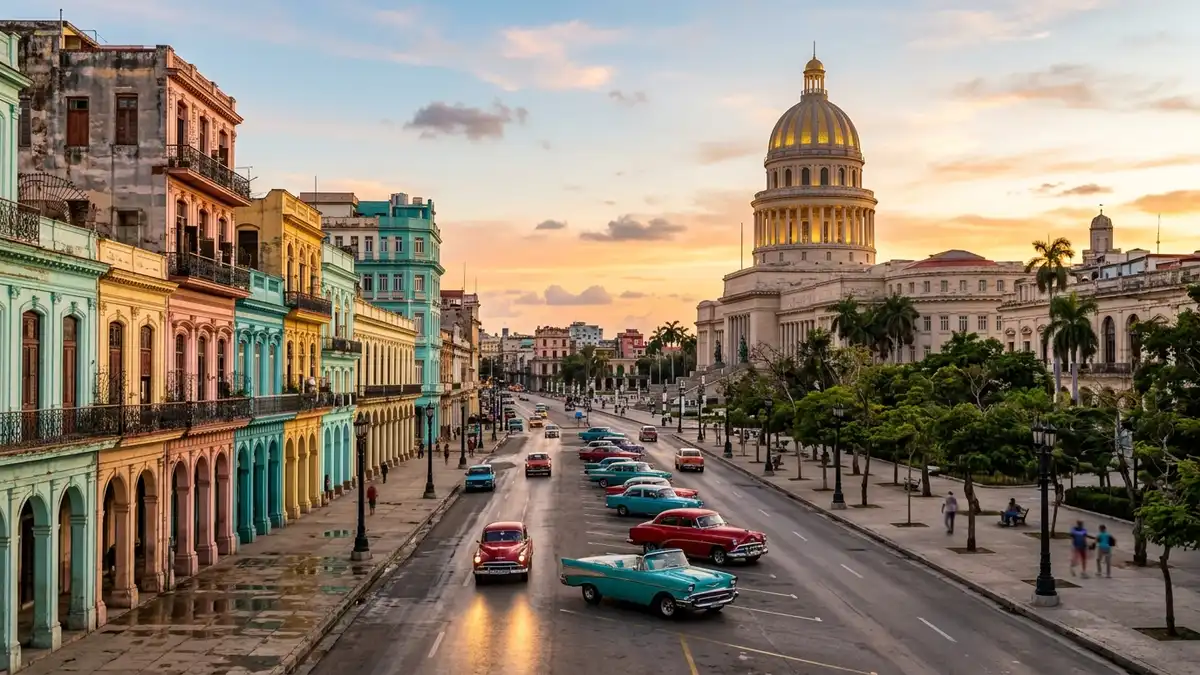



Route Briefing: Dubai to Havana
Few routes on the map feel quite as adventurous as this one — a journey from the gleaming, hyper-modern skyline of Dubai all the way to a city where time appears to have gently stopped sometime around 1959. Dubai to Havana is not a casual hop, and that's precisely the point. This is a route for travellers who understand that the destination justifies every layover.
With a total journey time of 18 hours or more across two or more stops, you'll want to plan this one carefully. Air Canada routing through Toronto and Copa Airlines through Panama City are your most dependable options, with Iberia also worth checking if you prefer a European connection. Because the itinerary is genuinely complex and seat availability on these multi-leg combinations is limited, booking four to six months ahead is not just advice — it's essential. A strong roundtrip fare comes in under $900, while most travellers end up paying somewhere between $1,200 and $1,800. If you spot something under that $900 mark, move quickly.
Timing matters enormously here. Havana's peak season runs December through February, when the Caribbean winter is warm, dry, and deeply pleasant — a welcome contrast to the humidity that blankets the city in summer. This is also when the city feels most alive with visitors, so if you prefer a slightly quieter experience with the same beautiful weather, aim for November or early March before prices climb again.
Arriving into José Martí International Airport, you'll want to have Cuban convertible currency sorted relatively quickly, as card infrastructure operates differently there than almost anywhere else you've likely visited. The city centre is a short taxi ride from the airport, and classic American cars serving as shared taxis are a genuinely iconic way to make that first approach into Havana feel cinematic.
The city itself rewards slow exploration. The old town, Habana Vieja, is a UNESCO World Heritage Site where crumbling colonial architecture and vibrant street life exist in extraordinary harmony. Salsa music drifts from open doorways at almost any hour. The Malecón seafront promenade is one of the great urban walks in the Caribbean, especially at dusk. Cuban food leans on simple, satisfying flavours — rice, black beans, slow-roasted pork — and the rum culture here is genuinely world-class.
The one tip that transforms a Havana trip: bring more cash than you think you need. ATMs are unreliable for foreign cards, and having a comfortable buffer means you spend your time enjoying the city rather than worrying about logistics. That small preparation makes all the difference on a journey this far from home.