


Route Briefing: Dubai to Sydney
There are long-haul flights, and then there's Dubai to Sydney — a journey that clocks in at around fourteen and a half hours with a stop, connecting two of the world's most glamorous cities across a vast stretch of sky. Emirates, Qantas, and Etihad all service this route, meaning you're generally in good hands when it comes to in-flight comfort, entertainment, and service. If you can snag a roundtrip fare under $900, you're genuinely doing well — standard pricing tends to sit north of $1,400, so patience and planning pay off here.
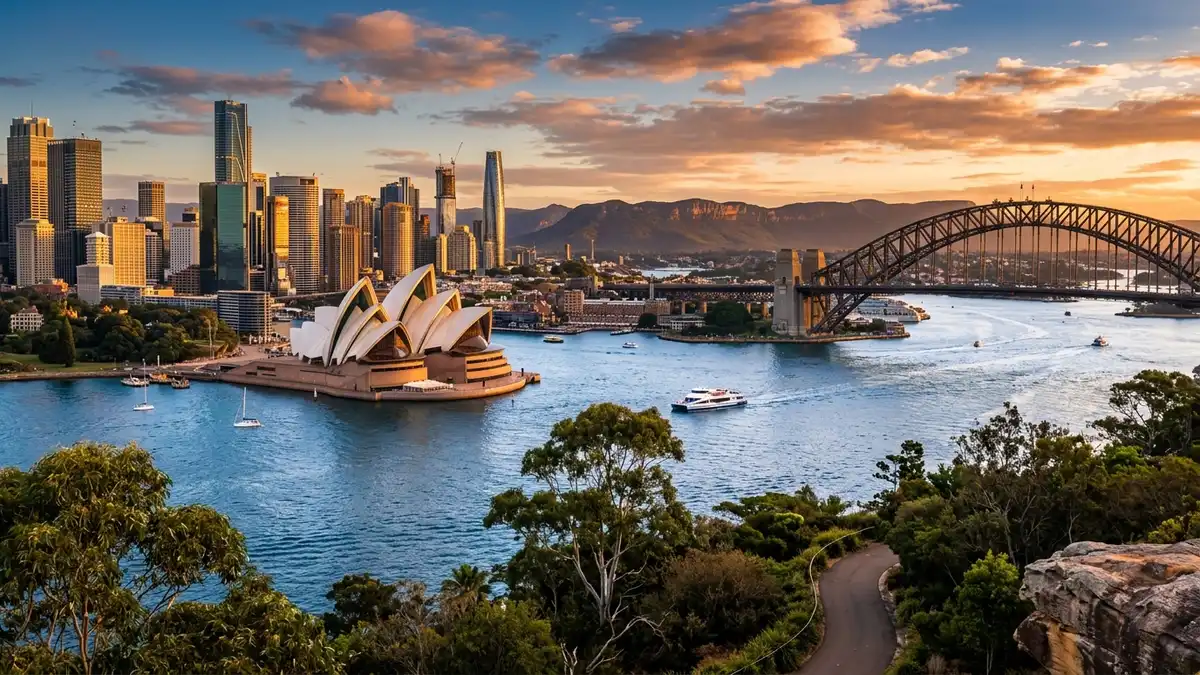
Sydney needs no introduction, but it rewards every visit like it's your first. The Opera House is one of those rare landmarks that actually exceeds expectations in person — its sail-like shells rising from Circular Quay are best appreciated from the water, so consider a harbour ferry early in your trip. Bondi Beach is iconic for good reason, but walk the coastal trail south toward Coogee and you'll find equally beautiful coves with far fewer crowds. For something completely different, the Blue Mountains sit just a couple of hours west of the city, offering dramatic sandstone escarpments, eucalyptus forest, and the famous Three Sisters rock formation — a genuinely breathtaking day trip.
The city itself has a relaxed confidence that's hard not to absorb. The food scene draws heavily on Asian and Mediterranean influences, the coffee culture is serious and excellent, and the neighbourhoods — from the historic Rocks district to the leafy inner west — each have their own distinct personality worth exploring on foot.
From Sydney Airport, the train into the city centre is straightforward, affordable, and drops you at Central Station or Town Hall within about fifteen minutes. It's the smartest arrival option, especially if you're landing during peak hours when road traffic can be unpredictable.
Timing matters on this route. December through January is Australian summer and the holiday season, which means beaches are buzzing and the city is at its most energetic — but also at its most expensive and crowded. If you want warmth without the peak-season premium, shoulder months like March or October offer genuinely lovely weather and a more relaxed pace. To lock in the best fares for summer travel, aim to book three to six months ahead. Flying mid-week and sidestepping Australian school holiday windows can shave a meaningful amount off your ticket price — easily enough to fund a harbour dinner or a Blue Mountains overnight stay. This is a route worth doing properly, and a little planning goes a long way.