


Route Briefing: Dublin to Havana
Dublin to Havana is one of those routes that feels like a genuine adventure before you've even landed — and the 14-plus hours of travel time, with at least one stopover, is absolutely worth it. Iberia routing through Madrid and Air France through Paris are your most reliable options, and both give you a chance to stretch your legs in two of Europe's great cities if you're clever about layovers. Expect to pay upwards of $1,200 for a standard roundtrip fare, but patient planners who book four to six months ahead and travel in shoulder season — April through May or October through November — can regularly find deals under $900. That's a meaningful saving for a destination this far-flung.
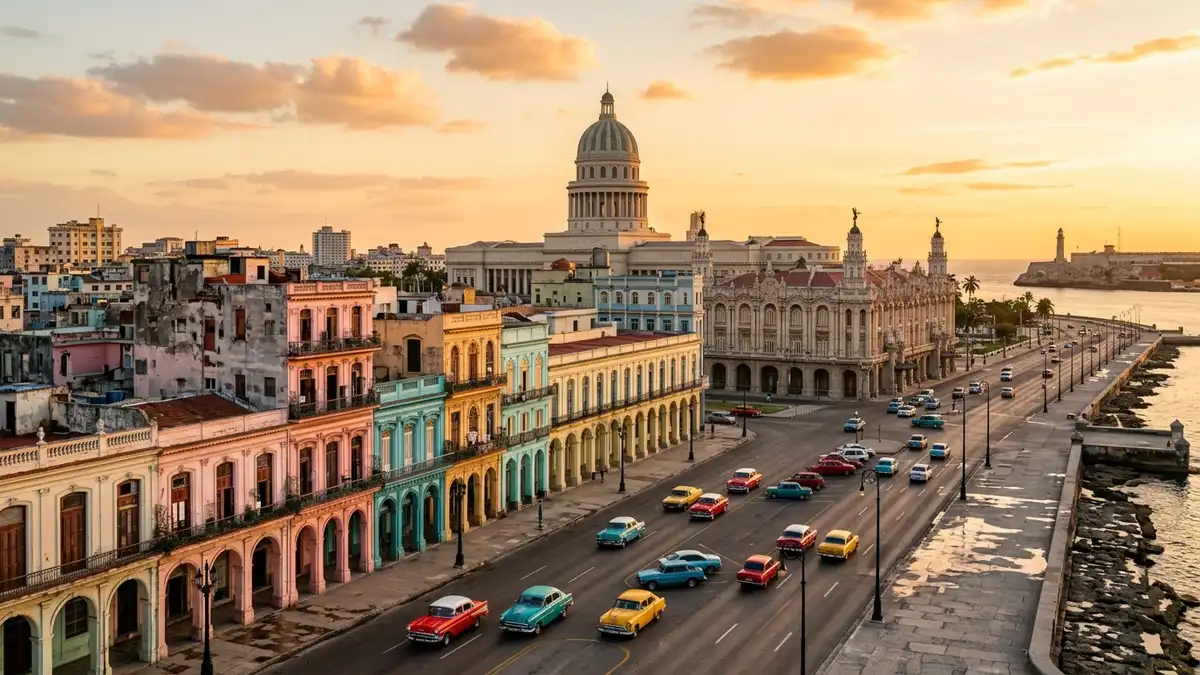
Havana is one of those places that genuinely delivers on its reputation. The city moves at its own rhythm, quite literally — salsa spills out of doorways at all hours, and the streets hum with a musical energy that's hard to describe until you're standing in the middle of it. The famous vintage American cars aren't a tourist gimmick; they're the actual working transport of the city, and riding in one through the broad, crumbling-beautiful boulevards of Centro Habana or along the Malecón seafront promenade is an experience that stays with you. The architecture is extraordinary — layers of Spanish colonial grandeur, Art Deco elegance, and sun-bleached pastels, all in various states of magnificent decay.
Old Havana, a UNESCO World Heritage Site, is compact enough to explore on foot and rewards slow wandering. The food scene has improved considerably in recent years, particularly at privately run restaurants known as paladares, which tend to offer far more interesting cooking than state-run establishments. Cuban cuisine leans on slow-cooked pork, black beans, rice, and fresh seafood — simple but satisfying when done well.
On arrival, José Martí International Airport sits southwest of the city centre. Taxis are the most practical option for getting into Havana, and it's worth agreeing on a fare before you get in. The Cuban peso has been the standard currency for everyday transactions, so sorting out some local cash early on makes daily life considerably smoother.
Peak season runs December through January and again in July and August, when prices climb and the city fills with visitors. If you want Havana at its most atmospheric without the crowds, aim for November — the heat has softened slightly, the rain has largely eased, and you'll feel like you have the city more to yourself. For a route this long and this rewarding, the planning is half the pleasure.