


Route Briefing: Frankfurt to Havana
Frankfurt to Havana is one of those routes that feels like stepping through a portal — you board in one of Europe's most efficient, modern cities and land somewhere that seems to operate entirely outside of time. The journey runs around 13 hours and 30 minutes with a stop, and the most natural connections route through Madrid with Iberia or through Paris with Air France, both of which tend to offer solid combinations of price and convenience. Condor also serves this route and is worth checking if you're watching your budget closely.
Speaking of budget, a roundtrip under $700 is genuinely a good deal on this route — standard fares push past $1,000, so when you spot something below that threshold, it's worth acting on quickly. Because transatlantic connections into Havana are limited, availability tightens faster than on more mainstream routes. Book three to six months ahead, especially if you're targeting the peak windows of December through January or July through August, when the city fills with visitors drawn by the warm Caribbean weather and the electric atmosphere of the holiday season.
If you have flexibility, the shoulder months — think late spring or autumn — offer a quieter, more intimate version of the city with fewer crowds and the same intoxicating energy.
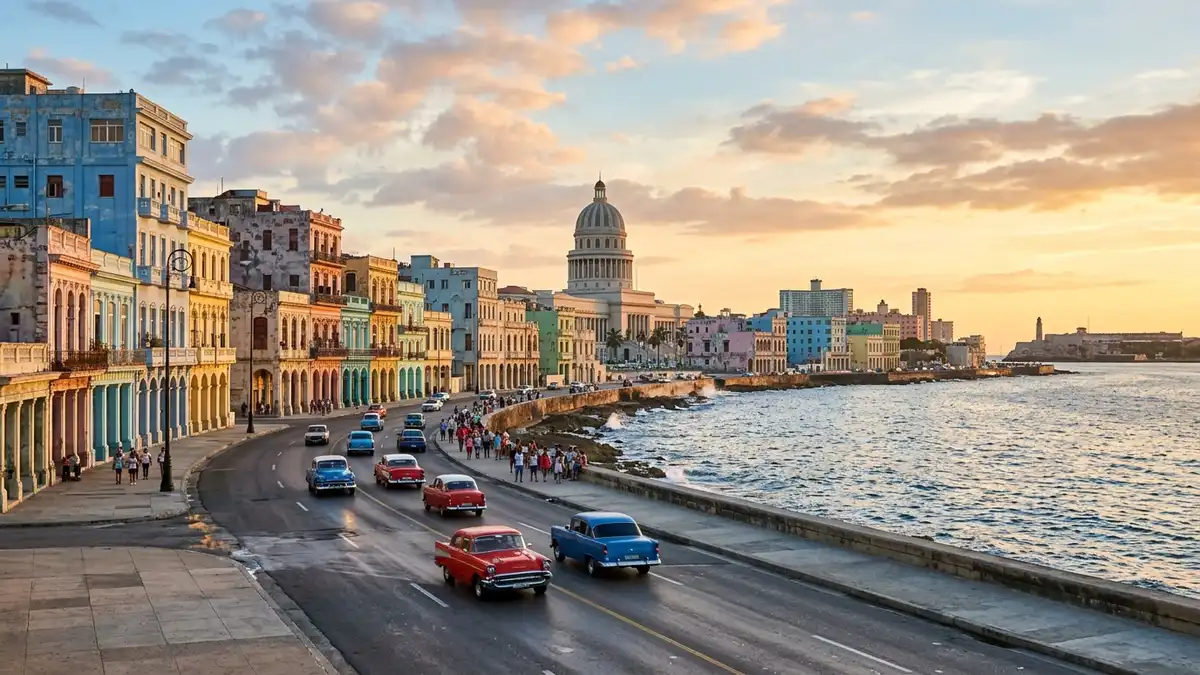
Havana itself is genuinely unlike anywhere else on earth. The Malecón seafront promenade, the crumbling grandeur of Habana Vieja's colonial streets, the pastel Art Deco facades, the vintage American cars rolling past like props from a film set — none of it feels staged, because none of it is. This is simply how the city exists. Salsa spills out of doorways at all hours, and the warmth of Cubans toward visitors is something most travelers remark on long after they've returned home.
On arrival at José Martí International Airport, taxis are the most straightforward way into the city centre. Agree on a fare before you get in — this is standard practice and avoids any confusion. It's also worth knowing that Cuba operates a cash economy for tourists in practical terms, so arrive with euros or another hard currency you can exchange, and carry enough cash to cover your first day or two comfortably before you get your bearings.
One genuinely useful tip: staying in a *casa particular* — a licensed private homestay — rather than a hotel gives you a far richer experience of daily Cuban life, often at a lower cost, and your hosts will typically point you toward the kind of local spots no guidebook has caught up with yet.