


Route Briefing: Honolulu to Cape Town
Few routes on the planet ask as much of a traveler as Honolulu to Cape Town — roughly 26 and a half hours in the air with two stops — but few routes reward you quite so generously at the other end. You're trading one of the world's most beloved island cities for another, and the Mother City at the tip of Africa has a way of making even the longest journey feel completely worth it the moment Table Mountain comes into view.
Most itineraries route you through a Middle Eastern hub, typically Dubai or Doha, with Emirates and Qatar Airways both offering strong connections and consistently competitive fares. South African Airways is another option worth checking. That Middle Eastern layover isn't just a logistical necessity — it's a genuine chance to stretch your legs in some of the world's most impressive airport terminals. If you're targeting a good deal, aim for under $1,400 roundtrip. Standard pricing on this route runs $1,800 to $2,500 or more, so the savings are real. Book four to six months ahead — this is a long-haul route with limited seat availability, and the best fares disappear early.
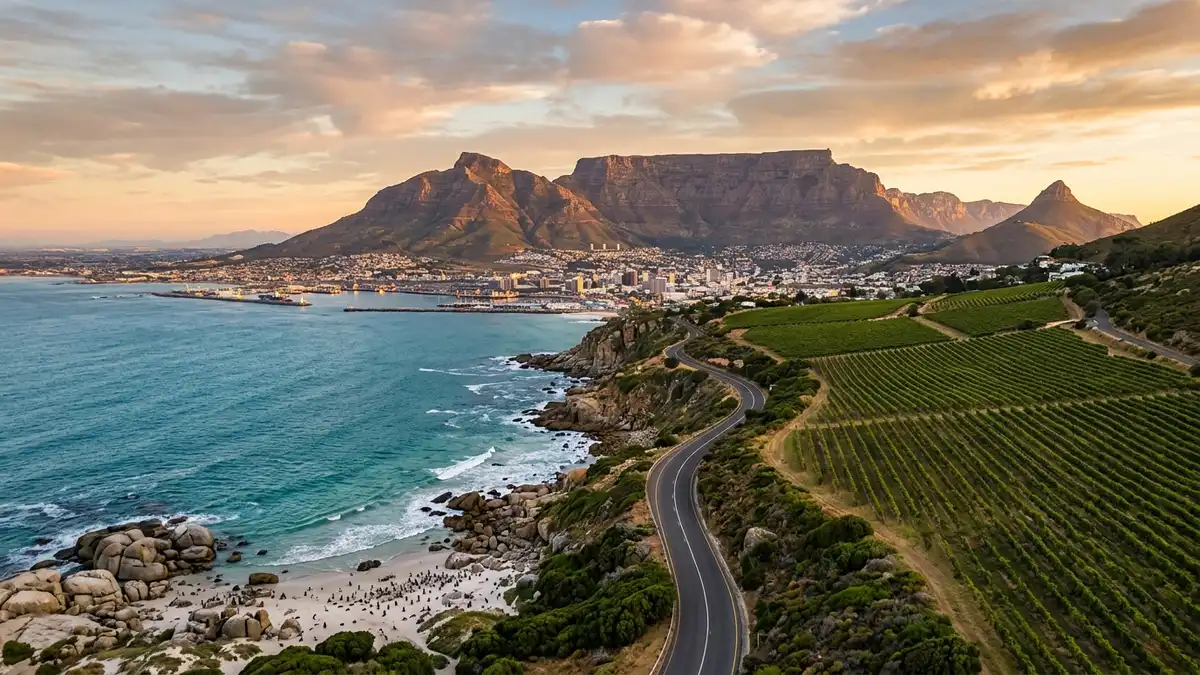
Cape Town itself is one of those rare destinations that delivers on every front. Table Mountain is the obvious starting point, and the aerial cableway up to the flat-topped summit gives you views across the Cape Peninsula that genuinely stop you mid-sentence. The Winelands region, anchored by towns like Stellenbosch and Franschhoek, sits just a short drive from the city and produces world-class Chenin Blanc and Pinotage in a setting that feels almost impossibly scenic. Down at Boulders Beach near Simon's Town, a thriving colony of African penguins waddles around with complete indifference to tourists — one of the more surreal and joyful wildlife encounters you'll find anywhere.
The city's food scene draws heavily from its multicultural heritage, with Cape Malay cuisine — fragrant, spiced, and deeply rooted in the Bo-Kaap neighborhood — being something you absolutely shouldn't leave without trying. The Bo-Kaap itself, with its brightly painted houses climbing the hillside, is one of the most photographed streets on the continent for good reason.
Timing matters here. Cape Town's peak season runs November through January, when the Southern Hemisphere summer brings warm, dry weather and the city buzzes with both locals and international visitors. If you want good weather without the peak crowds and prices, shoulder months like October or February are worth considering.
From Cape Town International Airport, metered taxis and ride-share apps offer reliable transfers into the city center. The drive is straightforward and gives you your first proper look at the mountain on the horizon — a preview of everything waiting for you.