


Route Briefing: Honolulu to Lagos
Few routes on the planet feel quite as epic as hopping from the middle of the Pacific Ocean all the way to West Africa's beating heart. Honolulu to Lagos is not a casual weekend trip — with 26-plus hours of travel time and at least two stops, this is a journey that demands intention. But for travelers willing to commit, Lagos delivers an energy unlike anywhere else on earth, a city of relentless ambition, creativity, and warmth that rewards the curious and the bold.
Ethiopian Airlines routing through Addis Ababa is consistently one of the strongest options on this corridor, both for competitive pricing and solid connections into Lagos. British Airways and Delta can also work well, typically funneling through European hubs like London. Fares under $1,200 roundtrip represent genuinely good value for this distance — standard pricing climbs to $1,800 or well beyond. Given how limited the routing options are, booking three to six months ahead is not just a tip, it's essentially a requirement. Waiting until the last minute on a route like this rarely ends well for your wallet.
Timing matters too. December through January and July through August are peak travel periods, driven by the Nigerian diaspora returning home for holidays and summer visits. If you want lower fares and a slightly calmer arrival experience, shoulder months like March, April, or October can be your friend. Lagos itself is tropical year-round, hot and humid, so there's no bad weather season to avoid in the traditional sense — just pack light, breathable clothing regardless of when you go.
Once you land at Murtala Muhammed International Airport, be prepared for a lively arrival experience. The airport sits on the mainland, and getting into the city proper — particularly the island neighborhoods of Victoria Island or Lekki — can involve significant traffic. Pre-arranging a pickup with your accommodation or using a trusted ride service is strongly advisable rather than navigating the chaos of the arrivals area unprepared.
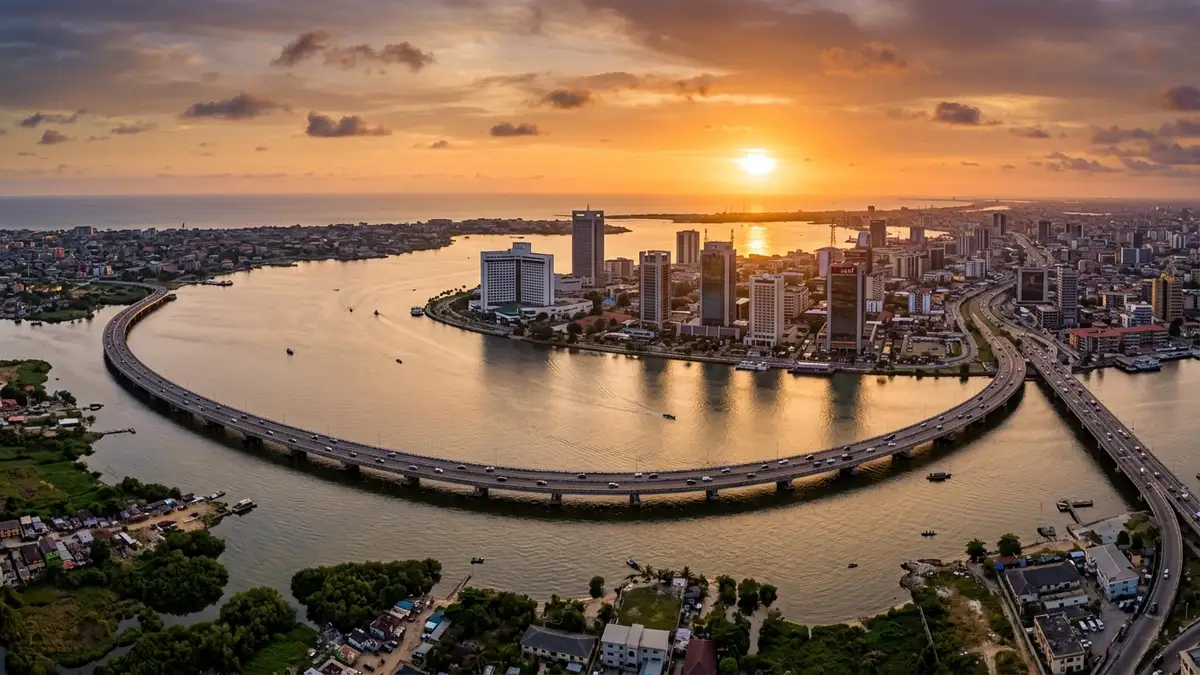
Lagos itself is a sensory overload in the best possible way. The Afrobeats music scene here isn't just a cultural export — it's a lived, daily experience you'll hear spilling out of shops, restaurants, and passing cars. The Lagos Lagoon frames much of the city's geography, and the contrast between the buzzing commercial districts and the waterfront gives the city a surprisingly layered feel. Nigerian cuisine — jollof rice, suya, fresh seafood — is reason enough to make the trip. Come with an open schedule, a flexible mindset, and genuine curiosity, and Lagos will give you stories you'll be telling for years.