


Route Briefing: Honolulu to Rome
There are long flights, and then there are flights that feel like a genuine rite of passage — and the journey from Honolulu to Rome is firmly in the second category. You're trading one of the world's great island paradises for one of its greatest cities, crossing roughly halfway around the planet in about 17 and a half hours with a stop along the way. Most itineraries connect through a major hub like Frankfurt, Chicago, or New York, and that's actually worth leaning into rather than fighting — Frankfurt connections in particular tend to surface some of the more competitive fares on this route, especially with Lufthansa. American Airlines and United are also solid options depending on your preferred routing.
On pricing, anything under $900 roundtrip is genuinely a strong deal for this distance. Standard fares typically run $1,200 to $1,600 or more, so if you see something in the $700s or $800s, don't hesitate. Book three to six months ahead if you're targeting summer travel — June through August is peak season, and Rome in July is absolutely packed with visitors who had the same excellent idea you did.
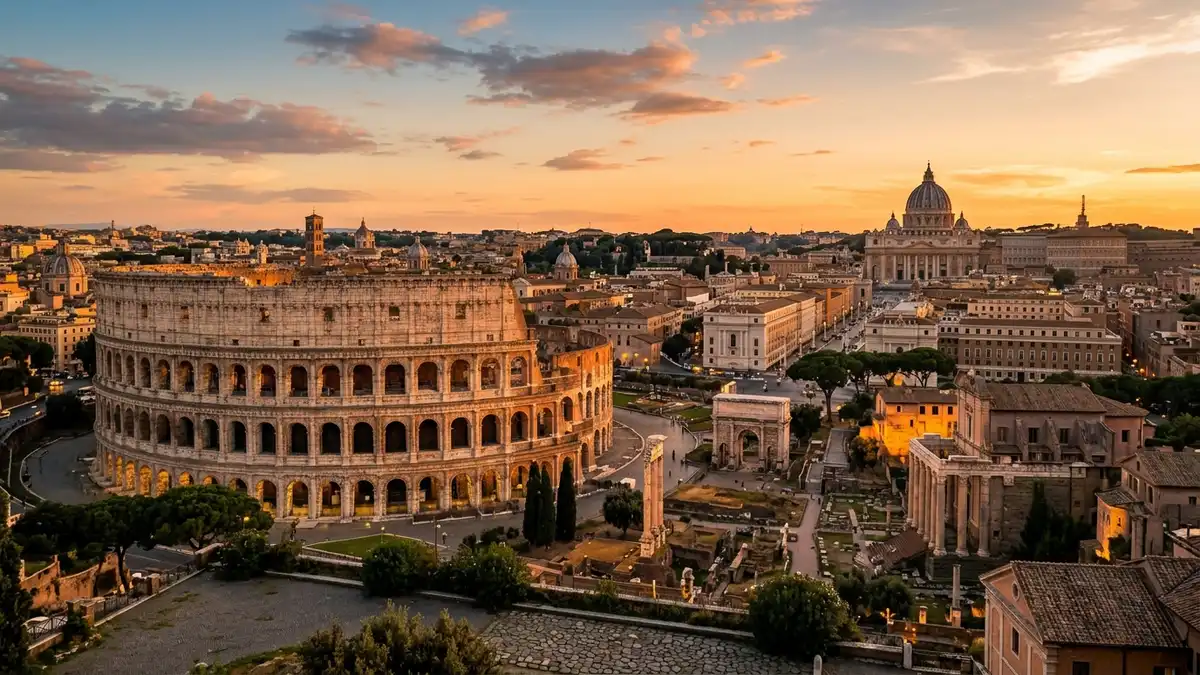
Rome rewards the traveler who slows down. Yes, you'll want to see the Colosseum, the Vatican Museums, the Sistine Chapel, and toss a coin into the Trevi Fountain — these are iconic for good reason, and they genuinely deliver. But the city's real magic lives in the quieter moments: a morning espresso at a neighborhood bar, wandering through Trastevere in the early evening, discovering a piazza that isn't on anyone's top-ten list. Roman cuisine is deeply regional and deeply satisfying — cacio e pepe, carbonara, supplì — and gelato here is a serious craft, not an afterthought.
From Rome's Fiumicino Airport, the Leonardo Express train runs directly to Roma Termini, the city's central rail hub, making it one of the more straightforward airport-to-city connections in Europe. It's fast, reliable, and saves you the stress of navigating traffic after a long-haul flight.
If you have flexibility on timing, consider shoulder season — April through May or September through October. The weather is still lovely, the crowds thin out considerably, and you'll find it far easier to actually stand in front of the Pantheon without feeling like you're at a stadium concert. That shift in timing alone can transform the experience from exhausting to genuinely enchanting.