


Route Briefing: Miami to Cartagena
Just three and a half hours from Miami and you're stepping into one of the most photogenic cities in the Western Hemisphere — that's the quiet magic of this route. No red-eye marathons, no brutal layovers. Avianca, American Airlines, and Copa Airlines all service this corridor year-round, which keeps competition healthy and fares honest. If you're flexible and book four to eight weeks out, you can realistically land a roundtrip under $350. Standard fares creep above $550, so that advance planning genuinely pays off. Steer well clear of Christmas and New Year's — prices spike sharply and the city fills with Colombian vacationers who know exactly how good their own coastline is.
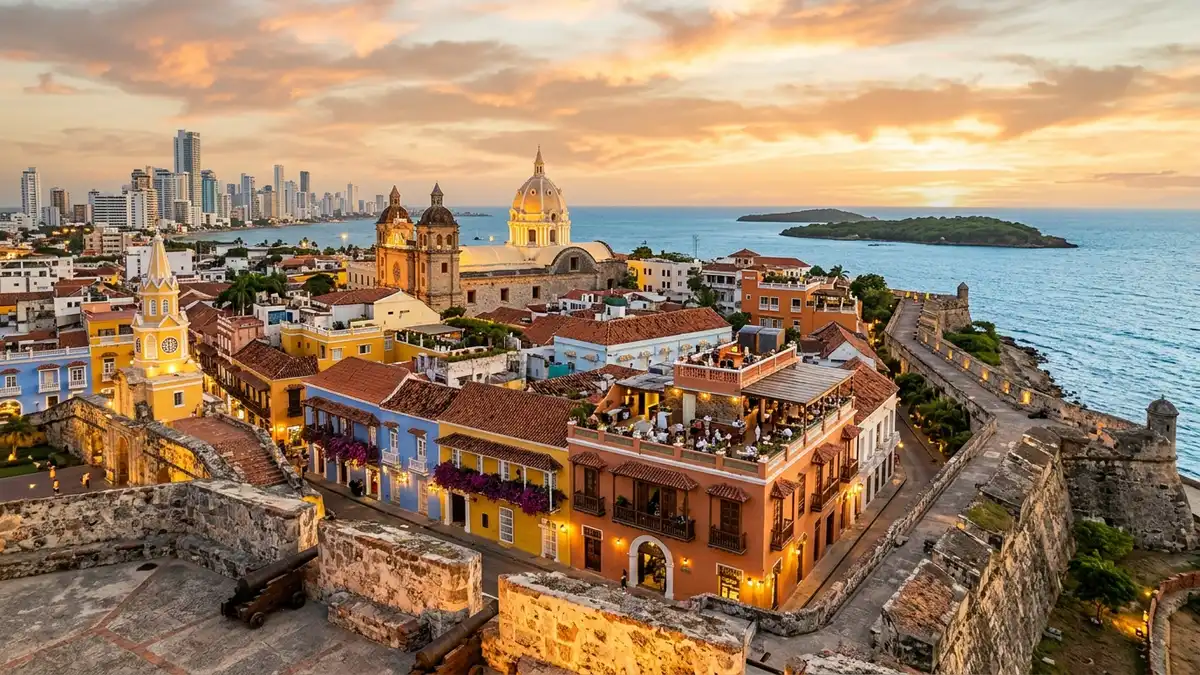
Cartagena earns every superlative thrown at it. The walled Old City, a UNESCO World Heritage Site, is a labyrinth of cobblestone streets lined with bougainvillea-draped colonial mansions painted in ochre, coral, and turquoise. Walking those walls at sunset, with the Caribbean glittering below and the city glowing behind you, is one of those travel moments that genuinely stops you mid-stride. The atmosphere is festive and unhurried at the same time — rooftop bars hum with salsa, street vendors sell fresh fruit and arepas, and the heat wraps around everything like a warm embrace.
Beyond the city walls, the Rosario Islands sit just offshore and offer some of the most accessible Caribbean snorkeling and beach-hopping in the region. Boat trips out there are easy to arrange and well worth a day of your trip. Back in the city, the Getsemaní neighborhood has evolved into a vibrant, street-art-covered district that gives you a grittier, more local counterpoint to the polished colonial center — don't skip it.
From Cartagena's Rafael Núñez International Airport, the city center is genuinely close, making arrival refreshingly painless compared to many Caribbean destinations. Taxis are readily available outside the terminal, and the ride to the Old City is short.
Timing-wise, December through January and July are peak season — beautiful weather but busier crowds and higher prices. The shoulder months either side of those windows offer a sweet spot: fewer tourists, lower costs, and the city still very much alive. The Caribbean climate means warmth is essentially guaranteed year-round, though the rainy season brings afternoon showers that typically pass quickly.
The one tip worth burning into your memory: negotiate and agree on taxi fares before you get in the car, and carry small bills in Colombian pesos for street food and markets. The vendors selling fresh ceviche and tropical fruit along the waterfront are not to be missed, and cash makes everything smoother.