


Route Briefing: New York to Cartagena
Five and a half hours from New York and you're stepping into one of the most photogenic cities in the Western Hemisphere — that's the quiet magic of the Cartagena route. For a fare under $350 roundtrip, which is genuinely achievable if you time it right, this is one of the most rewarding value plays in Caribbean and South American travel.
Most flights connect through Bogotá or Panama City, with Avianca, Copa Airlines, and American Airlines covering the bulk of the route. Copa's Panama City hub and Avianca's Bogotá connections tend to produce the most competitive fares, so it's worth comparing both when you search. Book six to ten weeks out and you'll be in the sweet spot — wait too long and prices climb fast, especially heading into peak season.
Speaking of timing: December through January and June through July are when Cartagena buzzes with energy, but they're also when fares and hotel prices spike. The shoulder months — think late April or October — offer a quieter, more affordable version of the city, though you should expect some rain during the wetter periods.
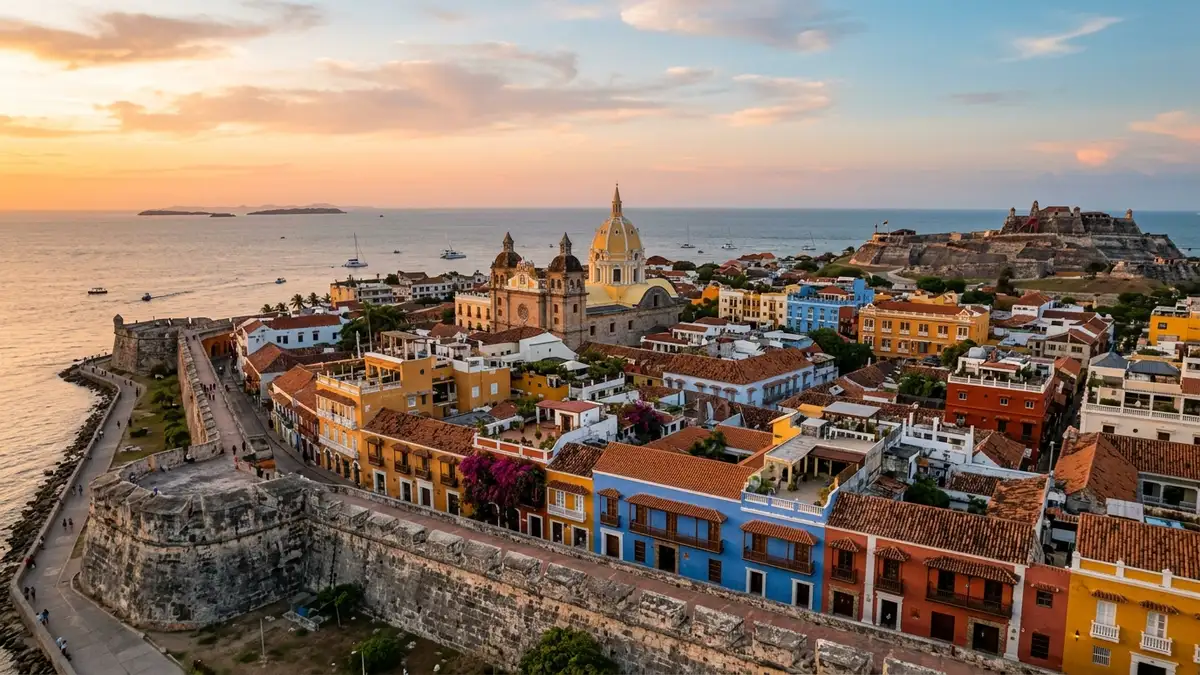
Cartagena's old walled city, the Ciudad Amurallada, is the kind of place that makes you forget your phone exists. The colonial architecture is extraordinary — candy-colored buildings draped in bougainvillea, cobblestone streets that seem designed specifically to slow you down, and rooftop bars where the Caribbean breeze makes a cold drink feel like a genuine luxury. The city walls themselves, built by the Spanish centuries ago, are best walked at sunset when the light turns everything golden.
Beyond the city, the Rosario Islands offer some of the clearest water in the region, easily reachable by boat from the city's docks. It's a half-day trip that feels like a completely different world.
From Rafael Núñez International Airport, the city center is close — taxis are the standard and most practical option for getting to your accommodation. Agree on a fare before you get in, as metered rides aren't universal.
The one tip that genuinely changes the experience: resist the urge to stay in the walled city exclusively. The Getsemaní neighborhood just outside the walls has transformed into one of the most vibrant, authentic, and affordable parts of the city, with street art, local restaurants, and a creative energy that the more polished tourist zones can't quite replicate. It's where Cartagena actually lives — and it's worth every minute.