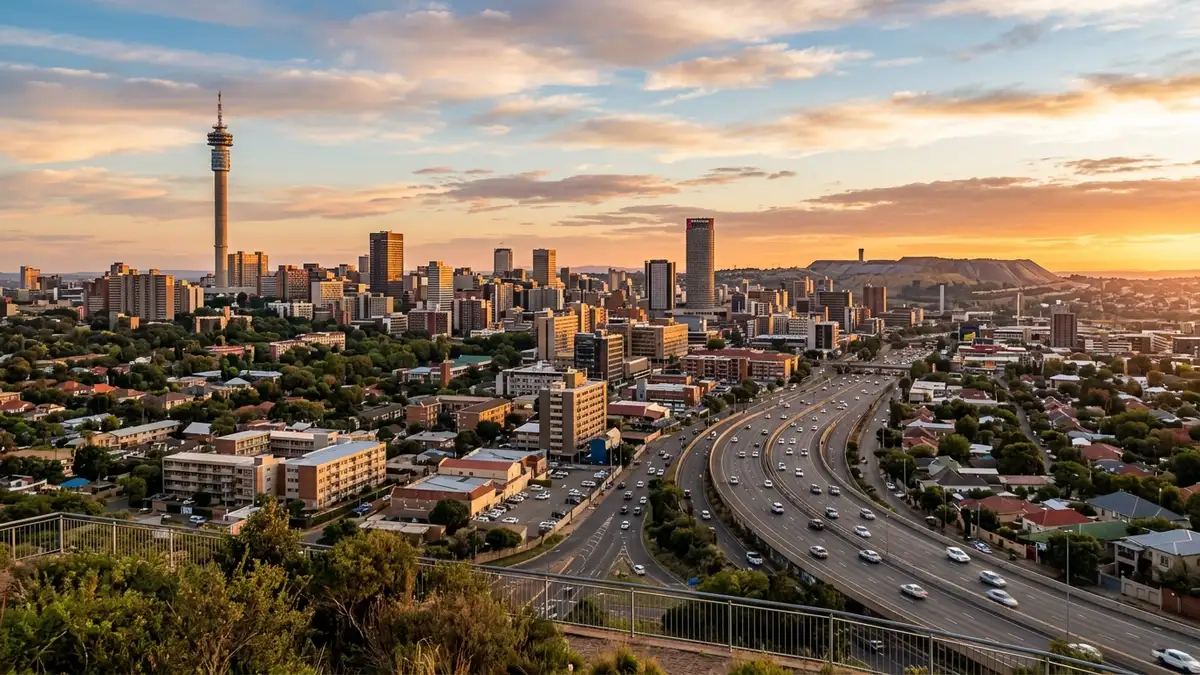



Route Briefing: New York to Johannesburg
Few long-haul routes reward the effort quite like New York to Johannesburg. Yes, you're looking at around sixteen and a half hours in the air with a connection, but what waits on the other end is one of Africa's most electrifying cities — a place that has reinvented itself without forgetting its past, and where the energy hits you the moment you land.
South African Airways, Delta, and Ethiopian Airlines all serve this route, and your connection point matters more than you might think. Routing through Atlanta with Delta or through Addis Ababa on Ethiopian Airlines tends to surface the most competitive fares. A roundtrip under $900 is genuinely a great deal here — standard pricing runs $1,200 to $1,800 or more — so when you see something in that sub-$900 range, move quickly. Book three to six months ahead if you can, particularly for the June-to-August window or the December-to-January holiday rush, when both South African winter escapes and festive travel push prices up sharply.
O.R. Tambo International Airport sits northeast of the city center, and the Gautrain rapid rail system connects the airport directly into Sandton and the broader Johannesburg network — it's fast, affordable, and far less stressful than navigating traffic in an unfamiliar city.
Once you're in Johannesburg, the depth of experience available is remarkable. The Apartheid Museum is one of the most thoughtfully constructed historical museums anywhere in the world — give it a full half-day, not a rushed hour. Soweto, the sprawling township southwest of the city, is essential: it's where Nelson Mandela and Desmond Tutu once lived on the same street, and it pulses with food, music, and community life that no amount of reading can prepare you for. The city's arts and dining scenes, particularly in neighborhoods like Maboneng and Melville, have a creative restlessness that surprises first-time visitors who expect something rougher around the edges.
Johannesburg also functions as the ideal launchpad for safari. Kruger National Park is a few hours by road or a short domestic flight away, which means you can pair urban culture with genuine wilderness on a single trip without backtracking.
Timing-wise, the Southern Hemisphere winter — June through August — brings dry, mild, and sunny weather to Johannesburg, and it's peak safari season in Kruger when animals gather around water sources. If budget is the priority over weather, shoulder months like April, May, or September often offer better fares with still-pleasant conditions.
The tip worth remembering: build at least one full day into your itinerary before any safari leg. Johannesburg deserves more than a transit stop, and arriving rested and curious rather than rushing straight onward is how you actually feel the city rather than just pass through it.