


Route Briefing: New York to Marrakech
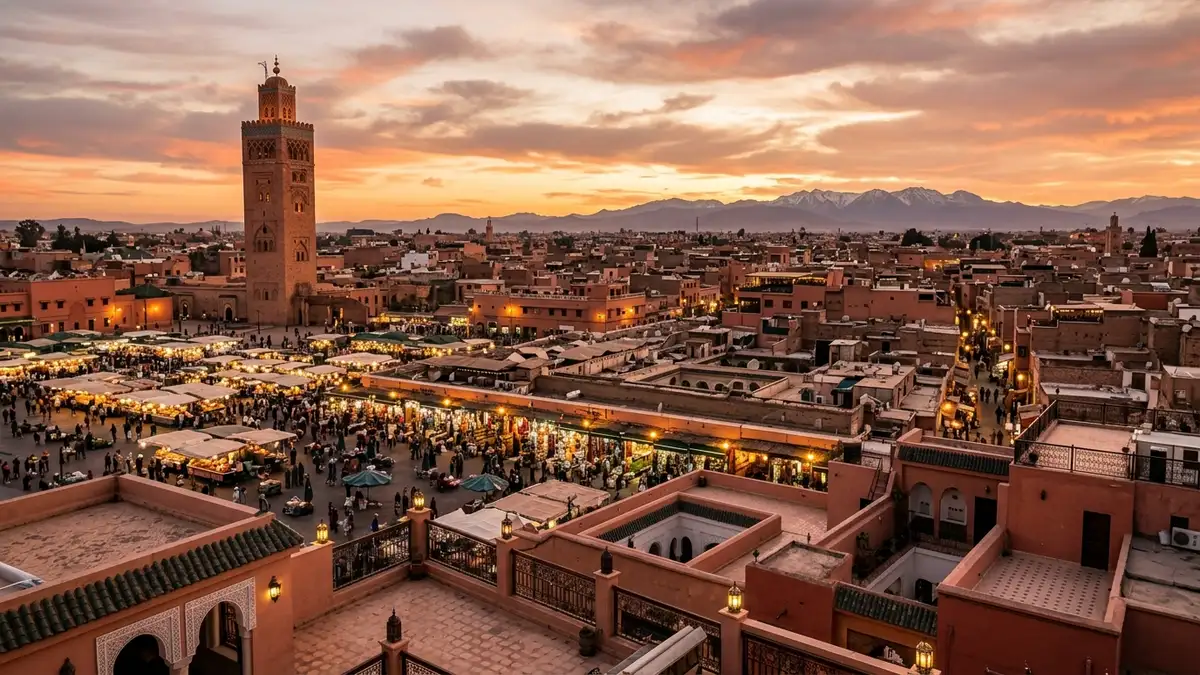
Few cities on earth deliver the kind of sensory arrival that Marrakech does. You step off the plane and within an hour you can be standing in Jemaa el-Fna, one of the world's great public squares, watching snake charmers, storytellers, and food vendors operate exactly as they have for centuries. For New Yorkers, that kind of complete cultural immersion — without crossing into a different hemisphere — is genuinely rare, and it makes this route one of the more underrated long-haul options flying out of the tri-state area.
The journey runs around ten and a half hours with one stop, which is entirely manageable for what awaits. Royal Air Maroc routing through Casablanca is a natural choice and often the most affordable, while Iberia through Madrid and Air France through Paris are reliable European alternatives that frequently offer competitive fares. If you can snag a roundtrip under $600, you're doing well — standard pricing tends to sit above $900, so booking two to four months ahead gives you the best shot at the lower end. Flexibility on your European connection can also open up better deals, so it's worth comparing the Casablanca, Madrid, and Paris routing options before committing.
Timing matters here. Peak season runs June through August and again in December through January, when prices climb and the medina fills with visitors. The shoulder months — particularly spring and early autumn — offer warm, pleasant weather and a slightly more relaxed atmosphere in the souks, which is worth considering if your schedule allows it. Summer temperatures in Marrakech can be genuinely intense, so if you're heat-sensitive, spring is your sweet spot.
From Marrakech Menara Airport, the city center is only a few kilometers away, making taxi transfers quick and straightforward. Agree on a fare before you get in, or look for metered options.
Once you're in the medina, the real experience begins. The labyrinthine souks reward slow wandering — leather goods, spices, ceramics, and textiles fill narrow alleyways that seem to have no logical end. The Bahia Palace and the Saadian Tombs offer genuine historical depth, while the Majorelle Garden provides a vivid, tranquil contrast to the medina's organized chaos. Staying in a traditional riad — a courtyard guesthouse tucked behind an unmarked door — is the single best experience-enhancing decision you can make. They range from budget-friendly to genuinely luxurious, and waking up to a tiled courtyard breakfast is the kind of thing that makes a trip memorable long after you're home.