


Route Briefing: New York to Seoul
Fourteen hours from New York to Seoul sounds like a commitment, but the moment you land at Incheon International Airport and step into one of Asia's most electrifying cities, you'll understand exactly why this route fills up fast. Korean Air and Asiana Airlines both operate direct service on this corridor, and when you catch a roundtrip fare under $700, it genuinely feels like one of the better deals in long-haul travel. Standard pricing runs $1,000 to $1,400 or more, so keeping an eye on fares and booking three to six months out is the move that separates the savvy traveler from the one paying full price.
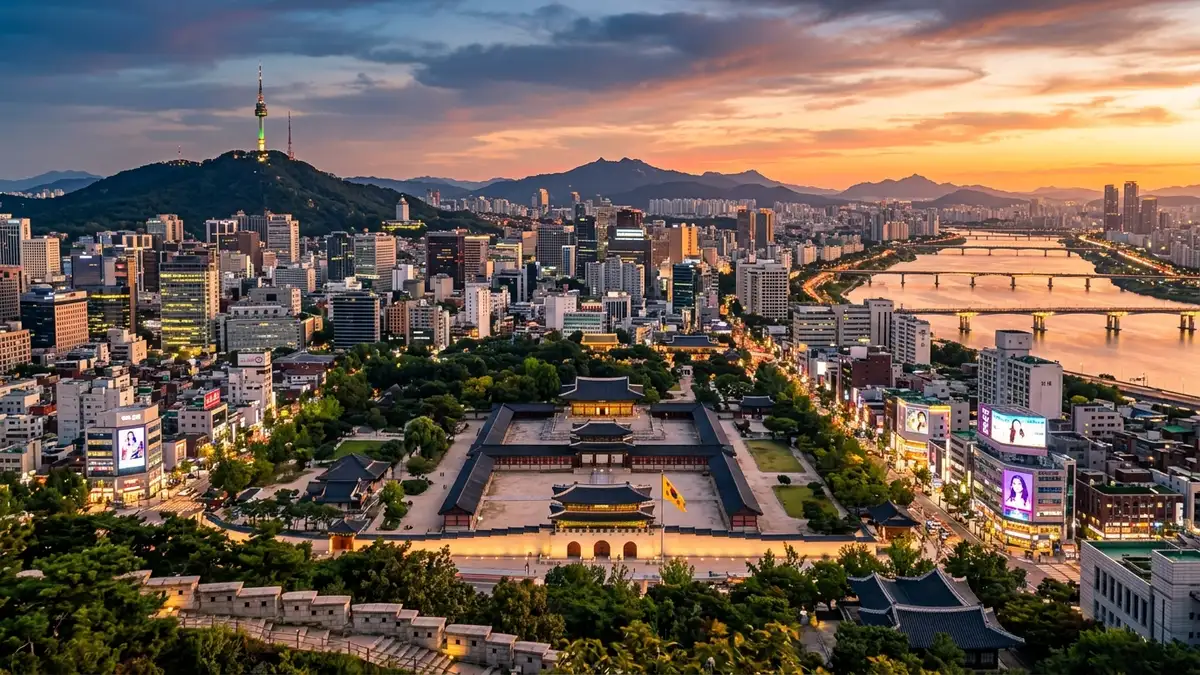
Seoul is a city that operates on multiple frequencies simultaneously. Ancient and modern don't just coexist here — they actively compete for your attention. Gyeongbokgung Palace sits in the heart of the city, its grand gates and stone courtyards a quiet counterweight to the relentless energy of Gangnam just across the Han River. The Bukchon Hanok Village offers a glimpse into traditional Korean architecture, while Hongdae pulses with street performers, independent boutiques, and the kind of late-night energy that makes you forget what time zone you came from.
The food alone justifies the flight. Korean street food culture is extraordinary — tteokbokki, Korean fried chicken, hotteok, and grilled meats at pojangmacha stalls are experiences that no restaurant abroad quite replicates. Seoul's food scene rewards wandering, so resist the urge to over-plan meals and just follow your nose through Myeongdong or Gwangjang Market.
From Incheon, the Airport Railroad Express, known as AREX, connects directly to central Seoul in a comfortable and affordable journey, making the arrival experience far less stressful than many major international airports. It's a genuinely smooth introduction to a city that runs with impressive efficiency.
Timing matters on this route. Summer, from June through August, draws crowds and higher fares, and late December into early January sees another surge. The real insider move is targeting spring — late March through May — when cherry blossoms transform the city and temperatures are mild without the humidity of summer. Autumn, particularly October and November, is equally beautiful with foliage and cooler air. Whatever you do, check the Korean holiday calendar before booking. Chuseok and Lunar New Year trigger significant price spikes and heavy domestic travel, which can complicate your experience on the ground.
One tip worth its weight: consider arriving with some Korean won already exchanged, but know that Incheon has reliable currency exchange facilities and ATMs if you prefer to sort it on arrival. Seoul rewards the prepared traveler who shows up ready to move.