


Route Briefing: Paris to Luxor
Few flight routes from Paris carry quite the same sense of time travel as this one. You board in the City of Light and, roughly ten and a half hours later — with a connection along the way — you step off a plane into a city where pharaohs once ruled and where the ancient world is simply part of everyday life. Luxor isn't a museum in the traditional sense; it's an entire city built on top of one of the greatest concentrations of ancient monuments on earth, and flying there from Paris feels like one of the more quietly extraordinary decisions a traveller can make.
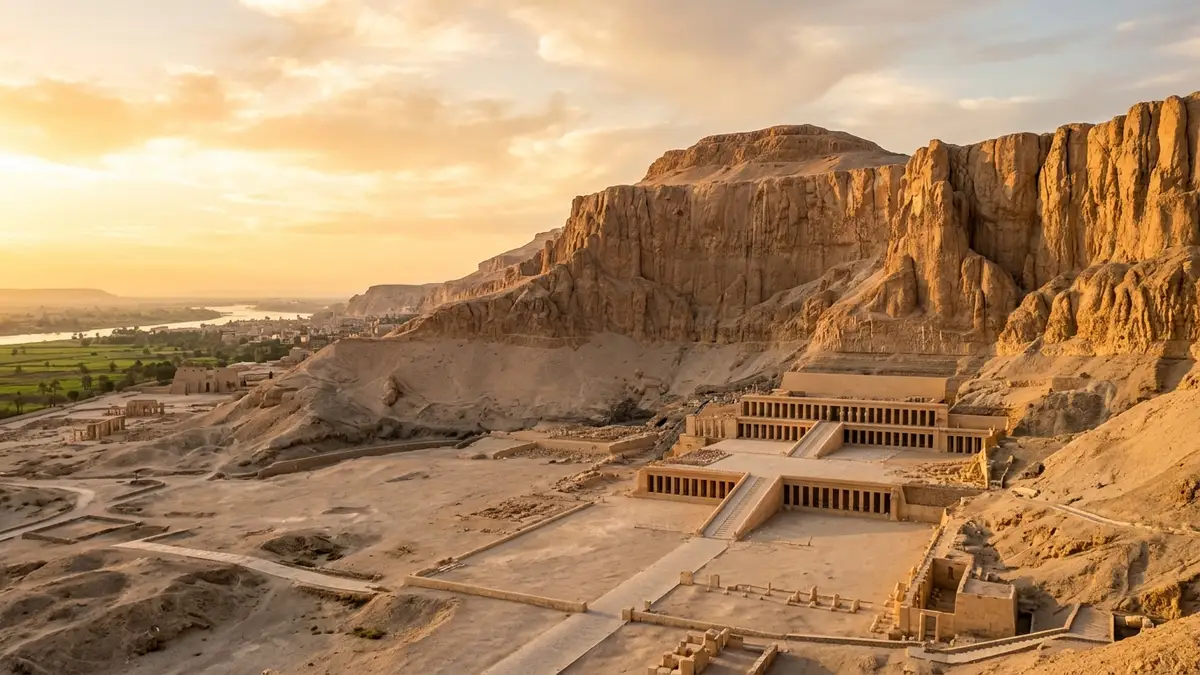
The Valley of the Kings alone justifies the journey. Carved into the limestone cliffs on the west bank of the Nile, this royal burial ground holds the tombs of Tutankhamun, Ramesses II, and dozens of other pharaohs, their painted walls still vivid after three thousand years. Across the river, the Karnak Temple complex is so vast it takes hours to properly explore, and the Avenue of Sphinxes connecting it to Luxor Temple is one of those sights that genuinely stops you in your tracks. The atmosphere in Luxor is warm and unhurried — the Nile moves slowly here, felucca sailboats drift past at dusk, and the pace of life encourages you to linger.
Timing matters enormously on this route. October through March is peak season for good reason — the heat becomes genuinely manageable, and the light in the late afternoon turns the sandstone temples a deep amber gold. Summer temperatures in Luxor can be punishing, so most savvy travellers plan winter trips. Because of this seasonal demand, booking two to four months in advance is strongly advisable, particularly for travel between November and February.
For flights, EgyptAir, Air France, and Lufthansa all serve this route with connections. EgyptAir routing through Cairo tends to offer the most seamless onward connection to Luxor and frequently comes in at the most competitive price point. A roundtrip under six hundred euros or dollars is a genuinely good deal on this route — standard fares can climb well above nine hundred, so flexibility and early booking pay off.
Once you land at Luxor International Airport, the city centre is close — taxis are the standard option for getting into town, and the distances are short enough that transfers are straightforward. The real tip, though, is this: consider hiring a local guide for your first full day on the west bank. The context they provide transforms a collection of impressive ruins into a living, breathing story — and that story is what makes Luxor unforgettable.