


Route Briefing: Sydney to Luxor
There are long-haul flights, and then there's Sydney to Luxor — a journey that deposits you, after roughly 22 hours and two stops, into what is arguably the greatest concentration of ancient human achievement on the planet. The distance is real, but so is the reward.
Emirates, Qatar Airways, and Etihad Airways are your best bets on this route, routing you through Dubai, Doha, or Abu Dhabi respectively. These Gulf hubs are genuinely pleasant places to connect — spacious, well-serviced, and easy to navigate — so a layover here rarely feels like a burden. Aim to book three to six months ahead, and if you can find a roundtrip fare under $1,200, grab it without hesitation. Standard pricing sits above $1,600, so that gap is meaningful. Flying mid-week rather than on weekends can shave another ten to fifteen percent off the ticket price — a saving worth rearranging your schedule for.
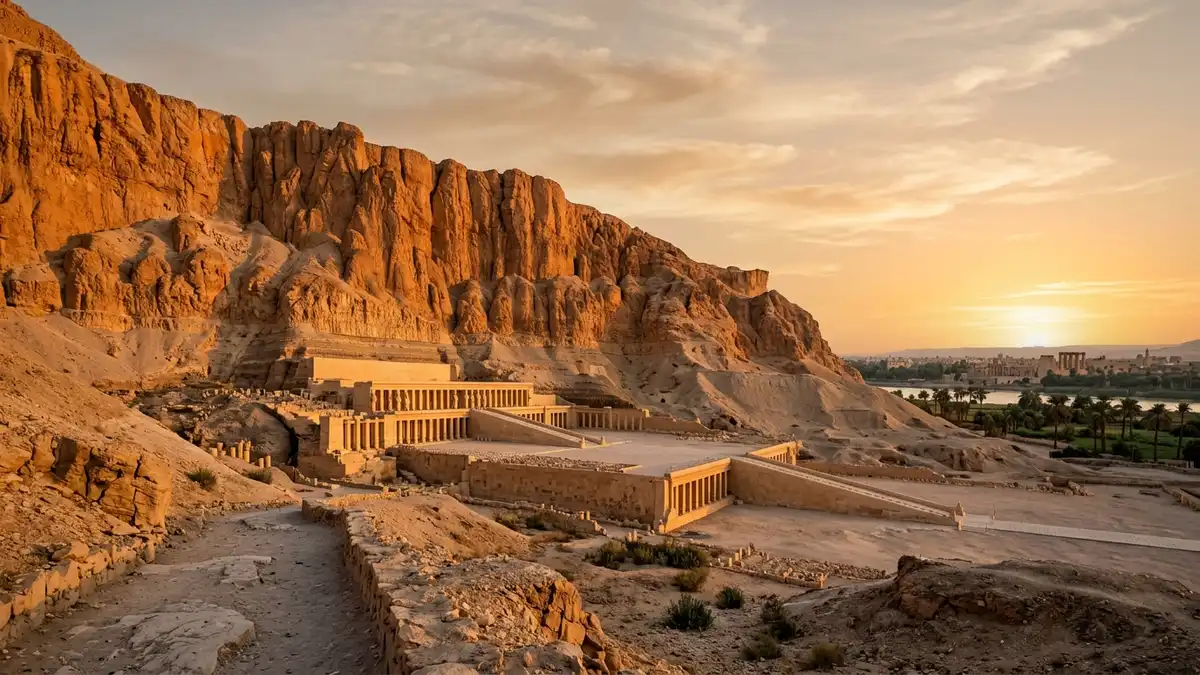
Luxor itself is almost impossible to oversell. This is ancient Thebes, the beating heart of pharaonic Egypt, and the scale of what survives here is genuinely humbling. The Valley of the Kings sits on the west bank of the Nile, where generations of pharaohs — including Tutankhamun and Ramesses the Great — were buried in elaborately decorated tombs cut deep into the limestone cliffs. Across the river, the east bank holds Karnak Temple, one of the largest religious complexes ever built, and the elegant Luxor Temple, which glows amber under floodlights after dark. A felucca ride on the Nile at sunset costs very little and delivers an atmosphere that no museum can replicate.
The best time to visit falls between October and February, when temperatures are warm and manageable rather than the punishing heat of the Egyptian summer. This is peak season for good reason — the light is golden, the air is clear, and the sites are at their most comfortable to explore on foot.
From Luxor International Airport, the city centre is a short taxi ride away, and the airport is compact enough that arrivals are generally smooth and stress-free. Once in town, horse-drawn carriages and taxis are the standard way to get around, and negotiating a price before you set off is simply part of the local rhythm.
One genuinely useful tip: hire a licensed local guide for at least your first full day. The tombs and temples are extraordinary on their own, but understanding the mythology, the dynasties, and the symbolism layered into every wall transforms the experience entirely. It's the difference between looking and truly seeing.