


Route Briefing: Toronto to Curaçao
If you've been dreaming of turquoise water and colorful colonial architecture without the chaos of the more heavily touristed Caribbean islands, Curaçao deserves a serious look — and from Toronto, it's more accessible than you might think.
The flight runs around seven and a half hours with one stop, typically connecting through Miami or New York. Those two hubs tend to offer the most competitive fares and the tightest layovers, so when you're searching, filter for those connections first. Air Canada, American Airlines, and United Airlines all service this route, giving you enough options to be strategic. A genuinely good deal lands under $500 roundtrip — not impossible if you book two to four months out. Standard fares creep above $750, so that advance planning window really does matter here.
Curaçao sits outside the hurricane belt, which is one of its best-kept secrets. That means the island is a legitimate year-round destination, though December through April brings the driest, sunniest weather and is considered peak season. If you can travel in the shoulder months — late spring or early fall — you'll find fewer crowds and more room to negotiate on accommodation.
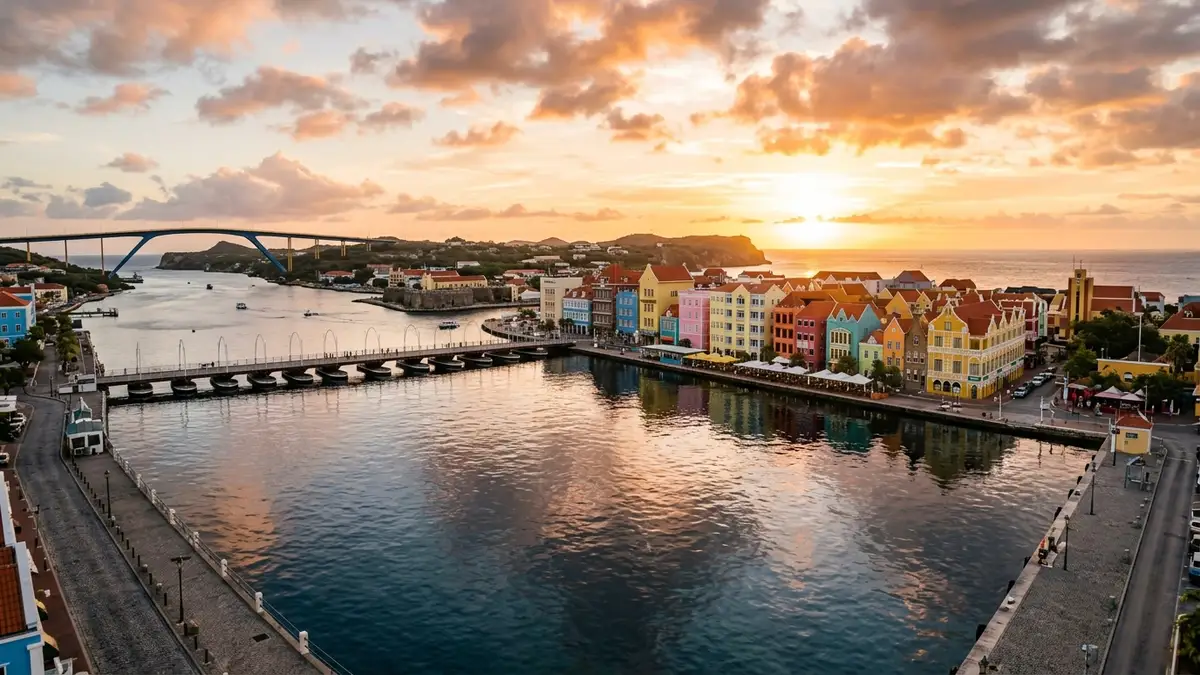
Willemstad, the capital, is genuinely one of the most photogenic cities in the Caribbean. The Dutch colonial waterfront along the Sint Annabaai is a UNESCO World Heritage Site, and the pastel facades reflecting off the water are every bit as striking in person as they look in photographs. The floating Queen Emma Bridge, which swings open to let ships pass, is a small but memorable piece of living infrastructure that locals and visitors cross daily on foot.
Beyond the city, Curaçao rewards the curious. The diving here is world-class — the island is ringed by coral reefs that drop off dramatically, with clear visibility and an impressive variety of marine life. Even if you're not a certified diver, snorkeling directly off many beaches puts you in contact with reef ecosystems that feel untouched. The island also has a rugged, desert-like interior that contrasts beautifully with the coastline, and the local cuisine reflects a fascinating blend of Dutch, African, and Latin American influences.
One practical tip worth knowing: Curaçao uses the US dollar widely alongside its local currency, which makes day-to-day transactions straightforward for Canadian travelers who stop at an ATM on arrival. The island is small enough that renting a car gives you genuine freedom to find the quieter beaches on the western and northern coasts that most package tourists never reach — and that freedom is where Curaçao really opens up.