


Route Briefing: Toronto to Hiroshima
Few destinations in the world carry the emotional weight and quiet beauty of Hiroshima, and making the journey from Toronto — roughly 18 and a half hours with one or two connections — is absolutely worth every minute in the air. This isn't a city you visit casually. It stays with you.
Most itineraries route through Tokyo's Narita or Haneda airports, or occasionally through Osaka's Kansai International, before the final hop into Hiroshima Airport. Air Canada, Japan Airlines, and ANA are your strongest options on this route, and if you're flexible with your connection point, it's worth comparing fares through each hub — Tokyo connections in particular can unlock better codeshare pricing that brings the total cost down meaningfully. A genuinely good deal lands under $900 roundtrip; standard fares typically run between $1,300 and $1,800 or more, so booking three to five months ahead gives you the best shot at the lower end.
Once you land, the city center is accessible by bus from Hiroshima Airport, a straightforward and affordable connection that drops you near the main train station. From there, the city's tram network is one of the most charming and practical ways to get around — it's easy to navigate even without Japanese language skills.
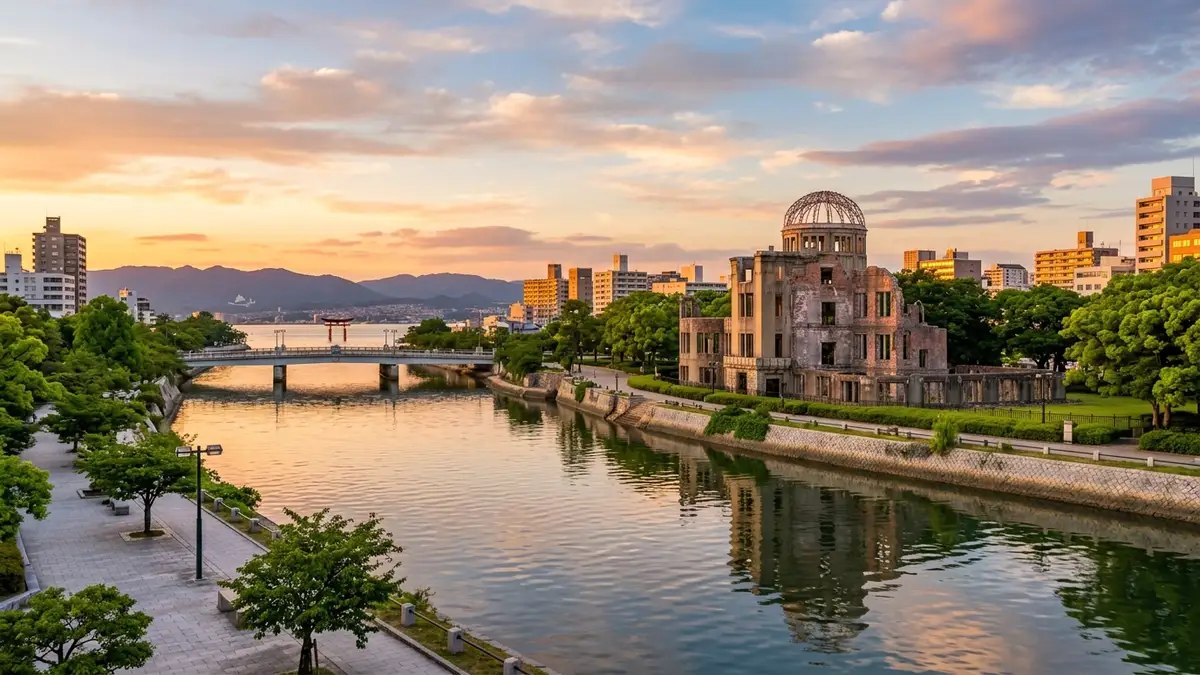
Hiroshima itself is a city that has rebuilt itself into something genuinely extraordinary. The Peace Memorial Park and Museum sit at the heart of the experience, and no matter how much you've read about the history, standing there in person is something else entirely. The Atomic Bomb Dome, preserved as it stood after 1945, is one of the most powerful UNESCO World Heritage Sites anywhere in the world. But Hiroshima isn't defined solely by its past — it's a vibrant, forward-looking city with a warm local culture and exceptional food.
Speaking of food: okonomiyaki is the dish you need to understand before you arrive. The Hiroshima style layers ingredients rather than mixing them, producing something richer and more complex than versions you'll find elsewhere in Japan. The city has entire buildings dedicated to okonomiyaki restaurants, and eating your way through a few variations is a legitimate evening plan.
A short ferry ride from the city takes you to Miyajima Island, home to the iconic torii gate that appears to float on the water at high tide. It's one of Japan's most photographed scenes, and it earns every shot.
Timing matters here. Late March to early April brings cherry blossom season, which is spectacular but draws significant crowds and higher fares. July and August are peak summer travel months. For a more relaxed experience with comfortable temperatures, the shoulder seasons of May or October offer a quieter, often more affordable visit. Book early either way — Hiroshima's secondary airport status means seat availability on connecting flights can tighten faster than you'd expect.