


Route Briefing: Washington D.C. to Luxor
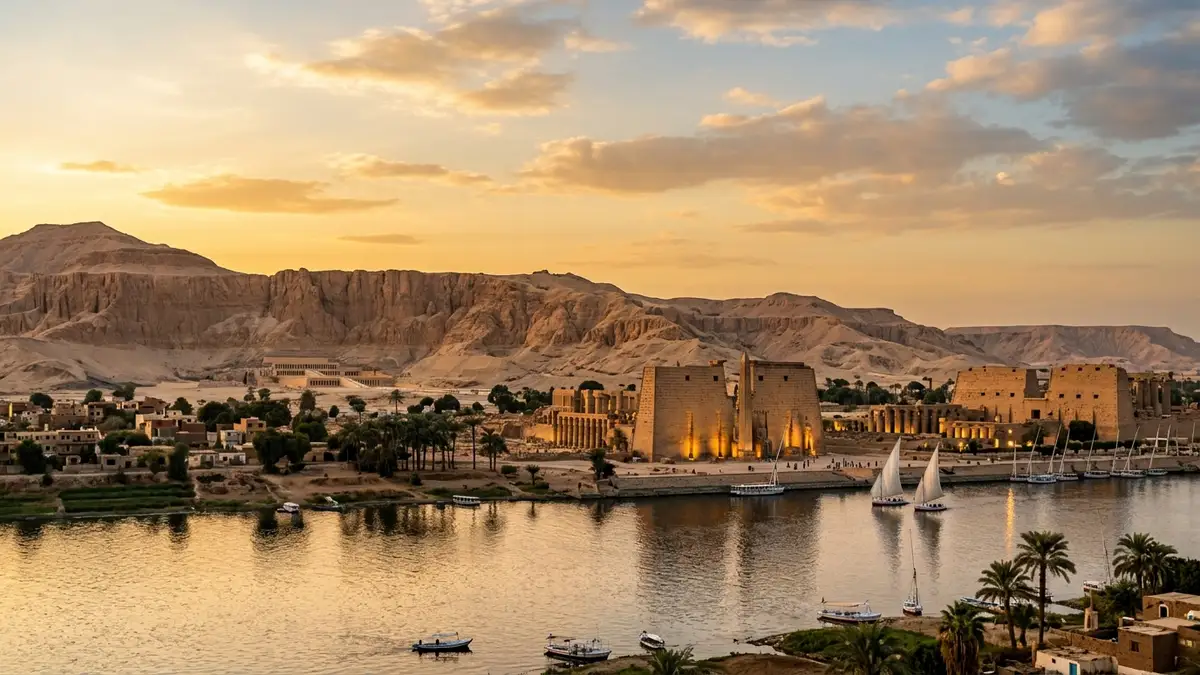
Few routes in the world carry the weight of this one. You're trading the monuments of a modern capital for the monuments of one of the oldest civilizations on earth — and Luxor delivers that contrast with breathtaking force. This is the city the ancient Egyptians called Waset, and walking through it today, past colossal statues and temple columns still standing after three thousand years, you'll understand why they considered it the center of the world.
Getting there takes commitment — around 18 and a half hours with two stops — but the journey is genuinely manageable if you plan it right. EgyptAir routing through Cairo tends to offer the most competitive fares, and if you can snag a roundtrip under $900, you're doing well. Standard fares push past $1,300, so booking three to five months out is the move here. Turkish Airlines and Qatar Airways are solid alternatives if you prefer their hubs, and both carriers have strong reputations for long-haul comfort in economy.
Timing matters enormously in Luxor. The peak season runs October through February, when temperatures are warm and pleasant rather than punishing — summers here are genuinely brutal, with heat that makes outdoor exploration difficult and potentially dangerous. If you can travel between November and January, you'll find the weather ideal for spending full days at sites like the Valley of the Kings, Karnak Temple, and the Luxor Temple complex that sits dramatically in the heart of the city itself. The West Bank of the Nile, where the royal tombs are concentrated, deserves at least two full days on its own.
Luxor International Airport sits close to the city, and taxis are readily available at the terminal. Agree on a fare before you get in — this is standard practice throughout Egypt and will save you the awkward negotiation at the end of a long journey. The city is compact enough that once you're settled, most major sites are reachable without much difficulty.
Here's the tip that genuinely transforms the experience: hire a licensed local guide for at least your first full day on the West Bank. The Valley of the Kings contains dozens of tombs, and without context, even the most spectacular painted chambers can blur together. A knowledgeable guide turns hieroglyphs into stories, and stories into something you'll carry home long after the photos fade. It costs relatively little and pays off enormously. Luxor rewards the curious traveler who slows down — this is not a city you rush through.