


Route Briefing: Washington D.C. to Osaka
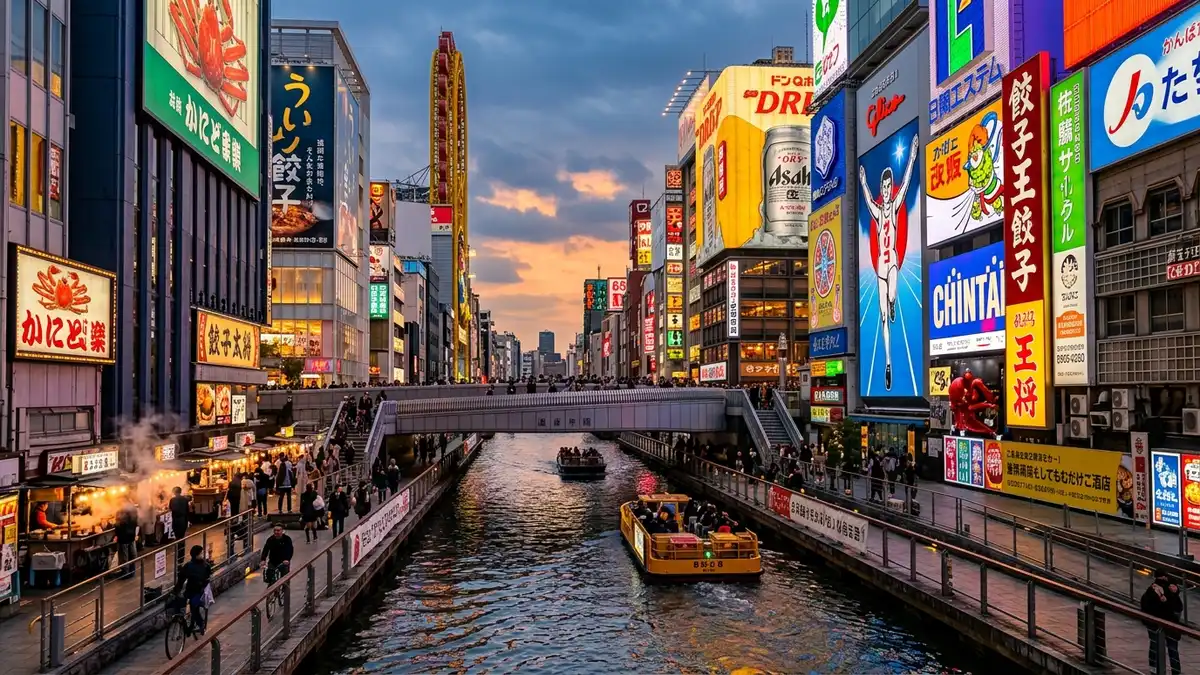
There's a reason seasoned travelers keep coming back to Osaka — it's the kind of city that grabs you by the appetite and never quite lets go. Flying from Washington D.C. to Kansai International Airport is a serious commitment at around 14 and a half hours with a connection, but the moment you step into Dotonbori and smell takoyaki sizzling on an open griddle, every hour in the air feels completely justified.
United Airlines, ANA, and Japan Airlines all serve this route, with connections typically routing through Chicago O'Hare or San Francisco. ANA and JAL are particularly worth considering for long-haul comfort — both carriers consistently rank among the world's best for service, cabin cleanliness, and food quality, which matters enormously when you're crossing the Pacific. A roundtrip under $700 is a genuinely good deal on this route; standard fares climb to $1,000–$1,400 or more, so booking three to five months ahead gives you the best shot at the lower end of that range.
Once you land at KIX, the Haruka Express train connects the airport directly to central Osaka and onward to Kyoto, making it one of the more straightforward airport-to-city transfers in Asia. Skip the taxi queue and get on that train — it's fast, reliable, and dramatically cheaper.
Timing your trip around late March to early April puts you squarely in cherry blossom season, when Osaka Castle Park becomes one of the most beautiful places on earth. The castle itself is worth visiting any time of year — it's a commanding structure with a museum inside and sweeping views of the city from the upper floors. July and August are lively but hot and humid, so pack accordingly if that's your window.
Beyond the famous Dotonbori strip, Osaka rewards wandering. The Shinsekai neighborhood has an old-school, slightly gritty charm that feels distinct from Tokyo's polish, and the covered shopping arcades around Shinsaibashi are perfect for rainy afternoons. Osaka's food culture runs deep — locals take genuine pride in eating well and eating affordably, which means you can have extraordinary meals without spending much at all.
The one tip that consistently makes this trip better: buy an IC card like an ICOCA at the airport on arrival. It works on trains, subways, and buses across the Kansai region, and even at many convenience stores. It removes all the friction from getting around and lets you focus on what Osaka does best — feeding you magnificently and making you feel immediately at home.