


Route Briefing: Washington D.C. to Sydney
Few routes from the American East Coast carry quite the same sense of adventure as the long haul from Washington D.C. to Sydney. You're not just crossing an ocean — you're crossing hemispheres, seasons, and time zones in one sweeping journey. At around 20 hours and 30 minutes with a stop, typically through Los Angeles or Dallas, it's a serious commitment of travel time. But Sydney has a way of making every hour feel completely worth it the moment you clear customs and step into that famously bright southern light.
United Airlines, Qantas, and American Airlines all serve this route, and routing through Los Angeles tends to give you the most flight options and the sharpest fares. A genuinely good deal lands under $1,200 roundtrip — standard pricing runs $1,600 to $2,200 or more, so there's real money to be saved by being strategic. Book four to six months out, especially if you're targeting the Australian summer between November and January, when Sydney is buzzing and the beaches are at their absolute best. That window also overlaps with US holiday travel, which pushes demand and prices up fast.
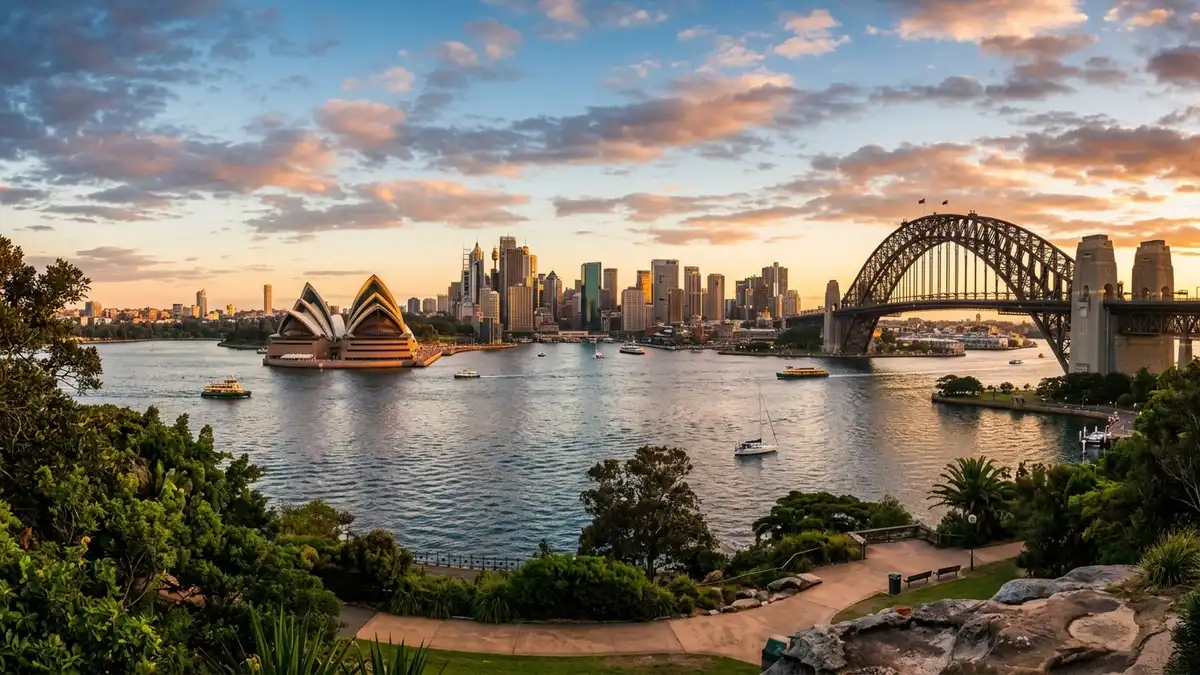
Sydney itself rewards the effort immediately. The harbour is one of those rare places that actually exceeds its reputation — the Opera House and Harbour Bridge together create a skyline that feels almost cinematic in person. Bondi Beach is iconic for good reason, but the coastal walk stretching south from Bondi through Coogee is one of those quietly perfect experiences that locals love and visitors often stumble upon by happy accident. If you have a few extra days, the Blue Mountains to the west offer dramatic sandstone escarpments and eucalyptus forests that feel genuinely ancient and otherworldly.
From Sydney Airport, the city is refreshingly easy to reach. A direct train connects the international terminal to the central business district in under twenty minutes, making it one of the more painless airport arrivals you'll encounter anywhere in the world.
The one tip worth burning into your memory before you book: if you can travel in the Australian shoulder seasons — think February through April or September through October — you'll find noticeably softer prices on both flights and accommodation, smaller crowds at the major attractions, and weather that's still warm and very pleasant. Sydney in autumn or early spring is genuinely lovely, and your wallet will feel the difference. For a journey this long and this rewarding, arriving relaxed and having saved a few hundred dollars is the best possible way to start.