


Route Briefing: Amsterdam to Cusco
Few flight routes carry quite the same sense of pilgrimage as Amsterdam to Cusco. You're trading the flat, canal-laced streets of one of Europe's most refined cities for a high-altitude former empire capital that sits at over 11,000 feet above sea level — a journey that takes roughly 18 and a half hours across two stops, but delivers you somewhere that genuinely feels like another world. KLM, LATAM Airlines, and Avianca are your main carriers on this route, with connections typically routing through Lima or Bogotá. Keeping an eye on those hub cities when you search fares is smart — they tend to unlock the most competitive prices. Anything under $700 roundtrip is a genuine bargain here; standard fares run between $1,000 and $1,400 or more, so booking three to six months ahead is well worth the planning effort given the limited seat availability on this multi-stop route.
Once you land at Alejandro Velasco Astete International Airport, the city centre is close — Cusco is compact enough that taxis from the airport get you into the heart of things quickly and affordably. That said, your first priority shouldn't be sightseeing. It should be rest. Altitude sickness is real and it doesn't discriminate. Give yourself a full day to acclimatise, drink plenty of water, and consider coca tea, which locals swear by and you'll find everywhere. Your body will thank you before you tackle the cobblestone climbs.
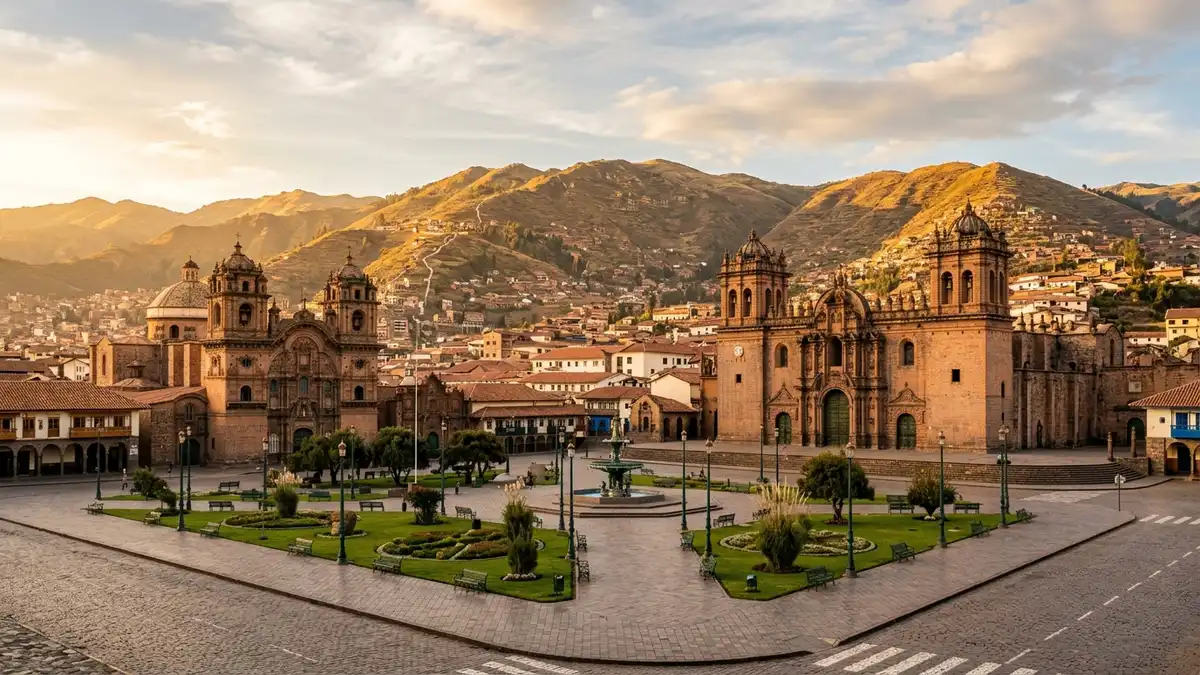
Cusco itself rewards slow exploration. The Plaza de Armas is one of the most beautiful main squares in South America, ringed by colonial architecture built directly on top of Inca stonework — a physical layering of history you can reach out and touch. The nearby Sacsayhuamán fortress offers sweeping views over the city and a masterclass in pre-Columbian engineering. And of course, the Sacred Valley and Machu Picchu are within reach by train, making Cusco the essential base for the region's most iconic experiences.
Timing matters here. June through August is peak season — the skies are clearest and the trekking conditions are best, but crowds and prices both rise accordingly. The shoulder months on either side offer a quieter, often more atmospheric visit, though the rainy season from December through March can affect some outdoor activities.
One tip that genuinely changes the experience: if Machu Picchu is your goal, book your entry tickets well in advance separately from your flights. Visitor numbers are capped and slots sell out, sometimes months ahead during busy periods. Don't let a sold-out citadel be the thing that derails an 18-hour journey.