


Route Briefing: Dallas to Cusco
There are flights, and then there are flights that change you. Dallas to Cusco is firmly in the second category. At roughly thirteen and a half hours with a connection, it's a commitment — but the payoff is arriving in one of the most extraordinary cities on earth, the ancient capital of the Inca Empire, sitting at over eleven thousand feet in the Peruvian Andes. LATAM Airlines, American Airlines, and Copa Airlines all serve this route, with the most common and typically most affordable path routing you through Lima's Jorge Chávez International Airport before the final leg up into the mountains.
On the fare side, anything under six hundred dollars roundtrip is genuinely good value for this route — standard pricing tends to run nine hundred dollars or more. Because Cusco draws visitors from around the world year-round, demand stays consistently high, so booking two to four months ahead is the move if you want the best prices without the stress.
Timing matters here beyond just cost. June through August is peak season, which means reliable dry weather, clear skies over the Sacred Valley, and the best conditions for trekking. The famous Inti Raymi festival in June draws enormous crowds and fills accommodation fast, so plan accordingly. If you prefer fewer tourists and don't mind the occasional afternoon shower, the shoulder months on either side of peak season offer a quieter, often more atmospheric experience.
When you land at Alejandro Velasco Astete International Airport, the city center is close — taxis are readily available outside the terminal for the short ride into town. That said, your first priority after landing shouldn't be sightseeing. It should be rest. Altitude sickness is real at eleven thousand feet, and Cusco locals have long recommended coca tea as a traditional remedy to help your body adjust. Give yourself at least a full day to acclimatize before attempting anything strenuous.
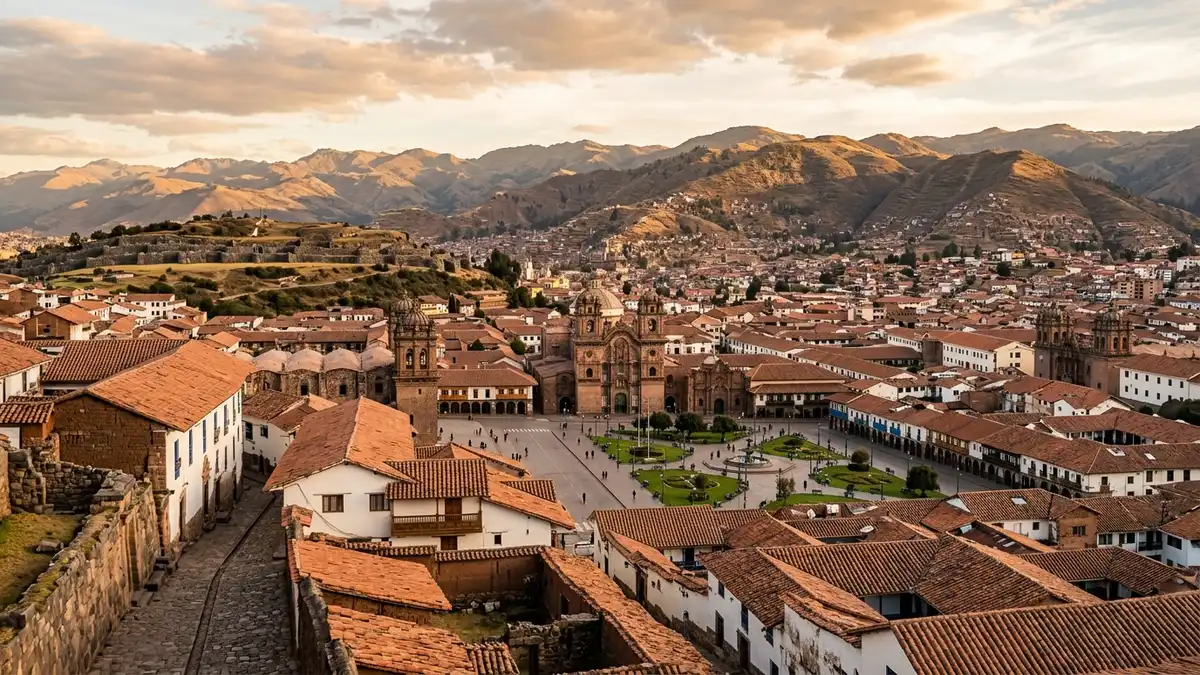
The city itself rewards slow exploration. The Plaza de Armas is one of the most beautiful central squares in South America, ringed by colonial churches built directly on top of Inca stone foundations — a literal layering of civilizations you can reach out and touch. Nearby, the ancient Inca site of Sacsayhuamán offers sweeping views over the city. And of course, Machu Picchu is the crown jewel, accessible by train from the nearby town of Ollantaytambo.
The one tip that will genuinely improve your trip: book your Machu Picchu entry tickets well in advance, separately from your flights. Access is timed and capped, and slots sell out weeks or months ahead during peak season. Don't leave it until you land.