


Route Briefing: Dublin to Accra
Dublin to Accra is one of those routes that rewards the traveller willing to make the journey — roughly eleven and a half hours with a connection, but what waits at the other end makes every minute worthwhile. West Africa's most dynamic capital is a city that gets under your skin fast, blending the energy of its famous markets with a coastline that genuinely surprises first-timers. This isn't a destination you drift through passively; Accra pulls you in.
The route runs year-round, which gives Irish travellers real flexibility, but timing matters if you want the best of both price and experience. December and January mark peak season, when the city buzzes with the Ghanaian diaspora returning home and a festive atmosphere that's infectious. If you'd rather avoid the crowds and the higher fares that come with them, travelling outside that window — particularly in the quieter months either side — can make a meaningful difference to your budget. Roundtrip fares under $700 represent genuinely good value on this route; standard pricing climbs well above $1,000, so hunting for deals pays off. Book two to four months ahead and keep an eye on connections through London Heathrow or Brussels, where Brussels Airlines, British Airways, and Air France tend to offer the most competitive pricing.
Once you land at Kotoka International Airport, you're already inside the city — it sits remarkably close to central Accra, making the transfer straightforward. Taxis are readily available from the arrivals area, and negotiating the fare before you get in is standard practice and expected.
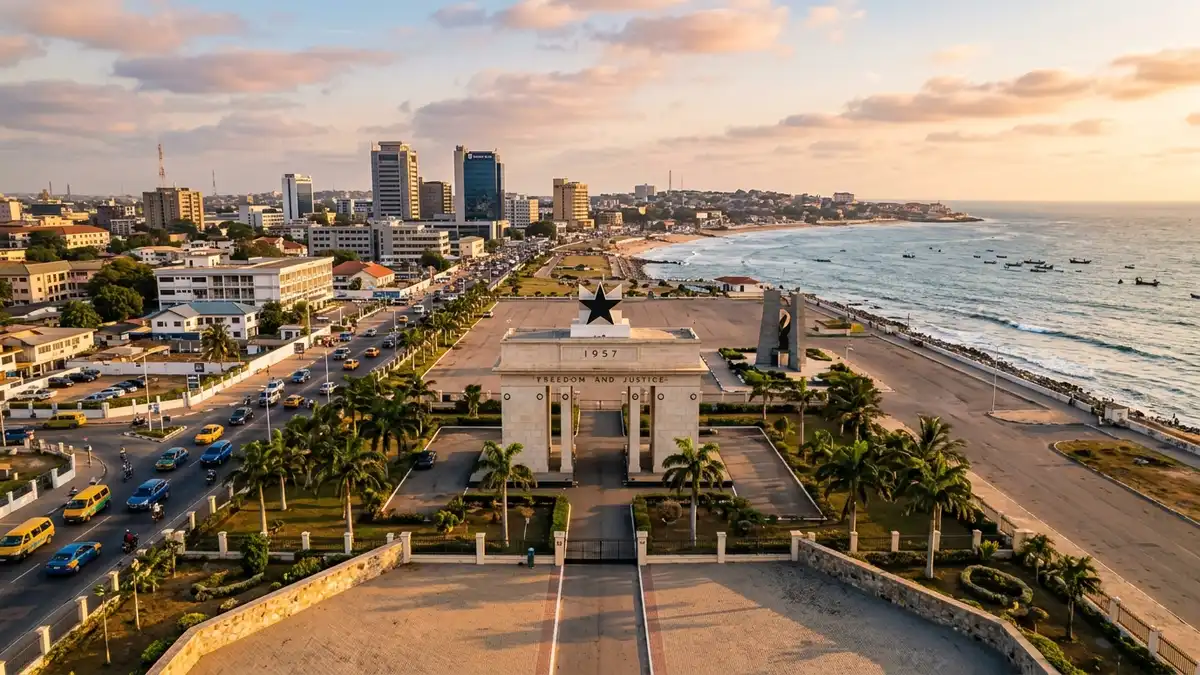
Accra itself rewards wandering with purpose. The Makola Market is a sensory overload in the best possible way — fabric, food, noise, colour — and gives you an immediate read on the city's commercial heartbeat. The National Museum offers essential context on Ghanaian history and the broader story of West Africa. For something more contemplative, the Cape Coast day trip from Accra — to the slave castles that now stand as UNESCO World Heritage Sites — is among the most historically significant experiences available anywhere on the continent. Closer to the city, the beaches along the Atlantic coast offer a more relaxed counterpoint to the urban energy.
The one tip worth emphasising: bring or source local currency, the Ghanaian cedi, for everyday transactions. While cards are accepted in larger establishments, cash remains king in markets and smaller eateries, and you'll eat and shop far better — and more authentically — when you're not dependent on card terminals. Dublin to Accra is a long haul, but it's the kind of journey that changes your frame of reference.