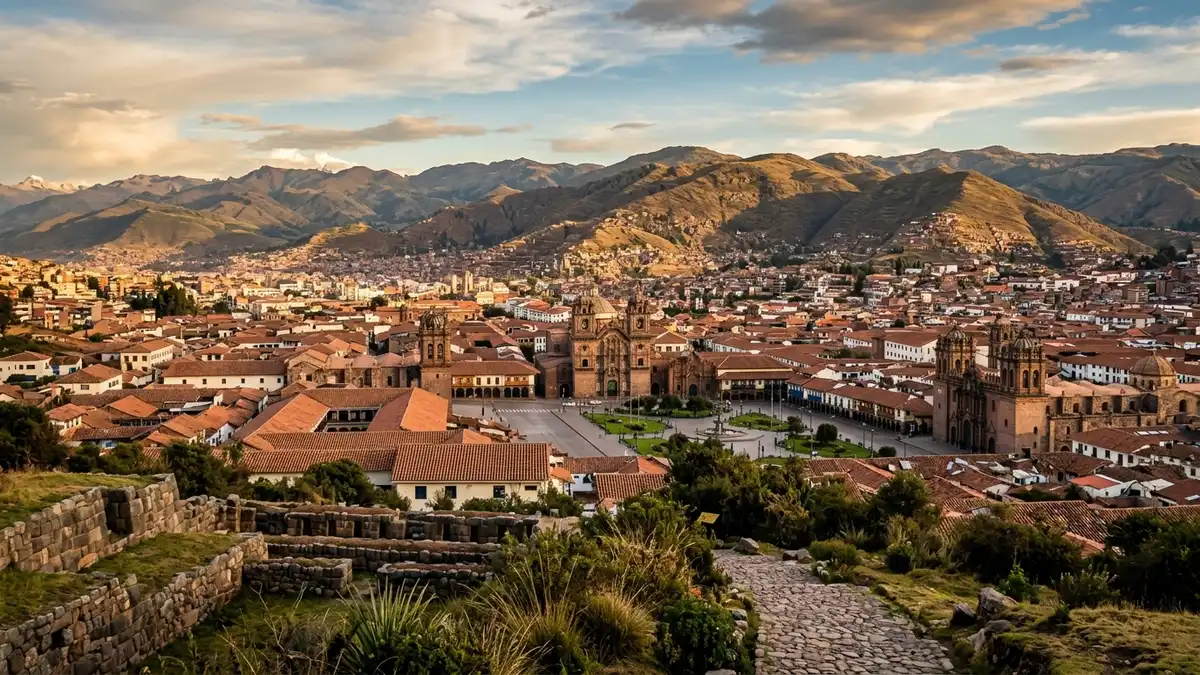



Route Briefing: Dublin to Cusco
Few routes from Dublin carry quite the same sense of epic adventure as this one. Yes, you're looking at 22-plus hours and at least two stops to reach the ancient Inca capital of Cusco, but the moment you step off the plane into thin Andean air and see the terracotta rooftops and colonial spires spread across a mountain valley, every hour of travel feels completely justified. This is one of those journeys where the destination genuinely earns the effort.
Cusco sits at around 11,000 feet above sea level, which means altitude is the first thing to take seriously. Give yourself at least two full days in the city before attempting anything strenuous — including the train journey to Machu Picchu. Drink plenty of water, take it slow, and coca tea, widely available throughout the city, is a traditional local remedy that many travellers swear by for easing the adjustment. The Plaza de Armas, Cusco's magnificent central square, is a perfect place to spend those acclimatisation days — surrounded by Spanish colonial arcades built directly on top of Inca stone foundations, it tells the whole layered story of this city just by existing.
Beyond Machu Picchu, which absolutely lives up to its reputation, Cusco rewards slow exploration. The Inca stonework throughout the city is extraordinary — massive, precisely fitted stones that have outlasted centuries of earthquakes. The San Pedro market is a vivid, bustling introduction to Andean food culture, and the surrounding Sacred Valley offers villages, ruins, and landscapes that many visitors find just as moving as the famous citadel itself.
On the practical side, LATAM Airlines, Iberia, and American Airlines are your most reliable options on this route. Iberia routes you through Madrid, which makes geographic sense from Dublin and can offer competitive fares, while American Airlines connections typically run through Miami. A roundtrip under $900 represents a genuinely good deal here — standard pricing sits between $1,200 and $1,600 or more, so flexibility pays off. Search across a range of dates rather than locking in immediately, and aim to book three to six months ahead, particularly if you're targeting the dry season between June and August, when skies are clear and the route to Machu Picchu is at its most spectacular. That peak window is popular for good reason, but it does mean accommodation and train tickets to Machu Picchu sell out fast — book those well in advance too.
If you can travel in the shoulder months of April, May, or September, you'll find fewer crowds, lower prices, and still largely manageable weather. Cusco is a year-round destination, but the wet season brings heavy rain that can complicate hiking plans. Whenever you go, budget generously for the experience itself — this is one of those rare places that genuinely changes how you see the world.