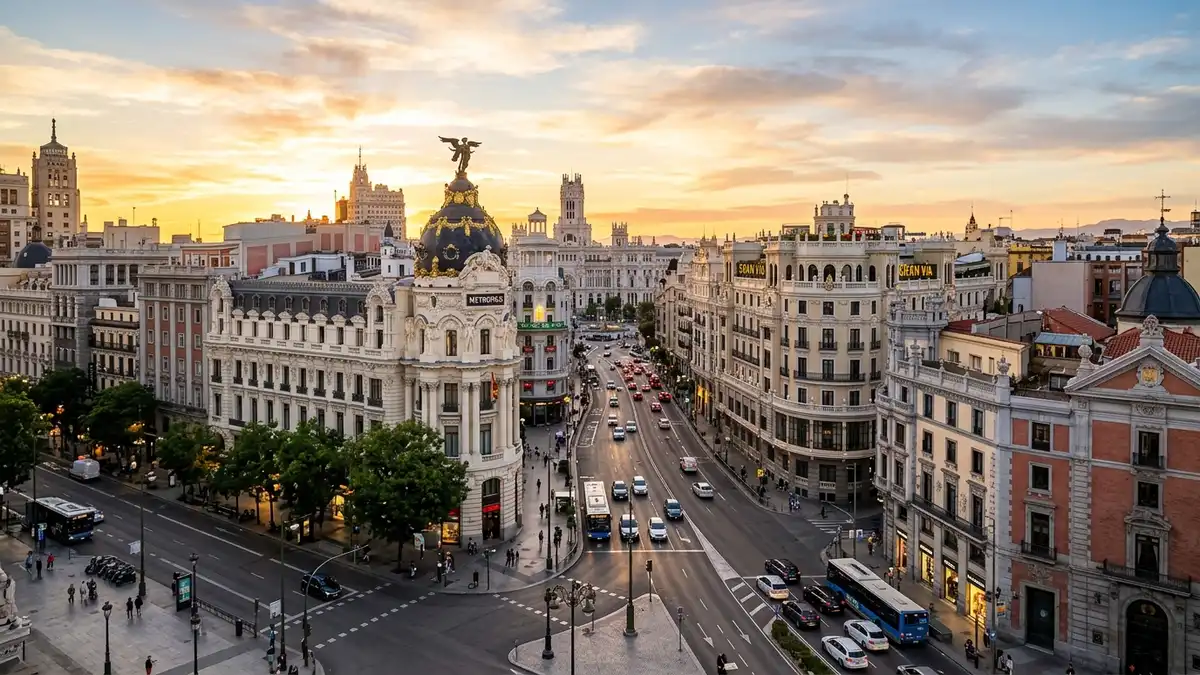



Route Briefing: Las Vegas to Madrid
Trading the neon desert of Las Vegas for the sun-drenched plazas of Madrid is one of those travel decisions that feels immediately right the moment you land. These two cities share a certain unapologetic love of staying up too late and doing everything with theatrical flair — but Madrid does it with centuries of history behind every cobblestone.
The journey runs around 13 hours and 30 minutes with one stop, typically connecting through New York's JFK or Miami before crossing the Atlantic with Iberia, American Airlines, or United. Routing through those major East Coast hubs tends to surface the most competitive fares, so be flexible about your connection city when searching. A genuinely good deal lands under $600 roundtrip — not impossible if you book three to six months ahead, particularly for summer travel when prices climb sharply. Standard fares run $900 to $1,200 or more, so that advance planning really does pay off here.
Once you touch down at Adolfo Suárez Madrid-Barajas Airport, the city center is straightforward to reach. The metro connects the airport directly to the heart of Madrid, making it one of Europe's more painless airport arrivals — affordable, reliable, and no taxi negotiation required.
Madrid rewards the curious traveler at every turn. The Prado Museum alone justifies the flight, housing one of the world's great collections of European art, with Velázquez and Goya as its crown jewels. The Reina Sofía is home to Picasso's Guernica, a genuinely moving experience. But Madrid isn't just a museum city — it breathes through its neighborhoods. Spend an evening tapas-hopping through La Latina, where small plates and cold wine flow freely from bar to bar, and you'll understand why Madrileños treat eating as a social sport rather than a necessity.
Flamenco here is the real thing, raw and passionate, and catching a live performance in an intimate tablao is something that stays with you. The city's nightlife is legendary for good reason — dinner rarely starts before nine, and the streets are genuinely alive well past midnight on any given weekend.
Peak season runs June through August when the city buzzes with energy, though Madrid in summer is seriously hot. Spring and autumn offer a sweeter balance — pleasant temperatures, thinner crowds, and often lower airfares. If you can travel in May or October, you'll likely get the best of everything.
One tip worth keeping close: the Museo del Prado offers free entry during its late evening hours on weekdays, letting you experience one of the world's great art collections without spending a euro. That's the kind of detail that makes a trip feel like it was designed just for you.