


Route Briefing: London to Seoul
Seoul has a way of grabbing you by the collar the moment you land — and with direct flights from London clocking in at around eleven and a half hours, you're closer to one of the world's most electrifying cities than you might think. Korean Air, Asiana Airlines, and British Airways all serve this route year-round, and if you time your booking right, you can snag a return fare under $700. Standard pricing sits between $900 and $1,200, so the savings from planning ahead are genuinely meaningful. Book two to four months out, aim for mid-week departures, and steer well clear of Chuseok and Lunar New Year — those Korean public holidays send prices surging, and you could be looking at 20 to 30 percent more for the privilege of flying in a packed cabin.
Incheon International Airport is consistently ranked among the best airports in the world, and getting into the city is refreshingly straightforward. The Airport Railroad Express, known as AREX, connects Incheon directly to Seoul Station in central Seoul, making it one of the smoothest airport-to-city transfers in Asia.
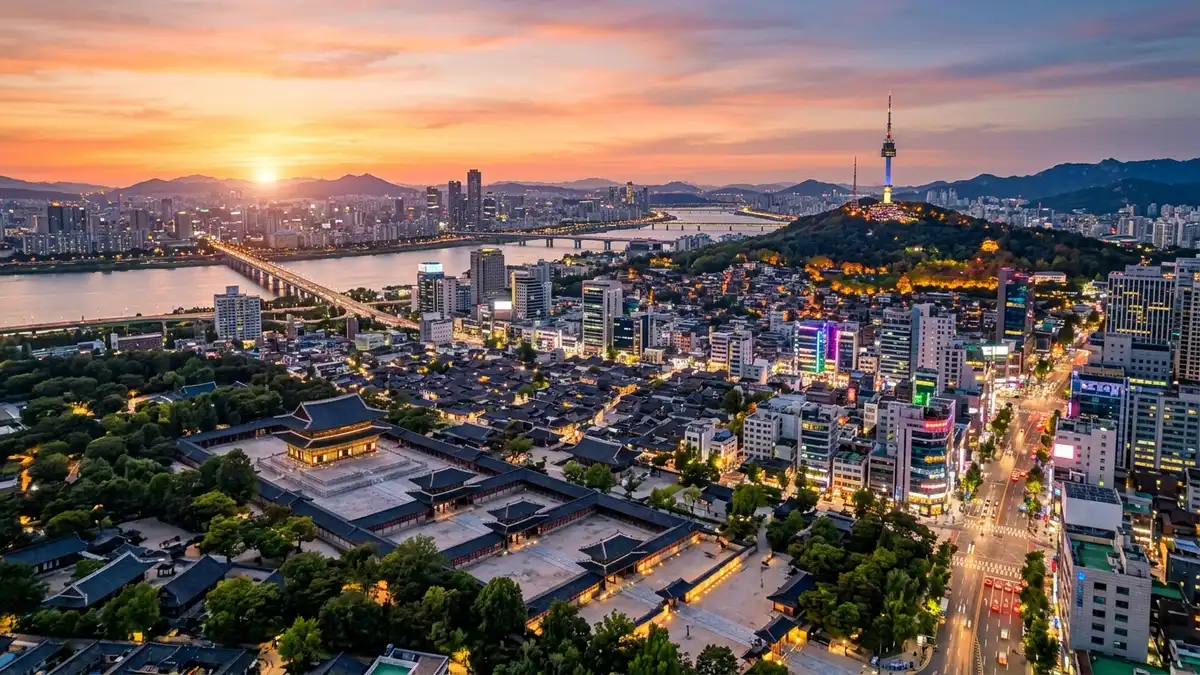
Once you're in, Seoul rewards curiosity at every turn. The city holds its ancient and ultramodern in a kind of thrilling tension — you can spend a morning wandering the courtyards of Gyeongbokgung Palace, watching the changing of the guard in full Joseon-era ceremonial dress, then find yourself by afternoon in the gleaming, high-fashion streets of Gangnam. The Bukchon Hanok Village offers a quieter glimpse into traditional Korean architecture, while neighbourhoods like Hongdae pulse with street performers, indie music, and the creative energy that makes Seoul the undisputed capital of K-culture.
The food alone justifies the flight. Korean barbecue, bibimbap, tteokbokki from street stalls, and the extraordinary variety of banchan side dishes that arrive without you even asking — eating in Seoul is an event, not just a necessity. Night markets and pojangmacha street tents keep things going well after dark.
Timing matters here. July and August bring summer heat and humidity alongside peak tourist crowds, and December through January draws visitors for winter festivities, though temperatures drop sharply. Spring, particularly April and May, offers mild weather and cherry blossoms, while autumn brings vivid foliage and arguably the most comfortable conditions for walking the city. Both shoulder seasons tend to offer better flight availability and more breathing room at the major sights.
One tip worth its weight: pick up a T-money card on arrival. It works across Seoul's subway, buses, and even some taxis, and the metro system is so extensive and well-signed in English that you may barely need anything else to navigate this vast, endlessly fascinating city.