


Route Briefing: Miami to Casablanca
There's something quietly thrilling about boarding a flight in Miami — all sunshine and ocean breeze — and landing roughly ten and a half hours later in a city where the Atlantic still laps at the shore, but everything else has transformed completely. Casablanca is Morocco's beating commercial heart, a place where Art Deco boulevards meet the call to prayer, and where the ancient and the thoroughly modern coexist without apology. For travelers flying out of South Florida, this route is genuinely one of the most rewarding long-haul options available, and the pricing makes it even more compelling.
Royal Air Maroc tends to offer the sharpest fares on this route, often routing you through their Casablanca hub in a way that keeps the journey surprisingly smooth. European carriers like Iberia via Madrid and Air France via Paris are solid alternatives, and both can be worth checking if you fancy a brief layover in a city you love. A good roundtrip deal comes in under $650, while standard fares push past $900 — so booking two to four months ahead is genuinely worth the calendar reminder.
Once you land at Mohammed V International Airport, the train connection into the city center is reliable, affordable, and far more civilized than battling airport traffic. It's the kind of arrival that sets the right tone immediately.
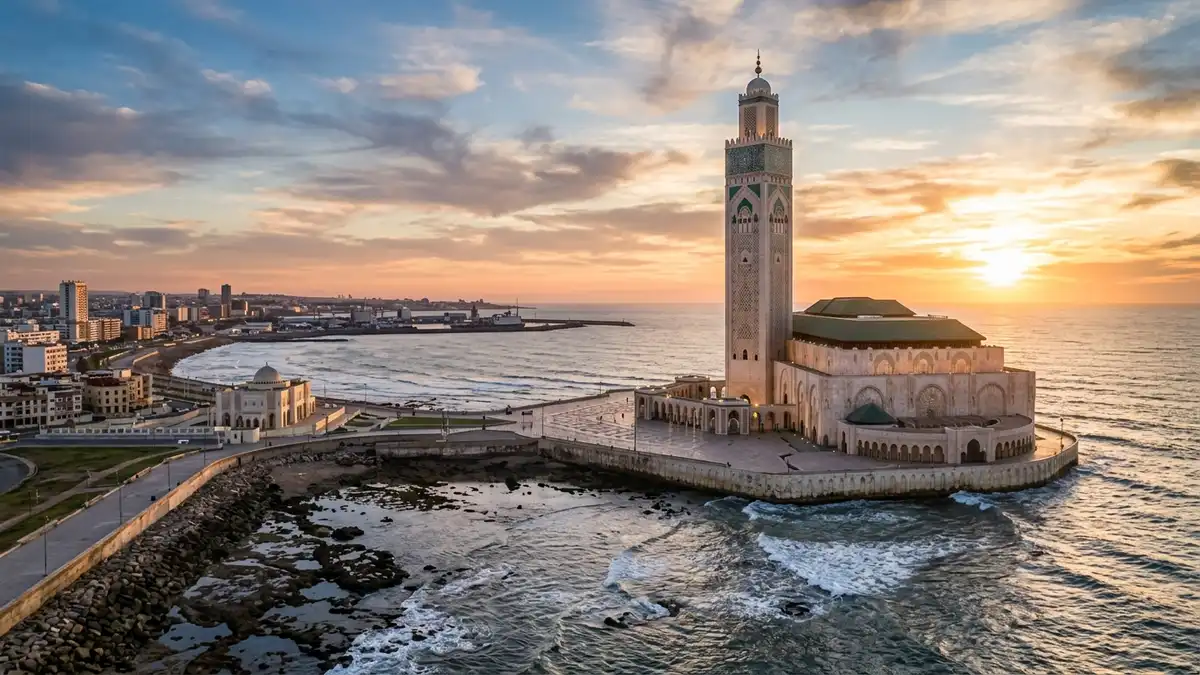
Casablanca itself rewards curiosity. The Hassan II Mosque is one of the most extraordinary pieces of architecture in the world — built dramatically over the Atlantic, with a retractable roof and a minaret that dominates the skyline. Even if religious sites aren't usually your thing, this one stops you cold. Beyond that, the Corniche along the waterfront is perfect for an evening walk, and the old Medina, while smaller than those in Fez or Marrakech, offers a genuine taste of traditional Moroccan market life without the overwhelming tourist pressure.
The food scene leans heavily on what you'd hope for: fresh seafood, slow-cooked tagines, flaky bastilla, and mint tea poured with theatrical flair. Casablanca also functions brilliantly as a gateway — Marrakech, Fez, and the Atlas Mountains are all accessible by train or road, making it an ideal base for a wider Moroccan adventure.
Peak season runs June through August when the city is lively and warm, but shoulder seasons in spring and autumn offer pleasant temperatures and noticeably thinner crowds. If you're flexible, those months often yield better fares too. One tip worth taking seriously: give yourself at least two nights in Casablanca itself rather than rushing straight onward. Most travelers who linger are glad they did.