


Route Briefing: Mumbai to Accra
Flying from Mumbai to Accra is genuinely one of those routes that rewards the curious traveller — connecting two of the world's most energetic, culturally layered cities across a journey of around 17 and a half hours with one stop. It's not a quick hop, but the destination absolutely justifies the travel time. If you can snag a roundtrip fare under $900, you're doing well — standard pricing climbs to $1,300 and beyond, so timing your booking matters. Aim to lock in tickets two to four months ahead, and look closely at Ethiopian Airlines routing through Addis Ababa or Kenya Airways through Nairobi, both of which tend to offer the most competitive pricing on this corridor.
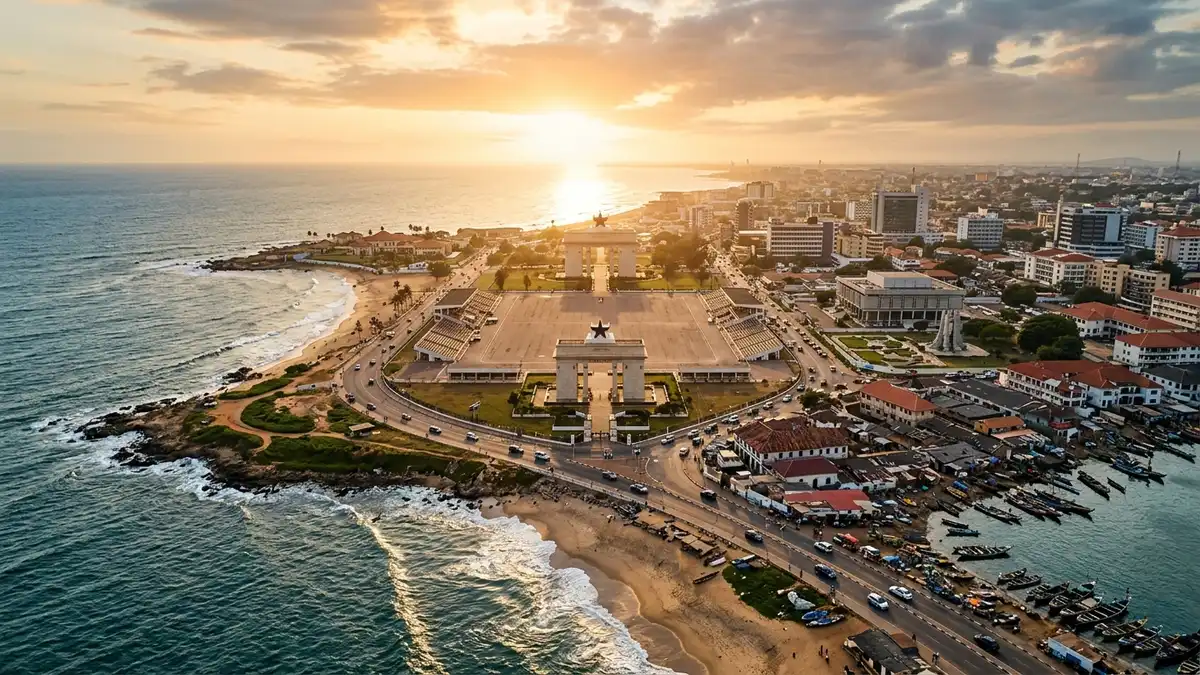
Accra is the kind of city that hits you immediately — warm, loud in the best possible way, and brimming with a confidence that comes from being at the heart of one of West Africa's most stable and welcoming nations. The city's markets are legendary, particularly Makola Market, where the sheer scale and colour of everyday commerce is an experience in itself. The coastline adds another dimension entirely — fishing villages, historic forts along the Gulf of Guinea, and beaches that feel worlds away from the tourist trail. The Cape Coast and Elmina castles, a short drive from the city, are among the most historically significant and emotionally profound sites in all of Africa, and no visit to Ghana is complete without making that journey.
Ghanaian food deserves serious attention. Jollof rice, kelewele (spiced fried plantain), and fresh grilled fish are staples you'll find everywhere, and the street food culture is vibrant and accessible. The local currency is the Ghanaian cedi, and while cards are accepted in many places, carrying cash for markets and smaller vendors is always wise.
From Kotoka International Airport, taxis and ride-hailing apps are the most practical way into the city centre — agree on a fare before getting in a regular taxi, or use a trusted app to avoid any ambiguity on pricing.
December and January represent peak season, when the weather is dry and the city buzzes with festivals and returning diaspora visitors, so expect higher prices and a livelier atmosphere. Travelling just outside those months — say, October or February — can mean noticeably lower fares and a more relaxed pace without sacrificing the experience. That shoulder-season window is genuinely one of the smartest moves you can make on this route.