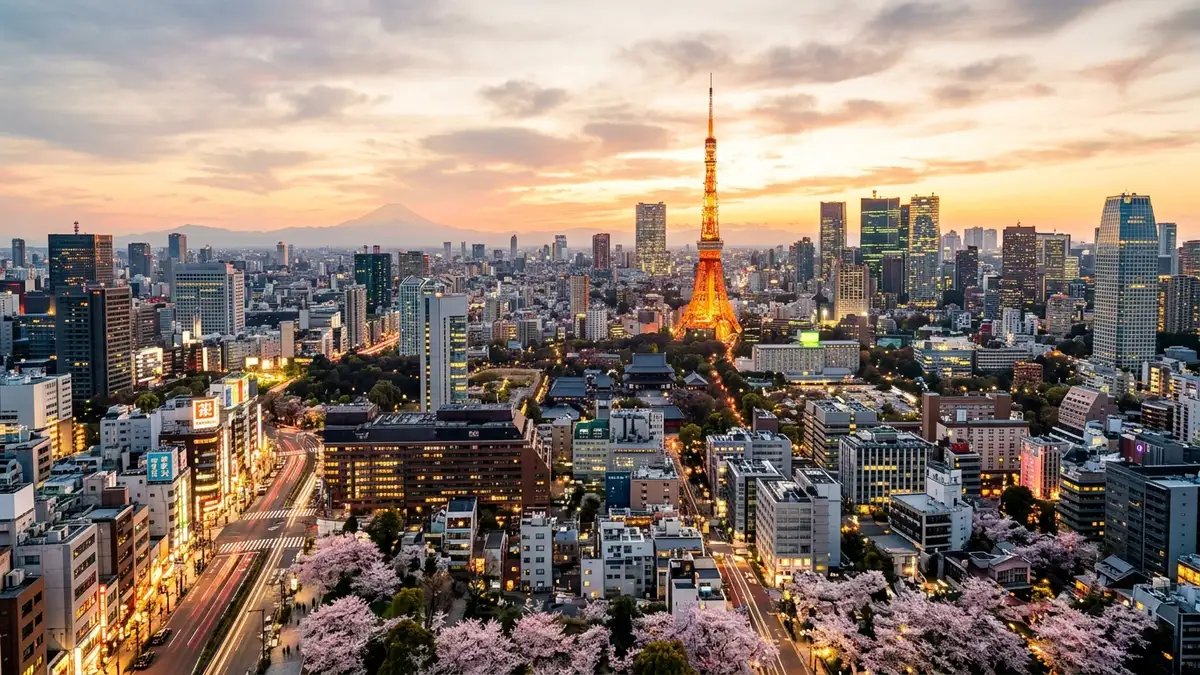



Route Briefing: New York to Tokyo
Few long-haul routes reward the effort quite like New York to Tokyo. Yes, you're looking at around 13 and a half hours in the air, but JAL and ANA — two of the world's most consistently well-regarded carriers — make that crossing genuinely comfortable, with attentive service and food that reminds you Japanese hospitality starts the moment you board. United also operates the route if you're chasing miles or a lower fare. Speaking of fares, anything under $700 roundtrip is a genuine steal worth jumping on immediately. Standard pricing runs $1,000 to $1,400 or more, so booking three to six months out gives you the best shot at the sweet spot.
Tokyo is one of those cities that makes experienced travelers feel like first-timers. It operates on a scale and at a level of detail that's almost overwhelming in the best possible way — ancient Shinto shrines tucked between glass towers, neighborhood ramen shops that have been perfecting a single broth for decades, and a subway system so precise you can set your watch by it. The city holds more Michelin stars than any other on earth, yet you can eat extraordinarily well for just a few dollars at a convenience store or standing noodle bar. Shibuya, Shinjuku, Asakusa, Harajuku — each neighborhood feels like a distinct city within a city.
From Narita Airport, the Narita Express train connects directly to central Tokyo stations including Shinjuku and Shibuya, making it one of the smoothest airport-to-city arrivals you'll experience anywhere. Haneda Airport sits even closer to the city center and is served by both the Tokyo Monorail and the Keikyu Line.
Timing matters enormously on this route. Late March through early April is cherry blossom season, and it is every bit as magical as advertised — but prices spike accordingly, so book early or consider the shoulder weeks just before peak bloom. Summer brings festivals and energy but also heat, humidity, and crowds. Autumn, roughly October through November, offers crisp weather and stunning foliage with far fewer tourists competing for the same views.
One tip that pays for itself immediately: buy a Suica or Pasmo IC card at the airport. It works on virtually every train, subway, and bus in Tokyo, and you can even use it at convenience stores and vending machines. It eliminates the friction of buying individual tickets and lets you move through the city the way locals do — quickly, cheaply, and without standing confused at a ticket machine.