


Route Briefing: San Francisco to Tokyo
There are long-haul flights, and then there's San Francisco to Tokyo — a journey that feels less like a commute and more like a portal between two of the world's great cities. At around nine and a half hours nonstop, it's genuinely one of the more manageable transpacific crossings, and carriers like Japan Airlines, ANA, and United Airlines run this route year-round with reliable frequency. JAL and ANA in particular are worth seeking out for their service quality, which tends to make those hours in the air feel considerably shorter.
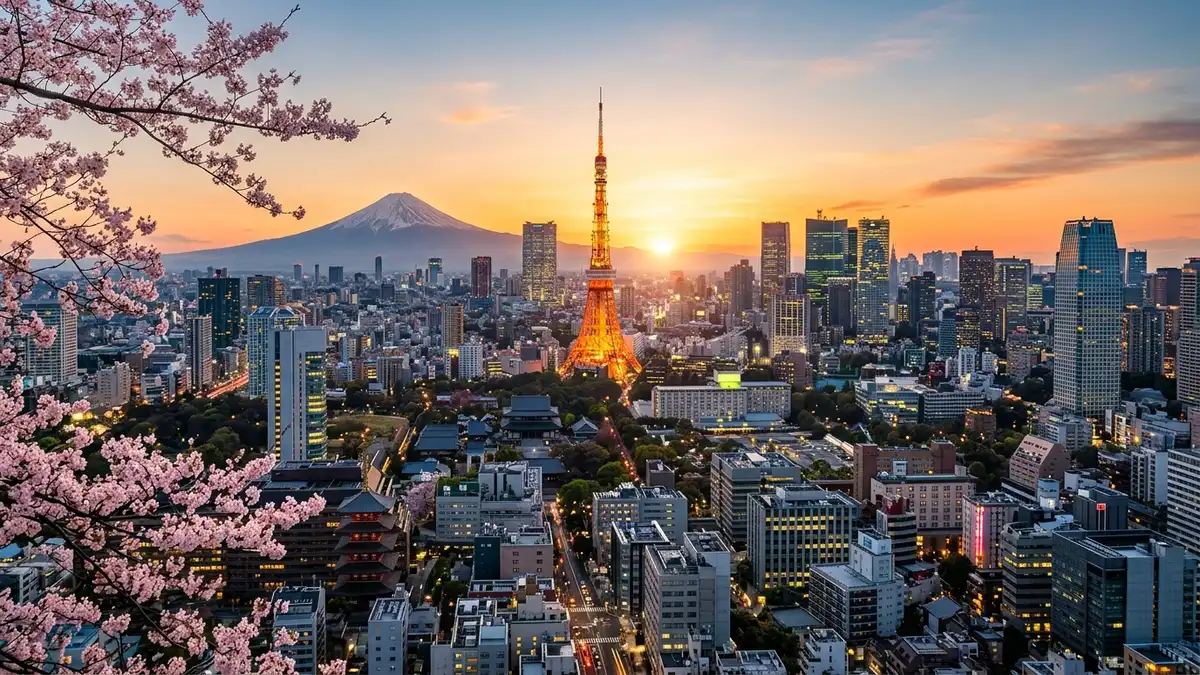
Tokyo earns every superlative thrown at it. This is a city where a centuries-old Shinto shrine sits quietly in the shadow of a glass skyscraper, where you can eat a flawless bowl of ramen at midnight in a six-seat counter restaurant, and where the sheer density of things to discover — neighborhoods, subcultures, flavors, aesthetics — means repeat visitors still feel like they're scratching the surface. Shibuya's famous scramble crossing, the serene grounds of Meiji Shrine, the electric chaos of Akihabara, the refined calm of Yanaka's old-town streets — Tokyo contains multitudes, and it rewards the curious traveler enormously.
On arrival, both Narita (NRT) and Haneda (HND) connect to central Tokyo via efficient rail links. Haneda sits closer to the city and is generally the more convenient option if you have a choice. Narita is farther out but well-served by the Narita Express, which gets you into Shinjuku or Tokyo Station without any fuss. Grab a Suica or Pasmo IC card at the airport — it works on virtually every train, subway, and bus in the city, and makes navigating Tokyo's otherwise bewildering transit network genuinely effortless.
Timing your trip wisely can make a real difference to your budget. Peak season runs July through August and again around the Christmas and New Year period, when fares climb well above the $900–$1,200 range. A roundtrip under $700 is the sweet spot to aim for, and it's achievable if you book three to five months out and target shoulder seasons. February and March are particularly compelling — late March brings cherry blossom season, one of the most genuinely magical things you can witness anywhere on earth, and fares haven't yet spiked to their spring peak. October and November offer crisp weather, autumn foliage, and similarly friendlier prices.
The one tip that consistently separates a good Tokyo trip from a great one: resist the urge to over-plan. Build in time to simply walk, get slightly lost, and follow your curiosity down a side street. That's where Tokyo reveals itself.