


Route Briefing: Paris to Seoul
Paris to Seoul is one of those long-haul routes that genuinely rewards the effort. At around eleven and a half hours direct, it's a serious journey, but Air France, Korean Air, and Asiana Airlines all operate this corridor with the kind of service that makes the distance feel manageable. Korean Air and Asiana in particular are known for attentive cabin crew and solid in-flight meals — a small but meaningful comfort when you're crossing half the planet.
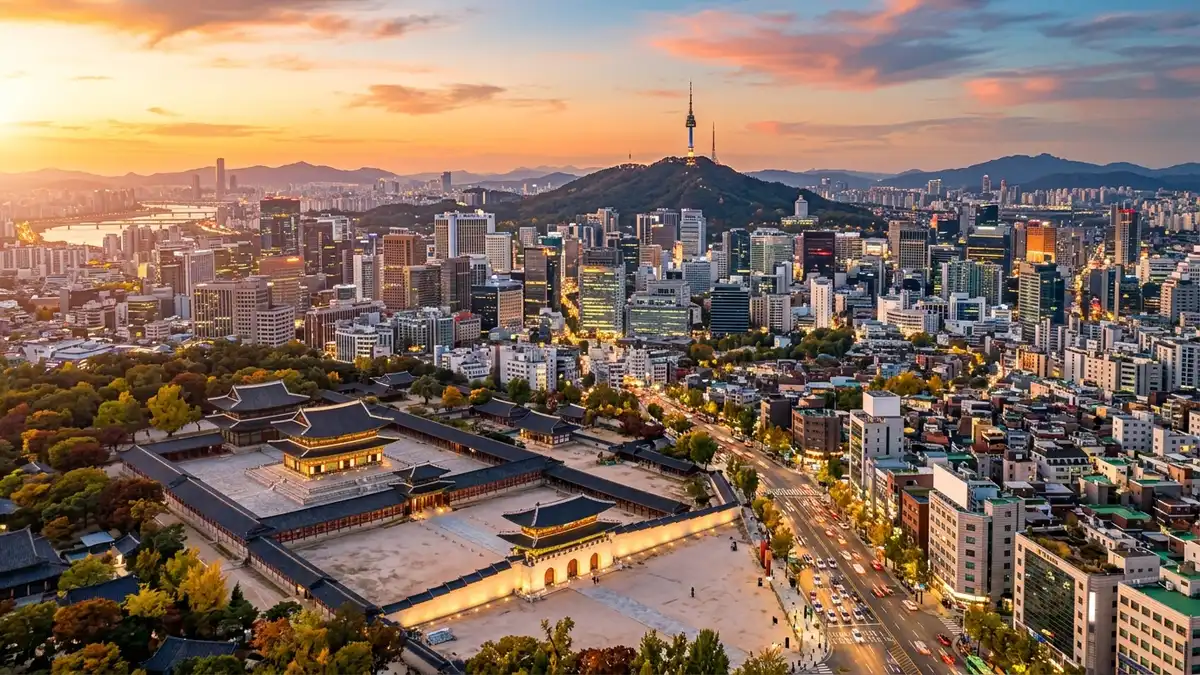
The real question is what's waiting at the other end, and Seoul delivers on almost every front. This is a city that somehow holds ancient royal palaces and hypermodern pop culture in the same breath without either feeling like a performance. Gyeongbokgung Palace sits in the heart of the city, vast and serene, and the surrounding Bukchon Hanok Village gives you a genuine sense of traditional Korean architecture that hasn't been entirely swallowed by development. Then you cross town to Gangnam or Hongdae and the city transforms entirely — neon, noise, street food stalls, and an energy that runs well past midnight.
Speaking of food: Seoul is one of the great eating cities in the world. Tteokbokki, Korean fried chicken, samgyeopsal grilled at the table, and the sheer variety of banchan side dishes that arrive without you even asking — it's a cuisine that rewards curiosity and costs very little if you eat where locals eat.
From Incheon Airport, the AREX express train connects directly to central Seoul in around 45 minutes and is genuinely one of the smoothest airport rail links in Asia. It's affordable, reliable, and drops you at Seoul Station or Hongik University Station depending on your stop — both well-connected to the rest of the metro network.
On timing, spring and autumn are the sweet spots. Cherry blossoms in April and the fiery foliage of October and November make those months particularly beautiful, and you'll avoid the humidity of summer and the deep cold of January. If budget is the priority, steer clear of Chuseok and Lunar New Year when fares and hotels spike sharply. Booking two to four months out and flying mid-week can shave a meaningful amount off the fare — a good roundtrip deal comes in under $700, while leaving it late or flying peak season can push you well past $1,000.
One tip worth keeping: grab a T-money card at the airport on arrival. It works across the metro, buses, and even some taxis, and makes navigating Seoul's excellent public transport completely seamless from day one.