


Route Briefing: Toronto to Seoul
Toronto to Seoul is one of those long-haul routes that genuinely rewards the effort. Yes, you're looking at around 14 and a half hours in the air with a typical stopover — most commonly routing through hubs in Asia — but Korean Air and Asiana Airlines are consistently excellent carriers, and Air Canada holds its own for the transatlantic leg. If you land a rare direct, you're looking at closer to 13 and a half hours, which feels like a small miracle on a transpacific crossing.
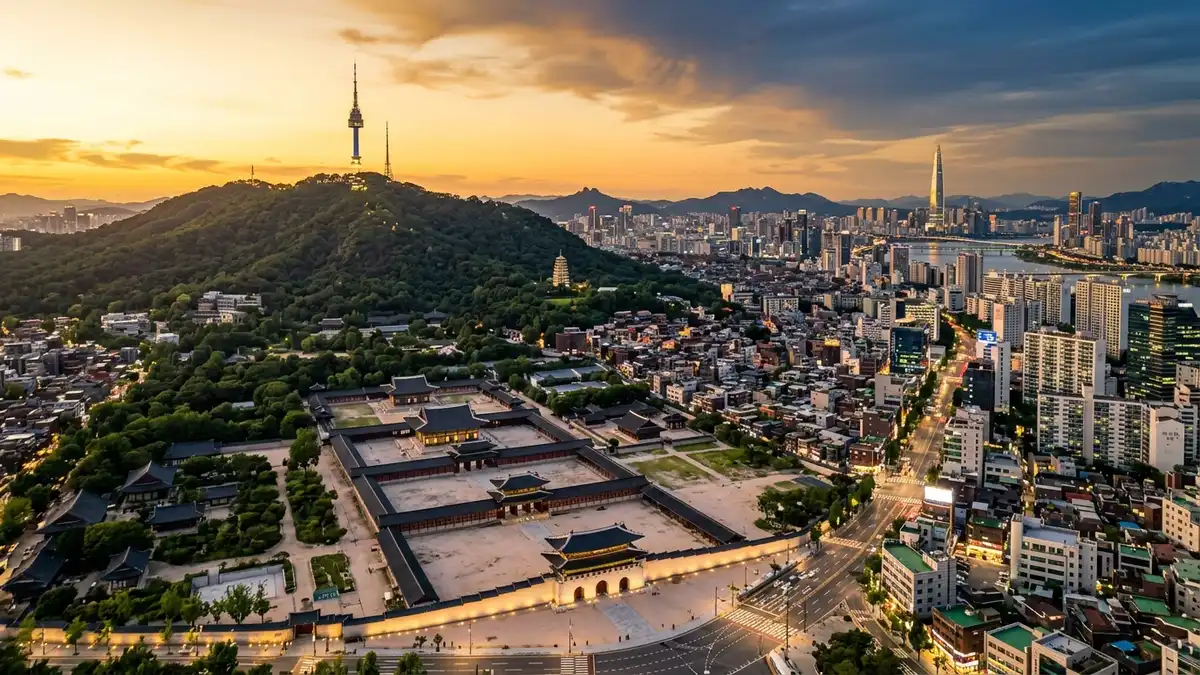
The payoff on arrival is immediate. Seoul is one of those cities that hits differently from anything else in East Asia — it's simultaneously ancient and aggressively modern, a place where 600-year-old palaces like Gyeongbokgung sit in the shadow of gleaming skyscrapers, and where Buddhist temples share neighbourhoods with K-pop entertainment agencies and some of the most exciting street food on the planet. Myeongdong is a sensory overload in the best possible way, Insadong offers a slower, more artisan Seoul, and Gangnam delivers exactly the neon-lit, high-energy atmosphere you'd expect from its cultural reputation. The food alone — tteokbokki, Korean BBQ, bibimbap, hotteok from street stalls — justifies the flight.
From Incheon International Airport, the AREX express train connects directly to central Seoul in roughly an hour, making it one of the smoothest airport-to-city connections in the world. Skip the taxi queue on arrival and take the train — it's fast, affordable, and stress-free even with luggage.
Timing matters on this route. Summer (June through August) and major Korean holidays — Chuseok and Lunar New Year — are peak periods, and fares reflect that. If your schedule allows, shoulder seasons like spring (April to May) and autumn (September to November) offer arguably the best experience anyway: cherry blossoms in spring, stunning foliage in fall, and far more comfortable temperatures than Seoul's humid summer. Prices are also friendlier outside those peaks.
The golden rule for booking this route: aim for three to six months in advance. Under $700 roundtrip is a genuinely good deal — anything in that range, snap it. Standard fares run $900 to $1,200 or more, so the savings are real. Flying mid-week and deliberately sidestepping Korean holiday travel windows can shave 20 to 30 percent off the fare, which on a route this long is serious money back in your pocket for street food and palace entry fees.