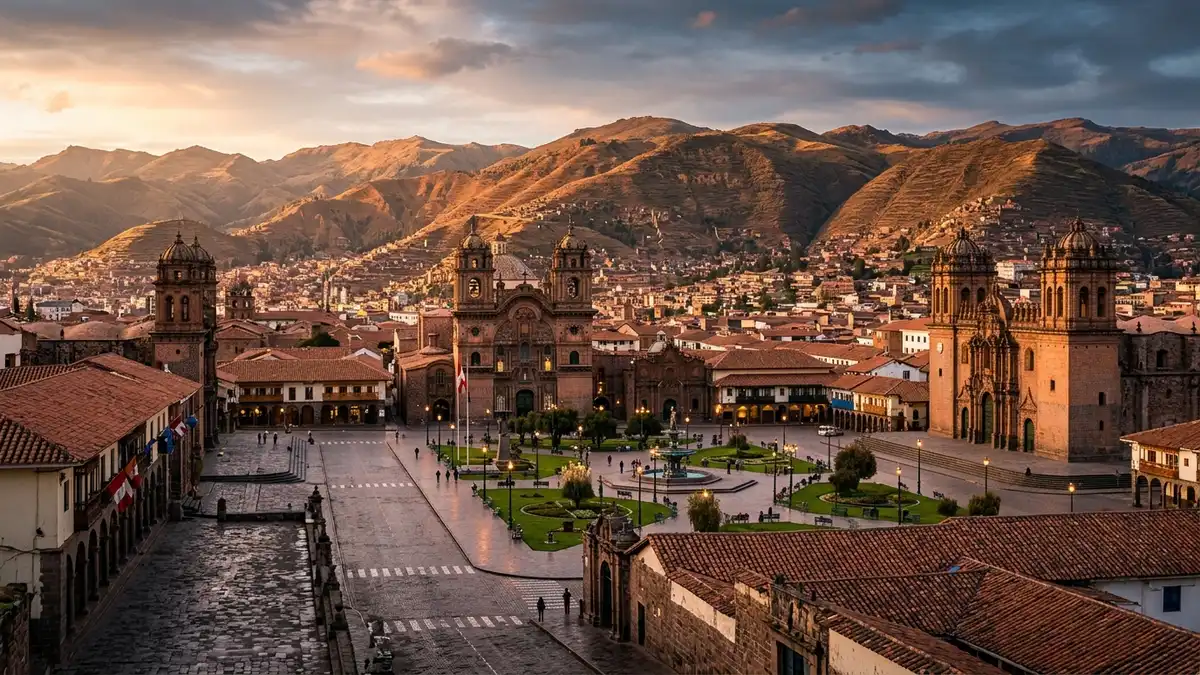



Route Briefing: Washington D.C. to Cusco
Few routes out of Washington D.C. carry the kind of anticipation that builds on the way to Cusco. You're not just flying to another city — you're heading to the former heart of the Inca Empire, a place where ancient stone temples sit directly beneath Spanish colonial churches, and where the surrounding mountains feel close enough to touch. At roughly 11,000 feet above sea level, Cusco demands respect from the moment you land, and rewards it generously.
The journey runs about 13 and a half hours with one stop, most commonly through Lima or Bogotá. LATAM Airlines connecting through Lima is generally your most reliable option — the Lima hub is well-equipped for onward Andean connections, and LATAM's pricing on this corridor tends to be competitive. Avianca and American Airlines also serve the route and are worth comparing when you're hunting for deals. A roundtrip under $600 is genuinely good value here; standard fares push past $900, so the gap between a patient booking and an impulse purchase is real money. Give yourself a two-to-four month runway before your travel dates, particularly if you're targeting the dry season.
That dry season — June through August — is peak Cusco for good reason. Days are clear and crisp, the light on the ruins is extraordinary, and the famous Inti Raymi festival in late June fills the city with ceremony and color. That said, the shoulder months on either side offer thinner crowds and prices that reflect it, while still delivering plenty of sunshine.
Altitude sickness is the one thing every first-timer underestimates. The airport sits high, and so does the city. Give yourself at least a full day to acclimatize before attempting any serious hiking — coca tea, available everywhere locally, is a traditional remedy worth trying. Taxis and private transfers connect the airport to the city center quickly, and the historic center itself is very walkable once you've found your legs.
Cusco is the obvious base for Machu Picchu, reached by train through the Sacred Valley, but the city itself earns far more than a single night. The Plaza de Armas is one of the most beautiful main squares in South America, the Sacsayhuamán fortress just above the city is genuinely staggering in scale, and the food scene — built around Andean ingredients like quinoa, purple corn, and fresh trout — is a highlight in its own right. Book the Machu Picchu train and entry tickets well ahead of your trip; they sell out, especially in peak season, and no amount of fare savings helps if you arrive and can't get in.