


Route Briefing: Washington D.C. to Madrid
There's something deeply satisfying about a nonstop transatlantic flight that drops you directly into one of Europe's most electrifying capitals, and the Washington D.C. to Madrid route does exactly that. At around eight and a half hours direct, you're trading the Potomac for the Paseo del Prado without a single layover to slow you down. Iberia, United Airlines, and Air Europa all serve this corridor, giving you genuine competition on fares — and that competition is your friend.
Speaking of fares, anything under $500 roundtrip is a genuine steal worth jumping on immediately. Standard pricing typically runs $800 to $1,100 or more, so the gap between a good deal and a mediocre one is substantial. One practical edge worth knowing: departing from Dulles (IAD) rather than Reagan National (DCA) tends to surface lower fares thanks to greater transatlantic competition out of that airport. If you're flexible on which D.C. airport you use, always check both. Book three to six months ahead, particularly if you're eyeing summer travel, when Madrid fills up and prices climb accordingly.
Peak season runs June through August, when the city buzzes with energy but also heat — Madrid summers are genuinely hot and dry. If you prefer a more relaxed pace with milder temperatures, spring and early autumn are wonderful times to visit. The city feels authentically itself outside the summer crush, and your euros stretch further too.
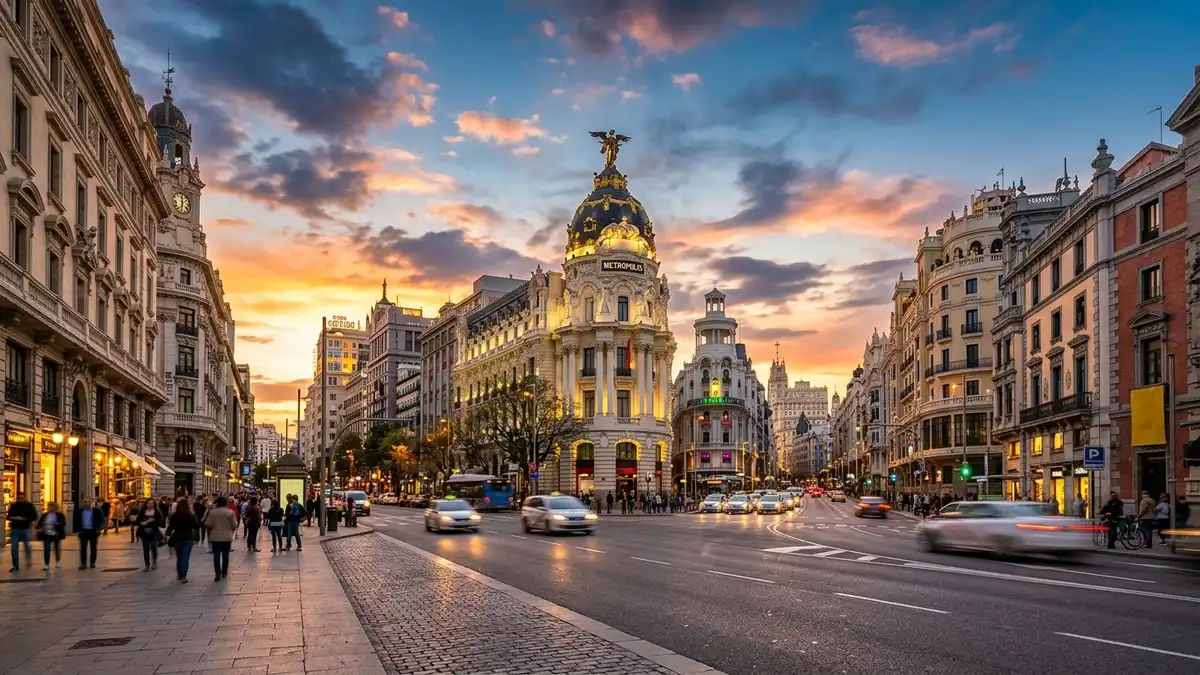
Madrid rewards the curious traveler at every turn. The Prado Museum alone justifies the flight — its collection of Velázquez, Goya, and El Greco is world-class in the truest sense. The Reina Sofía houses Picasso's Guernica, one of the most powerful paintings you'll ever stand in front of. Beyond the museums, Madrid is a city you experience through its rhythms: long lunches, evening tapas crawls through neighborhoods like La Latina, flamenco performances that don't start until most cities are already asleep, and a nightlife culture that treats midnight as early.
From Adolfo Suárez Madrid-Barajas Airport, the city center is easily accessible by metro — the airport has its own metro station with a direct line running into the heart of Madrid, making arrival straightforward and affordable without needing to negotiate taxis or private transfers.
The single best experience-enhancing tip for this route? Resist the urge to sleep through your first Madrid afternoon. Embrace the local schedule from day one — eat late, stay out later — and the city will open up to you in a way that no guidebook can fully capture.