


Route Briefing: Boston to Dakar
Boston to Dakar is one of those routes that feels genuinely adventurous — a transatlantic leap from New England straight into the beating heart of West Africa. At around 14 and a half hours with a stop, it's a serious journey, but Dakar has a way of making you forget the travel fatigue the moment you step outside and feel that warm Atlantic air.
Fares on this route can vary dramatically, so knowing your benchmarks matters. Anything under $700 roundtrip is a genuine deal worth jumping on. Standard pricing typically runs between $1,000 and $1,400 or more, so patience and planning pay off here. Air France, Delta, and TAP Air Portugal are your most reliable options, with connections routing through Paris Charles de Gaulle or Lisbon — both of which can actually be pleasant layover cities in their own right. Book three to six months out if you can, because this is a route with limited competition and prices climb fast as departure dates approach.
Timing your trip wisely makes a real difference. December and January bring holiday crowds and higher fares, and July through August sees another peak. If you want a balance of good weather and manageable prices, the shoulder months on either side of those peaks are worth considering. Dakar sits on the Cap-Vert peninsula and enjoys a relatively dry, breezy climate for much of the year, which makes it far more comfortable than many assume for a West African destination.
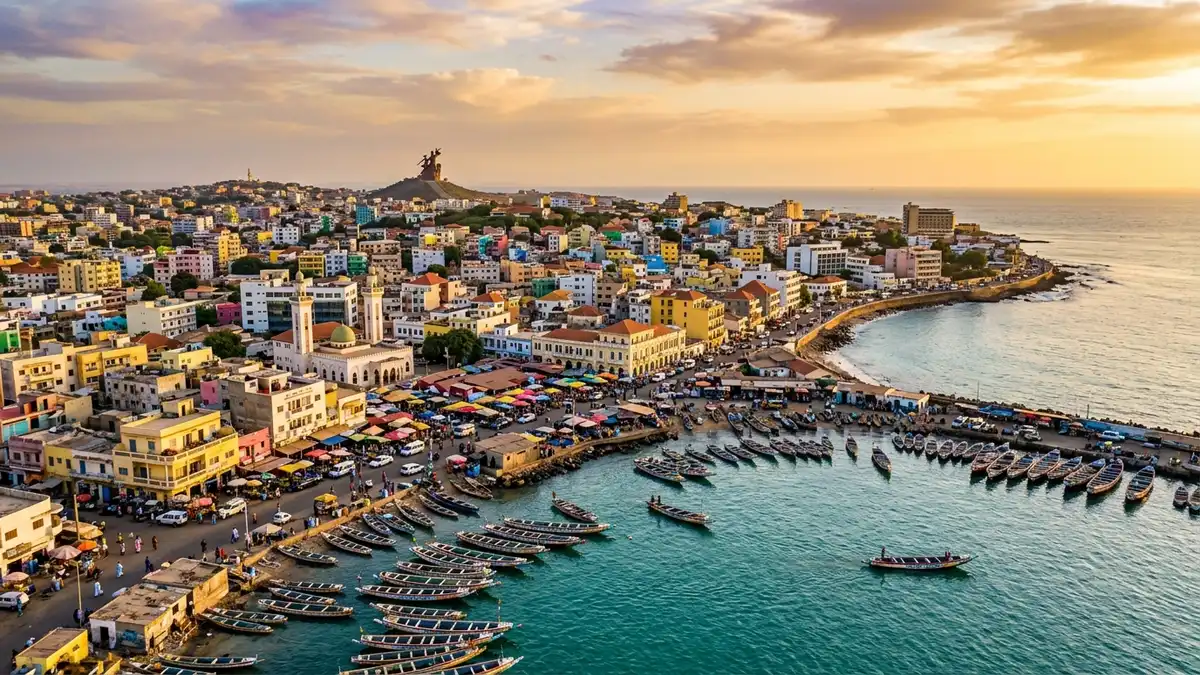
The city itself rewards curious travelers. Dakar has one of the most vibrant music cultures on the continent — mbalax rhythms pulse out of neighborhoods and live venues, and the legacy of artists like Youssou N'Dour gives the city a genuine musical identity you can feel everywhere. The markets, particularly Marché Sandaga and the artisan markets, are dense, colorful, and full of textiles, crafts, and local produce. The nearby island of Gorée, a UNESCO World Heritage Site and a sobering monument to the transatlantic slave trade, is a short ferry ride from the city and essential visiting. The seafood along the coast is exceptional — Dakar's position on the Atlantic means fresh fish is central to the local cuisine, and thieboudienne, the national dish of fish and rice, is something you should eat as soon as possible.
From Léopold Sédar Senghor International Airport, taxis are the standard way into the city center. Agree on a fare before you get in — this is standard practice and avoids any confusion on arrival.
One genuinely useful tip: connecting through Lisbon with TAP often unlocks some of the most competitive fares on this route, and a long layover there is hardly a punishment.