


Route Briefing: Miami to Dakar
There's something quietly thrilling about a flight that carries you from the neon-lit sprawl of Miami across the Atlantic to the sun-baked, drumbeat-filled streets of Dakar — two cities that share African diaspora roots but feel worlds apart in the best possible way. This route is a genuine adventure, and for travelers willing to plan ahead, it's one that doesn't have to break the bank.
Getting there takes around thirteen and a half hours with a connection, typically routing through Casablanca, Lisbon, or Paris. Royal Air Maroc via Casablanca is often the sweet spot — competitive fares and generally tighter layover windows compared to European connections. TAP Air Portugal and Air France are solid alternatives if you fancy a few hours in Lisbon or Paris along the way. A roundtrip under $700 is a genuinely good deal on this route; standard pricing runs $900 to $1,300 or more. The key is booking three to five months out, which gives you real leverage on fares before demand tightens.
Timing matters here. December through January draws holiday travelers, and July through August sees the Senegalese diaspora returning home in force — both periods mean higher prices and a more festive, electric atmosphere on the ground. If you want the energy without the premium, aim for shoulder months on either side.
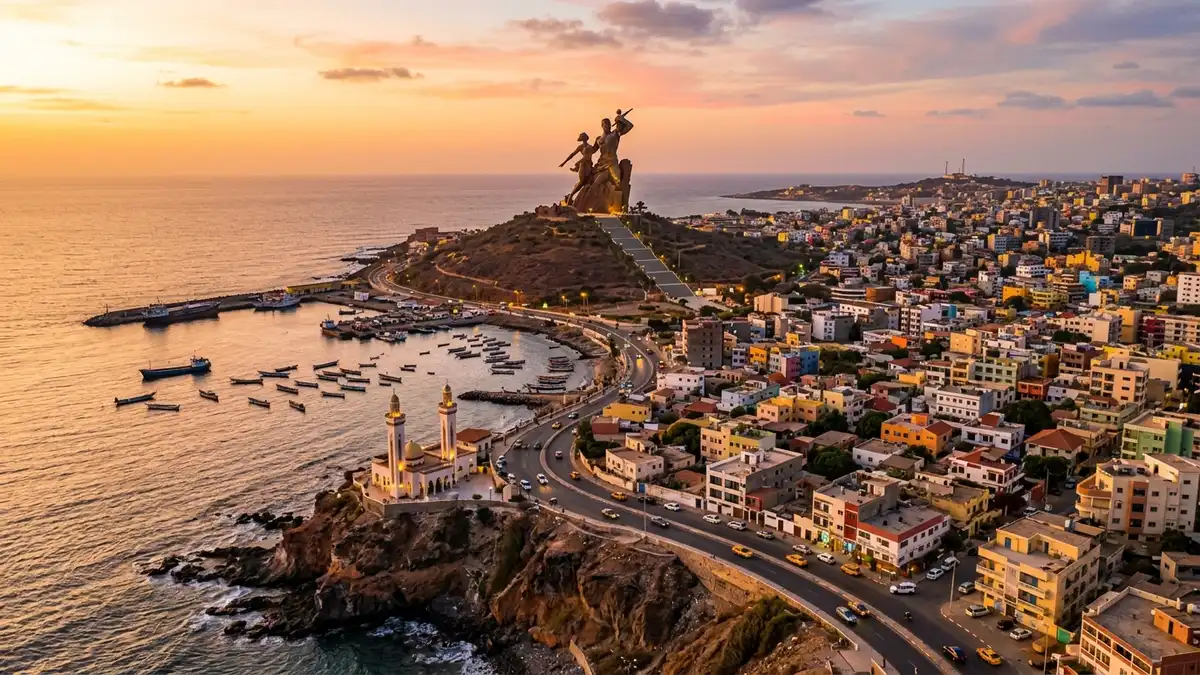
Dakar itself rewards curiosity. The city sits on a peninsula jutting into the Atlantic, giving it a breezy, salt-tinged quality that softens the West African heat. The music scene is legendary — Dakar is the city that gave the world mbalax, the percussive, hypnotic genre made famous by Youssou N'Dour, and live music spills out of venues most nights of the week. The markets, particularly Marché Sandaga and the artisan village at Soumbédioune, are dense with color, craft, and negotiation. Street food culture is central to daily life here, and thieboudienne — a richly spiced rice and fish dish considered Senegal's national meal — is something you should eat as soon as possible after landing.
Blaise Diagne International Airport sits outside the city center, and shared taxis and private car services are the standard ways to make the transfer into Dakar. Agree on a price before you get in any vehicle, a habit worth keeping throughout your stay.
The single best tip for this route: use your layover city intentionally. A longer connection in Casablanca or Lisbon can function as a free mini-stopover if you book strategically, turning a long-haul necessity into a two-destination trip. Dakar is absolutely worth the journey — few cities on earth feel this alive.