


Route Briefing: Seattle to Dakar
Few routes from the Pacific Northwest feel quite as adventurous as the long haul from Seattle to Dakar, and that sense of anticipation is entirely justified. You're trading the grey-green cool of Puget Sound for the golden Atlantic light of West Africa's westernmost capital — a city that pulses with energy, color, and one of the continent's most celebrated music cultures. Mbalax rhythms, the genre made globally famous by Youssou N'Dour, seem to drift out of every open doorway, and the city's creative spirit is impossible to miss.
Getting there takes commitment. Expect 20-plus hours of travel with one or two stops, typically connecting through Paris Charles de Gaulle or Casablanca Mohammed V. Air France, Delta, and Royal Air Maroc are your most reliable options on this route, and routing through CDG or CMN tends to surface the most competitive fares. A roundtrip under $900 is a genuinely good deal here — standard pricing runs $1,200 to $1,800 or more — so booking three to six months ahead is less a suggestion and more a necessity. Prices on this long-haul corridor move fast and availability is limited.
Once you land at Léopold Sédar Senghor International Airport, you're close to the city center by African capital standards, and taxis are the most straightforward way to reach your accommodation. Agree on a fare before you get in — this is standard practice and avoids any confusion at the end of the ride.
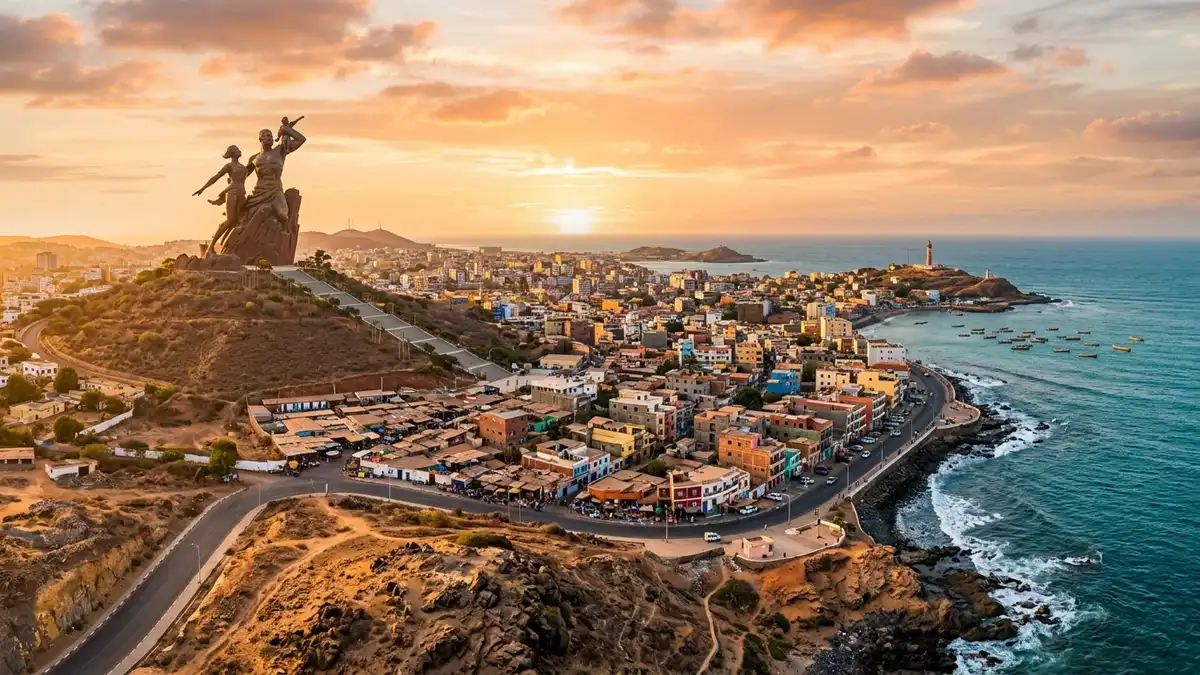
Dakar rewards explorers. The Medina and Sandaga Market areas are sensory overloads in the best possible way, stacked with textiles, produce, and the kind of street food that makes you reconsider every meal you've eaten before. The nearby island of Gorée, a UNESCO World Heritage Site and a sobering monument to the transatlantic slave trade, is reachable by a short ferry ride and is essential visiting. The pink waters of Lac Rose, the dramatic cliffs of the Mamelles, and the enormous Monument de la Renaissance Africaine are all within reach of the city.
Timing matters here. Peak season runs December through January and again July through August, when prices climb and the city fills with the Senegalese diaspora returning home. If you want a balance of good weather and lower fares, consider traveling in the shoulder months on either side of those windows. The dry season, roughly November through May, generally offers the most comfortable conditions for exploring on foot.
One tip worth holding onto: the Dakar art scene is thriving and largely undiscovered by mainstream tourism. Keeping your eyes open for local galleries and cultural centers will reward you with experiences that feel genuinely off the beaten path — and won't cost you much at all.