


Route Briefing: Boston to Manila
Boston to Manila is one of those routes that rewards the patient traveler — a long haul, yes, but the payoff on the other end is a city that pulls you in immediately with its noise, warmth, and sheer energy. At roughly 20 and a half hours with one stop, you're looking at a serious journey, but connecting through Hong Kong, Tokyo, or Seoul with Cathay Pacific, Japan Airlines, or Korean Air keeps the experience smooth and the fares competitive. Snag a roundtrip under $700 and you've done very well for yourself — standard pricing runs $1,000 to $1,400 or more, so booking three to six months out is genuinely worth the effort, especially if you're eyeing the busy holiday window around December and January or the summer surge from June through August.
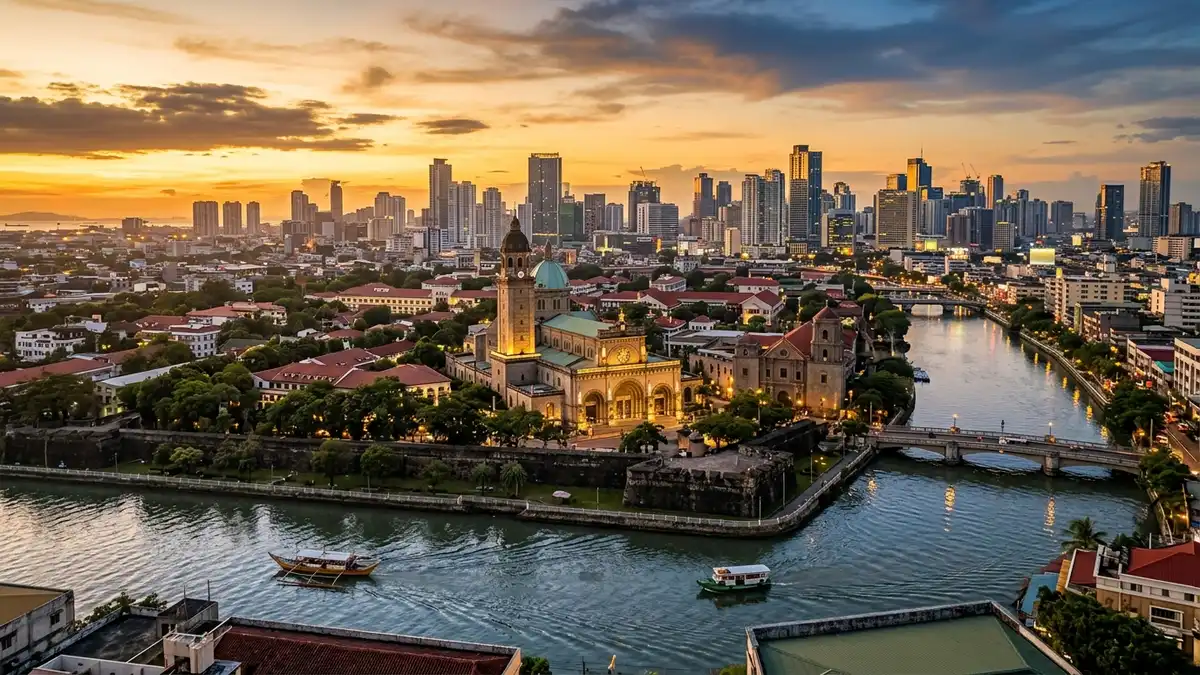
Manila itself is a city that defies easy description. It's the chaotic, fascinating gateway to over 7,000 islands, and even if you're using it purely as a jumping-off point, it deserves at least a few days of your attention. The Spanish colonial legacy is woven into the old walled city of Intramuros, where centuries-old stone fortifications and cobblestone streets offer a striking contrast to the sprawling modern metropolis surrounding them. Fort Santiago, sitting at the mouth of the Pasig River, is one of the most historically significant sites in the entire country and absolutely worth your time.
The food scene is a revelation for first-timers. Filipino cuisine — rich with influences from Spanish, Chinese, and Malay cooking — centers on dishes like adobo, sinigang, and lechon, and you'll find everything from humble street food to serious sit-down dining across the city's many distinct neighborhoods. Bonifacio Global City and Makati offer a polished, modern Manila, while areas like Binondo, the oldest Chinatown in the world, give you something far grittier and more atmospheric.
From Ninoy Aquino International Airport, metered taxis and ride-hailing apps are your most practical options into the city center. Traffic in Manila is notoriously heavy, so build extra time into any airport transfer, particularly during rush hours.
Timing-wise, the dry season running roughly from November through April is generally considered the most comfortable for exploring, with less humidity and lower chances of rain. If budget is your priority, traveling outside the peak December-January holiday period and the summer months can open up better fares and fewer crowds at popular spots. Book early, fly through a major Asian hub, and give yourself enough time in Manila itself — it's far more than just a layover city.