


Route Briefing: Chicago to Manila
Chicago to Manila is one of those routes that rewards the patient traveler — nearly 18 hours in the air with one stop, but what's waiting on the other end makes every minute worthwhile. This is your gateway not just to a single city, but to an archipelago of over 7,000 islands, each with its own personality, coastline, and story to tell.
Roundtrip fares under $700 represent genuine value for a transpacific journey of this distance, though standard pricing typically runs between $1,000 and $1,400 or more. Philippine Airlines flies the route with the obvious hometown pride you'd expect, while Cathay Pacific and EVA Air consistently offer competitive connections through Hong Kong and Taipei respectively. Routing through those hubs — or through Tokyo — tends to surface the most attractive fares, so be flexible about your layover city when searching. Book three to six months out if you can, and give yourself extra lead time around Philippine holidays when seats fill fast and prices climb accordingly.
Timing your visit matters here. December and January bring festive energy — Filipinos celebrate Christmas with an enthusiasm that's genuinely infectious, and the cooler, drier weather across much of the country makes sightseeing comfortable. June through August draws summer crowds, particularly Filipino families traveling domestically. If you prefer quieter streets and lower prices, the shoulder months on either side of those peaks are worth considering, though the Philippines does have a typhoon season that can affect certain regions, so check conditions for wherever you're heading beyond Manila.
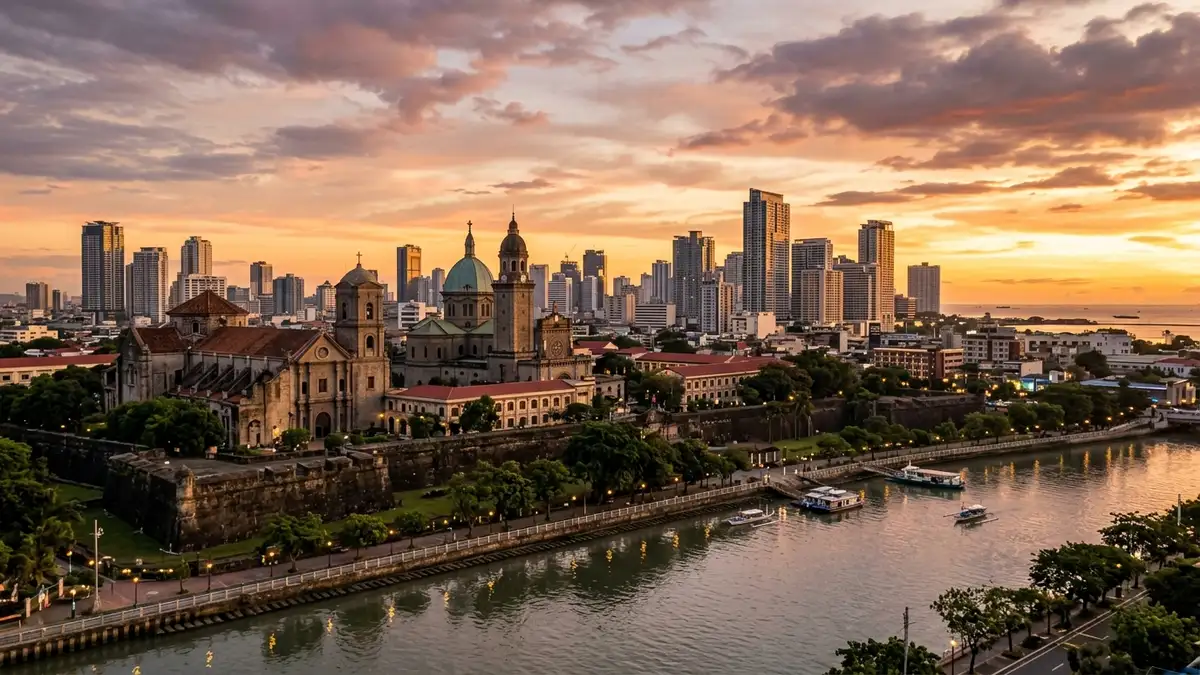
The capital itself is a dense, layered city where Spanish colonial history collides with modern Southeast Asian energy. Intramuros, the old walled city, is the obvious starting point — centuries of history compressed into a walkable district of stone fortifications and centuries-old churches. The food scene reflects the country's cultural crossroads, with flavors drawing from Malay, Spanish, Chinese, and American influences all at once. Adobo, sinigang, and lechon are the dishes to seek out early and often.
From Ninoy Aquino International Airport, taxis and ride-hailing apps are your most straightforward options into the city center, though Manila traffic is famously challenging, so build buffer time into any arrival day plans — especially if you have an onward connection or a dinner reservation to make.
The smartest move for stretching your budget? Use Manila as a launching pad rather than a final destination. Domestic flights within the Philippines are affordable and frequent, putting beaches, rice terraces, and volcanic landscapes within easy reach of your international arrival.