


Route Briefing: Los Angeles to Manila
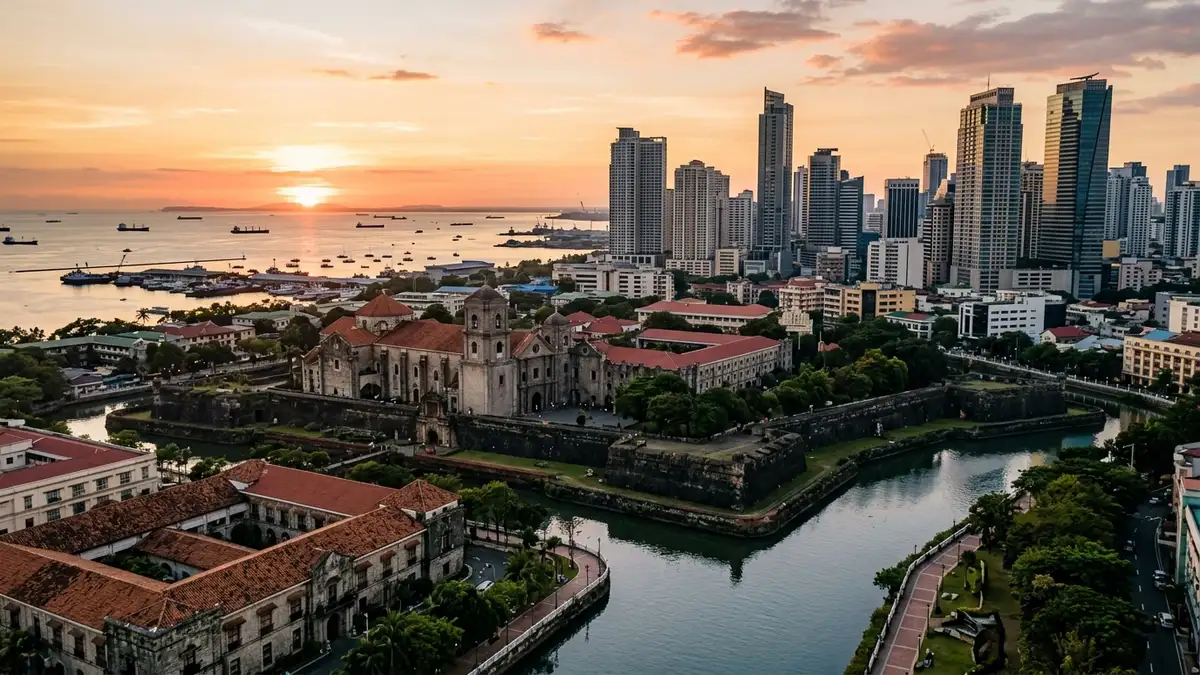
Few routes from the West Coast open up a world quite like the LAX to Manila run. You're trading the Pacific sprawl of Los Angeles for a city of over ten million people that somehow feels both chaotic and deeply welcoming — a place where Spanish colonial churches stand a short ride from gleaming shopping malls, and where the smell of grilling street food follows you around every corner. This is the gateway to over seven thousand islands, and Manila itself deserves far more than a quick stopover.
The flight typically runs around fourteen and a half hours with one stop, though direct options can shave that down to roughly eleven hours. Philippine Airlines is the obvious sentimental choice for the full immersion — you'll hear Tagalog, eat Filipino food, and land feeling like the journey was part of the experience. EVA Air routing through Taipei and Cathay Pacific through Hong Kong are both excellent alternatives, and connecting through either of those hubs frequently brings the price down meaningfully. A solid roundtrip deal lands under $700; standard fares climb to $900 and beyond, so timing your search matters.
Book two to four months out for the best results. The two peak windows to know are December through January, when the Philippines celebrates Christmas with an intensity that rivals anywhere on earth, and June through August, when summer travel from the US surges. If you want lower fares and thinner crowds, the months just outside those windows — February through May — offer warm weather and far more breathing room, though note that April and May can be intensely hot.
On arrival, Ninoy Aquino International Airport sits close to the city, but Manila traffic is legendarily unpredictable. The airport taxi system is straightforward and metered options are available, though many travelers find ride-hailing apps a more predictable experience once you have a local SIM or data connection sorted. Grabbing a Philippine SIM card at the airport is one of the smartest first moves you can make — it's inexpensive and transforms your ability to navigate, communicate, and get around independently.
In the city itself, the walled historic district of Intramuros is essential — centuries of Spanish colonial history compressed into a walkable neighborhood of stone fortifications and old churches. Beyond Manila, the country fans out into world-class diving, volcanic landscapes, and some of the most beautiful island scenery in Southeast Asia. Manila is your launchpad, but give it at least a couple of days first. It rewards the curious traveler who doesn't rush straight for the beach.