


Route Briefing: Miami to Manila
Miami to Manila is one of those routes that rewards the patient planner. At roughly 20 and a half hours with a connection — typically through Los Angeles or Tokyo — it's a serious journey, but what's waiting on the other end makes every hour worthwhile. Snag a roundtrip fare under $900 and you've genuinely won. Standard pricing runs $1,200 to $1,600 or more, so this is a route where timing your booking matters enormously. Aim to lock in tickets three to six months ahead, and pay attention to how you route yourself — flying through Seoul or Hong Kong with Korean Air or Cathay Pacific often undercuts the more direct Pacific-crossing options. Philippine Airlines is the obvious sentimental choice if you want to start the Filipino experience the moment you board.
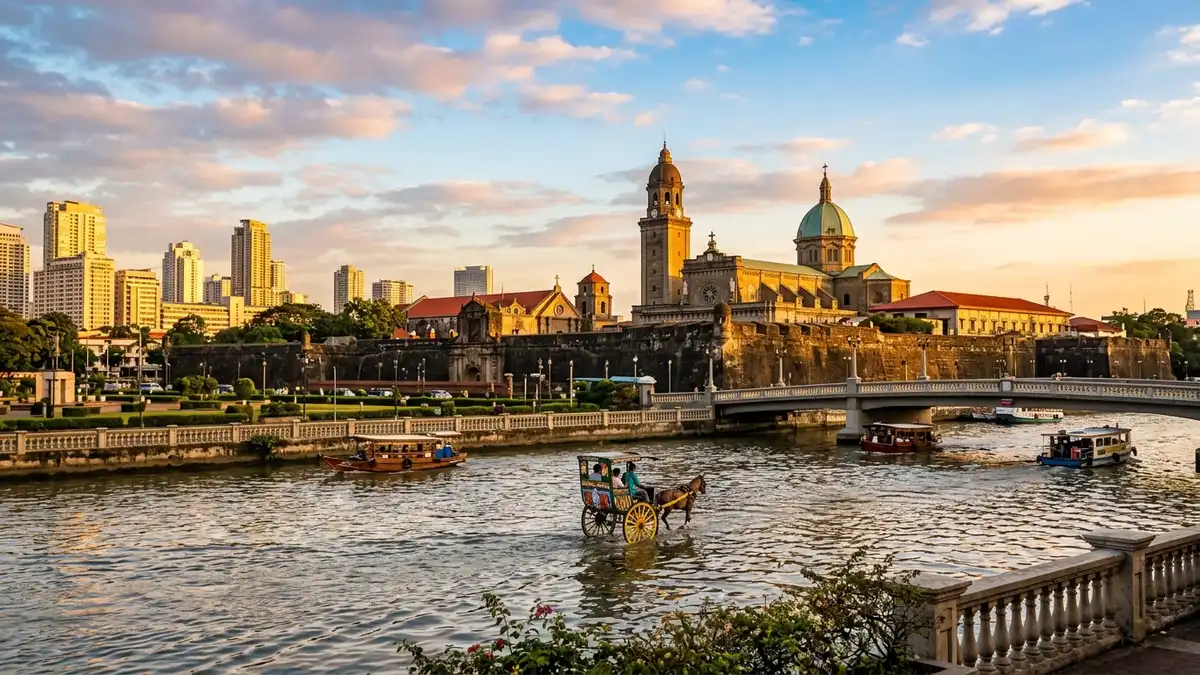
Manila itself is a city that refuses to be summarized neatly. It's chaotic, generous, historically layered, and endlessly alive. Intramuros, the old walled city built by Spanish colonizers in the 16th century, is the kind of place where you can spend an entire afternoon wandering cobblestone streets and feel the weight of centuries. The nearby Rizal Park is a beloved green lung in the middle of the metro, honoring the national hero José Rizal. Beyond the history, Manila is a serious food city — Filipino cuisine is having a long-overdue global moment, and eating your way through the capital, from rich adobo to sinigang to lechon, is reason enough to visit.
Timing your trip takes some thought. December and January bring the festive Filipino Christmas energy, which is genuinely magical but also means peak prices and crowds. June through August is popular with travelers during summer holidays, though it overlaps with typhoon season, so keep an eye on weather forecasts if you go then. The sweet spot for many travelers is the drier months between November and early December, or February through April, when the weather is more cooperative and fares can be more forgiving.
From Ninoy Aquino International Airport into the city, metered taxis and ride-hailing apps are your most practical options — the airport sits relatively close to the urban core, though Manila traffic is famously unpredictable, so build in extra time. One genuinely useful tip: the Philippines uses the peso, and exchanging currency at the airport or using local ATMs tends to give you better rates than converting dollars before you leave Miami. Get that sorted on arrival and you'll hit the ground running — because with 7,000 islands calling your name, there's no time to waste.