


Route Briefing: New York to Manila
Few routes reward the patience of a long-haul flight quite like New York to Manila. Yes, you're looking at around 17 and a half hours in the air with a connection — typically routing through Hong Kong, Seoul, or Tokyo — but what waits on the other end is a city that pulls you in immediately with its noise, warmth, and sheer energy. Philippine Airlines flies this route as the flag carrier, while Cathay Pacific and Korean Air consistently offer competitive options through their respective hubs. Connecting through an Asian gateway isn't just logistically sensible — it often unlocks the best fares, with a solid roundtrip deal coming in under $700 if you time things right.
Timing matters enormously on this route. Book three to six months out and you'll be in a strong position; wait until the last few weeks and you'll likely be paying the standard $900 to $1,200 or more. December and January are peak season — Filipinos celebrate Christmas with extraordinary enthusiasm, and the country fills up with both returning diaspora and international visitors. Summer months from June through August also see elevated demand. If your schedule is flexible, the shoulder periods around those peaks offer a sweeter combination of lower fares and manageable crowds.
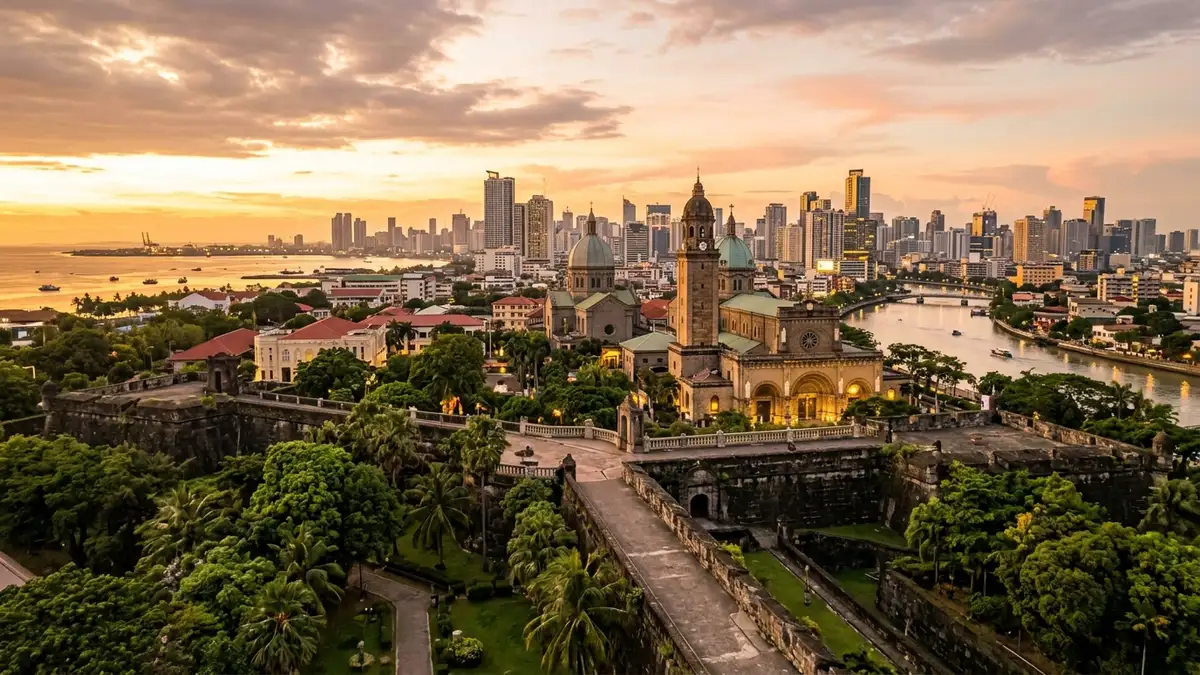
Manila itself is a city that defies easy summary. Intramuros, the old walled city built by Spanish colonizers in the 16th century, gives you a tangible sense of the country's layered history — cobblestone streets, centuries-old churches, and fortifications overlooking Manila Bay. The sunsets over that bay are genuinely among the most spectacular in Southeast Asia. Beyond the history, Manila is a food city in the truest sense: adobo, sinigang, lechon, and kare-kare are dishes worth traveling for on their own, and the local restaurant scene ranges from humble neighborhood eateries to ambitious modern Filipino cooking.
From Ninoy Aquino International Airport, taxis and ride-hailing apps are your most practical options into the city center. Traffic in Manila is notoriously heavy, so build extra time into any airport transfer, particularly during rush hours.
The single best tip for this route: use your layover city strategically. A longer connection in Seoul or Hong Kong can mean a proper meal, a hot shower at an airport lounge, and arriving in Manila genuinely refreshed rather than depleted. On a journey this long, that transition time is a feature, not a flaw. Manila rewards travelers who arrive ready to engage — and with a little planning, that's exactly how you'll land.