


Route Briefing: Chicago to Busan
There's something quietly thrilling about choosing Busan over Seoul when you're planning a South Korea trip from Chicago. Most travelers default to the capital, but Korea's second city rewards the curious with a completely different energy — salty sea air, mountains tumbling into the ocean, and a pace of life that feels genuinely lived-in rather than polished for tourists.
Getting there from O'Hare takes roughly 16 and a half hours with one stop, typically connecting through Seoul's Incheon Airport or Tokyo Narita. Korean Air and Asiana Airlines are the natural choices on this route and both offer solid long-haul service, though United also operates connections worth checking. Fares fluctuate considerably, so knowing your benchmarks matters: anything under $700 roundtrip is a genuinely good deal, while standard pricing tends to land between $1,000 and $1,400 or more. Book three to five months out to give yourself the best shot at those lower fares, and be especially strategic around Chuseok and Lunar New Year, when prices spike sharply as Koreans travel home in large numbers.
Once you land at Gimhae International Airport, the city center is accessible by subway and bus, making it easy to get oriented without the stress of navigating an unfamiliar taxi situation right off a long flight. Busan's subway system is clean, affordable, and well-signed in English — a genuine relief after 16-plus hours in the air.
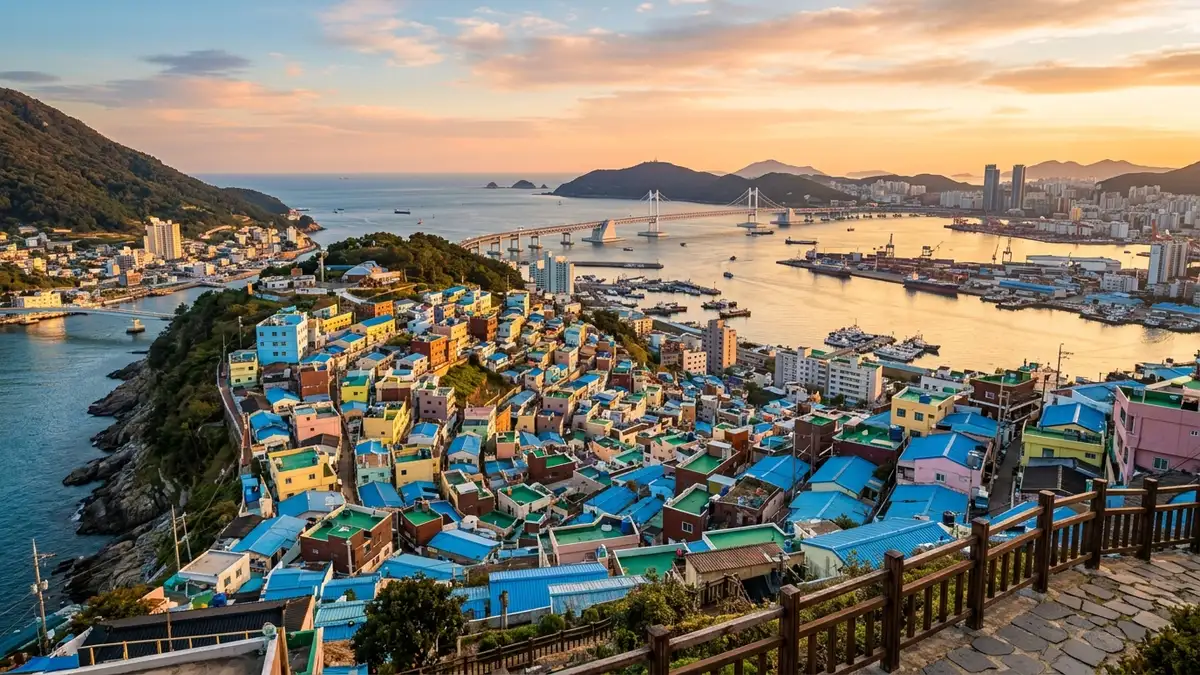
The city itself is a revelation. Haeundae Beach is one of Asia's most famous urban beaches, and while it gets genuinely crowded in July and August, the atmosphere is electric. Gwangalli Beach offers a slightly more relaxed alternative with stunning views of the Gwangan Bridge at night. The Jagalchi Fish Market is the largest seafood market in Korea and an essential stop — arrive hungry and be prepared to eat things you can't quite identify but won't regret. Up in the hills, the Gamcheon Culture Village spills down the hillside in a cascade of colorful houses that's become one of the most photographed spots in the country. And Haedong Yonggungsa Temple, sitting directly on the coastline, is among the most dramatically situated Buddhist temples you'll find anywhere in East Asia.
Timing-wise, spring and autumn are the sweet spots — mild temperatures, lower crowds, and some of the most beautiful light you'll encounter anywhere. Summer brings beach energy and festivals but also heat, humidity, and peak pricing. The experience-enhancing tip worth remembering: if you're connecting through Incheon and have a long layover, the airport itself offers free city tours for transit passengers, letting you squeeze a glimpse of Seoul into your journey without an extra ticket.