


Route Briefing: New York to Busan
If you've been dreaming of a Korean adventure but want to skip the Seoul crowds and dive straight into something rawer and more coastal, flying into Busan is one of the smartest moves you can make. At around 17 and a half hours with one stop, it's a serious journey from New York — but the payoff is immediate the moment you step off the plane into Korea's second city, a place that feels like it runs on salt air, fresh seafood, and an infectious energy all its own.
Most routings connect through Seoul's Incheon Airport, with Korean Air and Asiana Airlines being the natural choices for this trip given their extensive Korean peninsula coverage and generally strong service standards. United Airlines also operates connections on this route if you're working with miles or prefer a Star Alliance option. Fares can vary dramatically — snag a roundtrip under $700 and you're doing very well; $1,000 to $1,400 is more typical if you're not watching closely. Booking two to four months ahead gives you the best shot at the lower end of that range, and flying mid-week rather than on weekends can shave another 10 to 20 percent off the price.
Once you land at Gimhae International Airport, the city is genuinely easy to reach. The Busan-Gimhae Light Rail connects the airport to the main metro network, putting you within reach of virtually any neighborhood without the stress of navigating taxis or traffic.
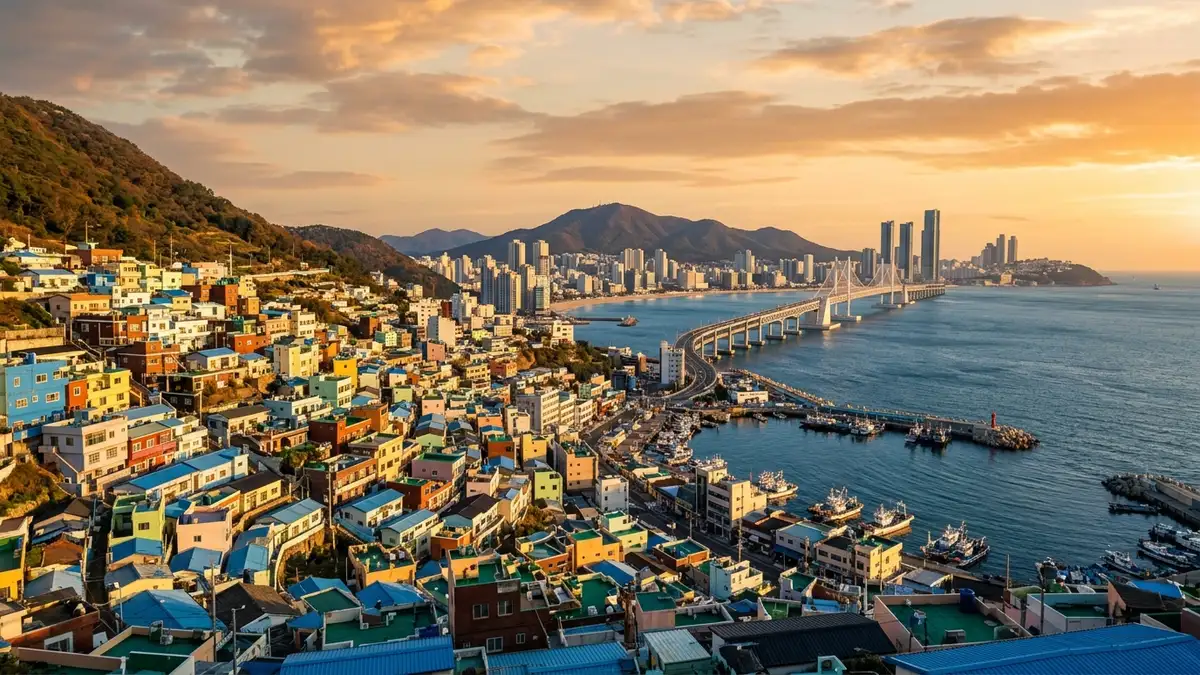
Busan itself rewards the curious traveler in ways that feel almost unfair for the effort involved. Haeundae Beach is famous for good reason — wide, lively, and backed by a glittering skyline — but wander a little further and you'll find Gwangalli Beach with its stunning views of the Diamond Bridge, especially magical after dark. The Gamcheon Culture Village, with its cascade of colorful houses climbing a hillside, is genuinely one of the most photogenic neighborhoods in all of East Asia. And the Jagalchi Fish Market is an absolute must: an enormous, bustling seafood bazaar where you can pick out live fish and have it prepared on the spot upstairs. It's chaotic, delicious, and completely unforgettable.
For temple seekers, Haedong Yonggungsa sits dramatically on coastal cliffs overlooking the sea — unlike most Korean temples tucked into mountain forests, this one feels like it grew straight out of the ocean.
Timing matters here. July and August bring peak summer crowds to the beaches, and late December through early January sees holiday travel spike prices. For the sweet spot, aim for late spring or early autumn — mild temperatures, manageable crowds, and some of the best light you'll find anywhere on the peninsula.