


Route Briefing: San Francisco to Busan
If you've been dreaming of a Korean adventure that skips the Seoul crowds and drops you straight into something rawer and more coastal, the San Francisco to Busan route is your ticket. At around 13 and a half hours with one stop — typically connecting through Seoul's Incheon Airport or Tokyo — it's a long haul, but the payoff is immediate. You land in a city that feels like Korea's best-kept secret, even though locals have known it all along.
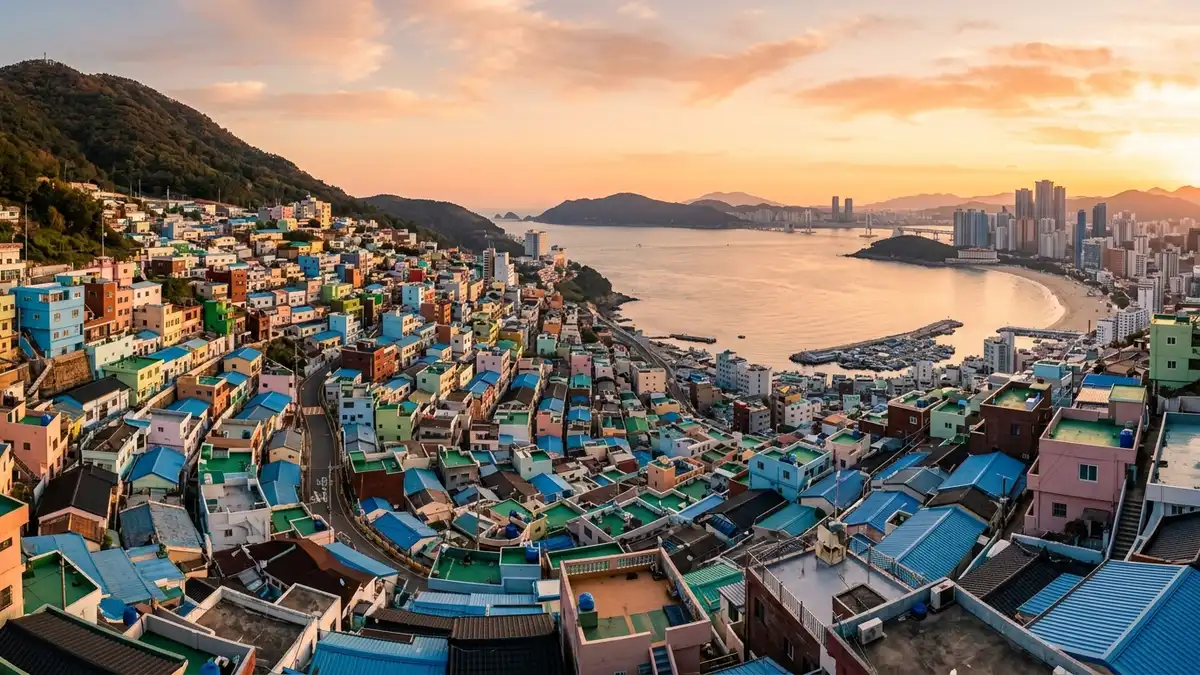
Busan is the kind of place that earns genuine affection fast. It's South Korea's second-largest city, but it carries itself with the relaxed confidence of a beach town. Haeundae Beach draws summer crowds for good reason — it's one of the most famous stretches of sand in all of Asia — while Gwangalli Beach offers a slightly more laid-back vibe with a stunning view of the illuminated Gwangan Bridge at night. The Gamcheon Culture Village, a hillside neighborhood painted in vivid colors, is genuinely as photogenic as it looks in every photo you've seen. And Haedong Yonggungsa Temple, sitting right on the rocky coastline rather than tucked into a mountain, is one of the most striking Buddhist temples in the country.
Then there's the food. Busan takes seafood seriously in a way that will recalibrate your expectations entirely. Jagalchi Market is the place to go — Korea's largest seafood market, where you can point at something still very much alive and have it prepared on the spot. The city is also famous for its milmyeon, a cold wheat noodle dish with local roots, and dwaeji gukbap, a hearty pork and rice soup that Busan residents consider a point of civic pride.
Getting from Gimhae International Airport into the city is straightforward. The airport subway line connects directly to central Busan, making it one of the easier arrivals in Asia — no need to stress about taxis or shuttle logistics on a tired post-flight brain.
Timing matters on this route. July and August bring peak summer energy — beaches packed, festivals running — but fares and accommodation prices climb accordingly. Late spring, particularly May and early June, offers warm weather, manageable crowds, and some of the most pleasant conditions Korea has to offer. Late December into early January is another peak window, so budget accordingly.
On the fare front, anything under $700 roundtrip is a genuine win on this route, with standard pricing running $1,000 to $1,400 or more. Korean Air and Asiana Airlines are the natural choices for direct service to Korea, with United also operating on this corridor. Book two to four months out, and compare itineraries carefully — the layover city affects pricing significantly, so running the numbers on both Seoul and Tokyo connections is worth the extra few minutes.