


Route Briefing: Miami to Busan
If you've been dreaming of a South Korean adventure that goes beyond Seoul's well-trodden tourist trail, the Miami to Busan route is your ticket to something genuinely special. Yes, it's a long haul — around 18 and a half hours with one stop — but Korean Air and Asiana Airlines are consistently excellent carriers for this journey, offering solid service and comfort that makes the distance feel manageable. Delta also operates competitive options on this corridor, and connecting through Seoul's Incheon Airport or Tokyo is your best bet for both scheduling flexibility and keeping costs reasonable.
Speaking of costs, a roundtrip under $700 is a genuinely good deal on this route, while standard fares typically run between $1,000 and $1,400 or more. Book two to four months out and you'll give yourself the best shot at landing that lower tier. This is a year-round route, but if you want to avoid the crowds and the premium pricing that comes with them, steer clear of July and August as well as the late December to early January holiday window — those are peak periods when both prices and tourist numbers spike.
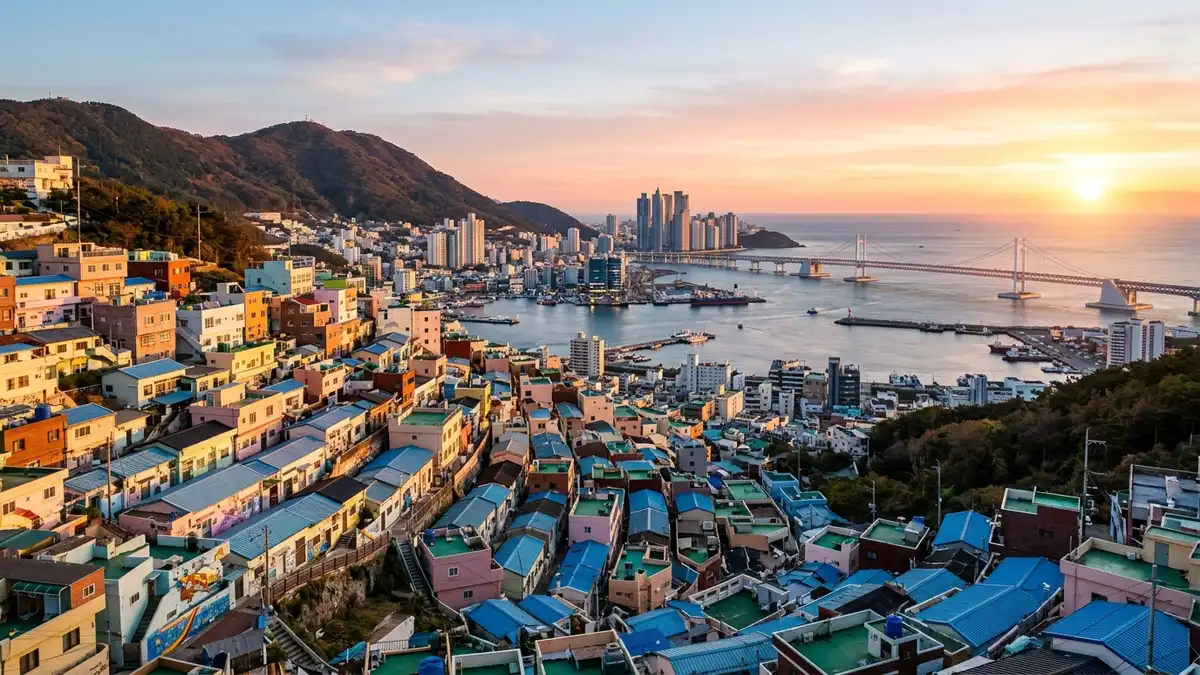
Now, about Busan itself: Korea's second city has a personality entirely its own. It's a port town with real grit and warmth, built around a coastline that delivers beaches, dramatic cliffs, and one of Asia's most extraordinary seafood markets. Jagalchi Market is a sensory experience unlike anything in the Western world — a sprawling, chaotic, utterly alive fish market where you can eat the freshest raw seafood imaginable right on the spot. The city also surprises visitors with Gamcheon Culture Village, a hillside neighborhood painted in vivid colors that cascades down toward the sea, and Haedong Yonggungsa, a Buddhist temple dramatically perched on coastal rocks where the ocean spray practically reaches the prayer halls.
From Gimhae International Airport, getting into the city is straightforward — the airport subway line connects directly to central Busan, making it an easy and affordable arrival without the stress of negotiating taxis after a long flight.
The shoulder seasons of spring and autumn are genuinely magical here. April and May bring mild temperatures and cherry blossoms, while October delivers crisp air and vivid foliage against the mountain backdrops surrounding the city. Either window gives you Busan at its most photogenic and most pleasant, without the summer humidity or holiday crowds.
One experience-enhancing tip: spend at least one evening at the Gwangalli Beach area after dark. The view of Gwangan Bridge illuminated over the water, with the city glowing behind it, is one of those travel moments that makes an 18-hour flight feel like the best decision you ever made.