


Route Briefing: Los Angeles to Busan
If you've been dreaming about a Korean adventure but assumed Seoul was your only gateway, let Busan change your mind entirely. This coastal city in the country's southeast is a completely different beast — saltier, louder, more relaxed — and flying into it directly means you skip the capital crowds and land right where the real magic happens. The route from LAX runs around 13 hours and 30 minutes with one stop, typically connecting through Seoul's Incheon Airport or Tokyo Narita, and Korean Air and Asiana Airlines are your most reliable bets for comfort and service on this long haul. Delta also operates on this corridor. If you can snag a roundtrip under $700, grab it without hesitation — standard fares push well past $1,000, so that threshold is genuinely worth chasing. Book two to four months out and keep an eye on connecting itineraries through ICN or NRT, which tend to surface the most competitive pricing.
Once you land at Gimhae International Airport, getting into the city is straightforward. The airport limousine bus and subway connections will get you into central Busan without the stress or expense of a taxi, and the city's metro system is clean, affordable, and easy to navigate even without Korean language skills.
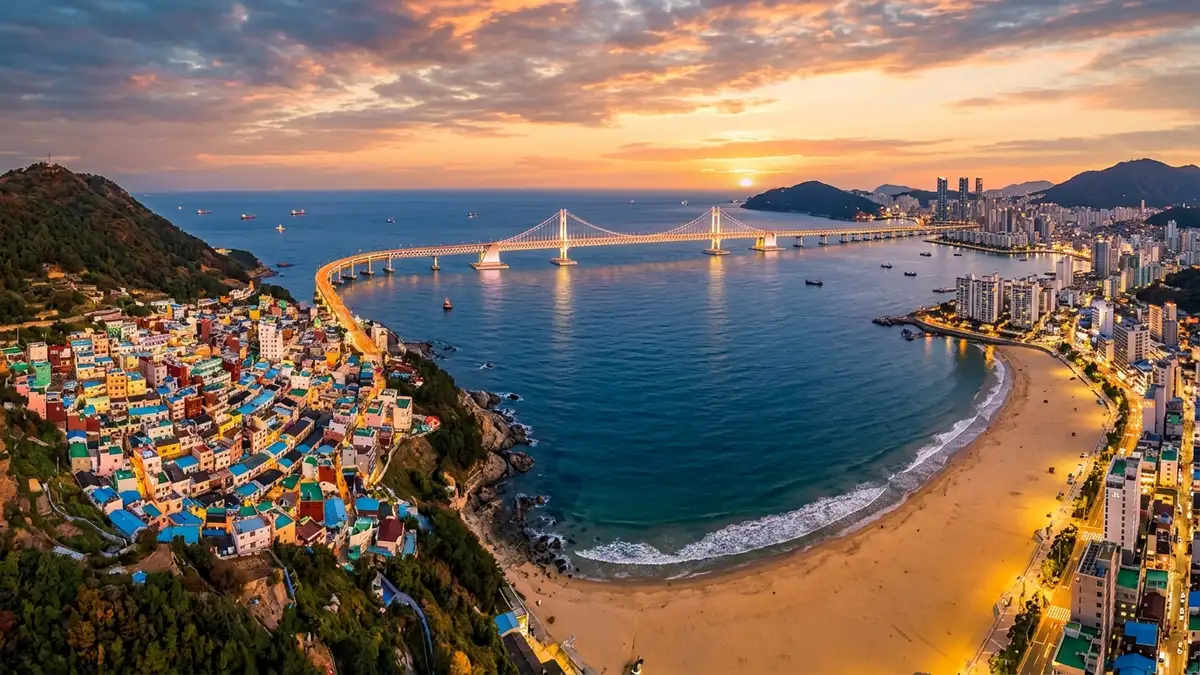
Busan rewards you immediately. Haeundae Beach is one of the most famous stretches of sand in all of Asia, and the surrounding neighborhood buzzes with energy day and night. Jagalchi Market, the country's largest seafood market, is an experience you genuinely cannot replicate anywhere else — vendors haul in fresh catch at dawn and you can eat it within the hour. The Gamcheon Culture Village, with its pastel-painted hillside homes, is the kind of place that earns its reputation. And if you're willing to make the short trip to Haedong Yonggungsa Temple, a Buddhist shrine built right on the rocky coastline, you'll understand why people call Busan a coastal gem without any irony.
Timing matters here. Peak season runs June through August when the beaches are in full swing, and late December draws visitors for the atmosphere and year-end celebrations — both periods mean higher fares and bigger crowds. For the sweet spot, consider spring or autumn when the weather is mild, the city is less packed, and your travel budget stretches further.
The one tip worth burning into your memory: get a T-money card as soon as you arrive. It works on buses, the metro, and even some taxis across South Korea, and it will save you the daily friction of fumbling for exact change in a city that moves fast and rewards those who keep up.